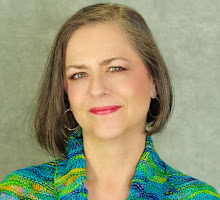
I've gotten behind in writing posts as my husband and I just got back from a trip to Florida visiting friends. Today I'm off to have lunch with a girlfriend and then I have a guild meeting tonight. Here's a few photos of the resort we were at. Our friends have a condo there and we stayed in the hotel. We did a little touring around that area of Florida, ate a lot of really good food, spent a day at the pool and I think I gained some weight so it's back to normal eating and exercising now.
Wednesday, November 16, 2016
Monday, November 14, 2016
What's your Yarn Inconsistency Tolerance Level?
![]() |
| Have you ever seen a label like this? I have. |
I had a comment from someone who bought one of my patterns and used the suggested yarn for the pattern.
It's this pattern:
![]() |
| http://www.ravelry.com/patterns/library/the-high-park-scarf |
The yarn is Knitted Fever Painted Desert. The knitter was unhappy with the yarn because she felt it had been spun too unevenly. It's a three ply yarn and when the three strands line up in spots where all three are thinner you get a skinny section and the same happens when it lines up three thicker sections. Generally the strands balance one another out, making these inconsistencies of each single ply less noticeable. It got me thinking about how do knitters decide what's acceptable and what isn't.
I think my range must be pretty wide because I didn't have a problem with this yarn, if anything I was surprised by the comment, but then I also really like Noro yarns too. I've seen a lot of negative commentary on Ravelry about Noro yarns. I like the uneven, imperfect nature of many yarns. To me it makes them feel more natural and reminds me they come from plants and animals. I do think we need to remember all natural fibres have this tendency to vary and spinning techniques play a role here as well. Often thick and thin yarns are created on purpose. Hand spun yarns are also more likely to vary in thickness. Man made fibres are often consistent in thickness as synthetic fibres are extruded polymers. Do recognize this isn't about the price of the yarn or the quality of the yarn. I'm currently working with a gorgeous merino, cashmere and silk blend which is much more uneven than some knitters would be happy with.
So what's a knitter to do? I think the simplest thing to do is to look carefully at your ball of yarn and specifically follow the individuals strands with your eye. You can often see the variations sitting on the outside of the ball. If you prefer a more consistent yarn and you see unevenness that yarn is probably not for you. Remember knitting is all about pleasing yourself.
Friday, November 11, 2016
An Interview with...Christopher Salas
![]() |
| http://www.ravelry.com/patterns/library/moho |
Once a week I post interviews with interesting people about their insights on their experience of working in the Knitting industry. I’ve noticed that every one of these individuals makes their living in a slightly different manner bringing their own unique presence to the knitting world.
You can find Christopher here and here on Ravelry.
Where do you find inspiration?
I find my inspiration in different ways. If I’m out and about, I may notice a structure or pattern in a building or in a plant and I try to see if I can make it work in a similar look. One time, I saw a plant while watching Jurassic Park or something, and the way the leaves looked on a prehistoric plant, I came up with what is my Athyrium shawl. I might also scroll through Ravelry and see a pattern with a certain technique I like, and I use that in some form for another design. Other times, I’ll just draw shapes, and fill in the canvas.
What is your favorite knitting technique?
![]() |
| http://www.ravelry.com/patterns/library/metro-lines |
Do you look at other designers’ work or are you afraid that you will be influenced by their designs? A little of both, actually. I’m not afraid to say that I go to a lot of my favorite designers to gather some fresh inspiration (Melanie Berg, is my top favorite, so I always see what she’s released). At the same time, I make my work have my own touch to it, only because I’m worried that some may think I’m copying another designer. Once I feel that a design is something that has already been done, I abandon it completely and restart.
How do you feel about the so called controversy of “dumbing down” patterns for knitters?
I think that the subject is different from each different designer. Personally, I’ve always written patterns the best I can for the knitter to understand, and if anyone needs help, I feel like I’ve been there. That’s really what any good designer should do: give as clear instructions as they can. At the same time, if I want a design to turn out a particular way, I won’t change it for the sake of difficulty. There are a lot of tough patterns out there. It’s just a matter of the designer to be clear on what should be done, and to offer help if they can.
How many sample/test knitters do you have working for you or do you do it all yourself?
I don’t necessarily employ test knitters. A lot of the friends I work with knit, and they are always looking forward to what I can design and are usually willing to make a new sample of mine. I will knit the original sample, and hand it off to another to see if anything may be off, unclear, or incorrect.
Did you do a formal business plan?
I had NO CLUE what I was doing from the beginning! When I first discovered you can sell patterns on Ravelry, it wasn’t even a way for me to be well known or anything. I just typed up a pattern in a fairly rough format and uploaded it. I didn’t think of anything from a professional standpoint until me and my friend (who also knits) were talking. The subject came up about my sales numbers, and she suggested, firmly but helpfully, that as it starts taking off, I need to make sure everything was in order. After getting some other tips, I found some good ways to organize, do my own financial summaries, inventory, etc. I still ask for help every now and then, but it’s definitely better than it was in the beginning.
Do you have a mentor?
Not truly a mentor, but some of the people that I always look to and learn from are Francoise Danoy of Aroha Knits for her social media skills, Sarah Abram (Sarah Bear Crafts), who is really good at making connections with other knitters, and Kyle Kunneke, for being a good friend, amazing colorwork knitter, and a person I can go to for help of how to make knitting techniques happen.
Do you have a business model that you have emulated?
Not really, to be honest.
![]() |
| http://www.ravelry.com/patterns/library/hippie-swamp-witch |
Do you use a tech editor?
My co-workers, who have knit and designed their own patterns, are great help. I owe them a lot, because they have always had faith in me with designing, and have always been willing to help me with the testing and editing. Sometimes, if a pattern is straightforward and simple, I don’t use a tech editor for anything major other than a quick edit on grammar and such.
How do you maintain your life/work balance? It’s tough. I have a full time job at Jimmy Beans Wool, which I enjoy very much. There are times when they want me to design for them, which in some cases, is a one skein project that would take no time at all (compared to other projects). In my off time from that, I knit, write patterns, make time for photos, and other things related to my business. I still knit when I’m at my parent’s house visiting, when I’m at a coffee shot or relaxing at home. Sometimes, I even go to a local bar near my studio, have a beer and knit. I even do it when I’m with friends sometimes. They’ve gotten used to it, but bug me if I’m ever going to make them anything.
How do you deal with criticism? I am always open to criticism in a constructive sense, especially from anyone who buys my patterns. One of my favorite moments was when someone said that I need to start including more close up photos so that people can see the work better. Now, I make sure that’s what I do. I’ve always taken constructive criticism from others. It comes down to a matter of whether it will work more me, and if it works for the whole group and not for one person’s benefit. Also, I’ve been lucky to not get any flat-out, mean comments or anything like that. If anything, I figure that that’s just ignored.
![]() |
| http://www.ravelry.com/patterns/library/colors-of-love |
How long did it take for you to be able to support yourself?
At this point, I can’t financially support myself on designing alone, which is why I still work for Jimmy Beans Wool. Luckily, it’s an environment that is related to my passion, which makes it much more enjoyable. But in general, I was able to support myself since I lived in Portland with my friends (I live in Reno now). Even with roommates, I paid bills, had a job, took care of everything, but here in Reno, I am lucky to be stable enough to have my own place, pay for my necessities, and live a way that may not be luxury, but definitely comfortable.
What advice would you give someone who wants to pursue a career in knitting?
PRACTICE, and… PRACTICE! My first month of knitting was hell. Every mistake that could be made was made. But I still practiced when I had time. Also, don’t be intimidated by someone who can knit a whole shawl in a week if you are still halfway through a scarf after six weeks. They were at your level also. But they didn’t give up. They wanted to get better. You just have to have that same level of desire. Maybe even a higher level.
What’s next for you?
At the moment, I am working on a collaboration MKAL design for later this winter, and another MKAL for Jimmy Beans Wool to be released next month. After that, I am focusing a bit more on more shawl patterns that I am dying to cast on. One thing I am very excited for is that I will have a design in Vogue Knitting Holiday Magazine, which will be my first time I am in print. Once I knit a sweater I have queued after those, I am going to try my hand at actual garments. Next year, I am going to start networking more directly by attending more things like Stitches West and TNNA in Long Beach. As for designing, I also want to reach out to more publications and do more design submissions. It’s a road that requires a lot of work, but I love it so much. I didn’t think I would ever even learn to knit. Now, I can’t see myself NOT knitting!
![]() |
| http://www.ravelry.com/patterns/library/nuaderne |
Wednesday, November 9, 2016
How to Store your Circular Needles
They say the best organizing system is one which you will actually use. I've tried two methods for storing circular needles. The first was a binder of plastic pockets each labeled by size. I didn't like that system because I have some older circulars which belonged to my mother and curling them into the pockets always puts kinks in the cords which would take a while to disappear when I used them. Circular needle are actually not my first choice, I prefer straight needles mainly because I feel they put less strain on my wrists. On the other hand, circulars often make more sense dependent on the project or for knitting in public. Poking strangers with your needles tips doesn't generally go over too well.
My second system was one of these:
![]() |
| http://www.patternworks.com/the-circular-solution |
It should have worked better, but keeping the organizer in my crowded closets wasn't as simple as I thought it would be. The needles often caught on other things when I took them out. The labels face the wrong way when you are replacing needles in the organizer. I tried an over the door hook in our spare room and realized I just didn't put them back when I was finished. I'm not sure why but for whatever reason it just didn't work for me.
I've now stumbled on a new system. In an attempt to stop my constant searching for needle gauges, I tied one to a ribbon, tied the other end to a large binder clip and clipped it to a book case in our spare room. The idea was this would be permanent so I could always find at least one of the many needle gauges I own. Later I started sticking needles inside the handle of the clip instead of in the hanging organizer. When I filled that clip I added a new one. So two weeks ago I went to an office supply store, bought a bag of the largest size binder clips, labelled them and I have six of them in place.
If I'm more consistent with this system I may add a few more clips to make the groups smaller. It's not pretty but if it works I don't care!
Monday, November 7, 2016
World of Threads
On Friday I spent the day with a knitting friend visiting The World of Threads Festival. This is the third time I've attended and it's always inspiring.
"The festival features 315 artworks by 134
artists from 24 countries including Austria,
Australia, Belgium, Canada, England, France, China, Hungary, India,
Iran, Israel, Japan, Mexico, Netherlands, New Zealand, Norway, Poland,
Portugal, Russia, South Africa, Spain, Ukraine and USA.
The
biennial festival features local, national and international
contemporary fibre and textile art organized and curated by Dawne Rudman
and Gareth
Bate and featuring partner curators. It’s based in Oakville, Ontario and attracts visitors from around the world. It began in 1994."
Here's: a few of the images I was sent in the promotional material:
![]() |
| Penelope Stewart from Toronto (amazing beeswax leaves) |
![]() |
| Aurora Towers, Gwen Lowery, U.S.A. |
![]() |
| Corono I, Gwen Lowery from U.S.A. |
Here's some photos I took (with permission):
Knitting
Embroidery and Machine Quilting
Buttons!
Yarn
Labels:
# knitting blogs,
World of Threads
Friday, November 4, 2016
An Interview with...Mindy Ross
Once a week I post interviews with interesting people about their insights on their experience of working in the Knitting industry. I’ve noticed that every one of these individuals makes their living in a slightly different manner bringing their own unique presence to the knitting world.
You can find Mindy here on Ravelry.
![]() |
| http://www.ravelry.com/patterns/library/early-morning-rain |
Where do you find inspiration?
I find inspiration from almost anywhere. I love shapes & colors and how they blend to form their own unique patterns, whether it's in nature or man made. I found nothing that suited my fashion sense, so decided to design 'thingies' that I'd like to wear myself. Then I discovered that others felt the same, so I took my inspirations, creating simple pieces for others to enjoy as I have.
What is your favourite knitting technique?
I love eyelet and YO's (yarn over). I guess my patterns demonstrate that.
Do you look at other designers’ work or are you afraid that you will be influenced by their designs?
I enjoy seeing what others have created. I feel just as in the clothing/fashion industry, it's interesting to see what others find unique.
![]() |
| http://www.ravelry.com/patterns/library/early-morning-rain |
How do you feel about the so called controversy of “dumbing down” patterns for knitters?
I didn't realize there is a controversy of 'dumbing down' patterns? I feel a pattern should be written in the simplest of terms to begin with, for anyone to understand. To me, I feel almost the opposite. If a pattern is 'too sophisticated' and written 3 levels above my understanding of terms, it is a turn off.
How many sample/test knitters do you have working for you or do you do it all yourself?
I try for 2 or more test knitters after I've tried the pattern once, sometimes twice myself.
Do you use a tech editor?
I do. And I cannot say "Thank You" enough to her.
![]() |
| http://www.ravelry.com/projects/stormyk9/dangling-conversation-5 |
How do you maintain your life/work balance?
It's a fine line of personal life and knitting life. Knitting is a calming influence when 'everyday life' gets to be a bit much. I do feel however, I've got a pretty good balance on the whole picture.
How do you deal with criticism?
Criticism is part of 'the deal', and many times I relish it, turning it to "constructive criticism". I try my best to answer each comment, no matter how severe. I learn from others' thoughts, whether it's a complement or a criticism.
![]() |
| http://www.ravelry.com/projects/stormyk9/giggle-with-a-jiggle-5 |
What advice would you give someone who wants to pursue a career in knitting?
As with any artistic medium (and YES, I consider knitting an "art") there can be a lot of starving artists out there, and success stories as well. I think for any promising knitting (or other) artist, you need the passion to go along with the drive. And you need time. I truly feel it's rare to become an overnight success. Keep looking/moving forward, while maintaining what your everyday life demands. I've learned stumbling is okay; get up, shake it off and keep that momentum moving forward.
What’s next for you?
I've got a little bit of a "stepping stone" in my personal life, for now. But heeding my own words, I will move forward and hope to design more 'thingies' in the future.
![]() | |
| http://www.ravelry.com/patterns/library/weatheror-knot |
Wednesday, November 2, 2016
Yarn - The Movie
![]() |
| http://www.yarnfilm.com/#synopsis |
Last Thursday I joined some knitting friends for a special outing to Yarn, a film by Una Lorenzen. Neil Genzlinger of the The New York Times says:
"You have almost certainly never seen a better documentary about yarn than Yarn. It isn’t perfect — it’s a little too airy and artsy in spots — but still, thread and string should be jealous."
![]() |
| http://www.yarnfilm.com/#synopsis |
Surprisingly? There wasn't a large turn out for the week long run of this documentary but I will say my friends and I enjoyed it.
![]() |
| http://www.yarnfilm.com/#synopsis |
The filmmakers take you on a world wide tour of various countries including Iceland, Canada, Cuba and a number of European countries. If you get a chance, do check it out.
![]() |
| http://www.yarnfilm.com/#synopsis |
Labels:
# knitting blogs,
Yarn - The Movie
Subscribe to:
Posts (Atom)