Monday, June 17, 2013
Designer Secrets - Fitting Hand Knits
In an effort to continue my own self education, I often read both the blogs and books published by other designers. On occasion I will disagree with what they write. When my view differs from theirs I try to delve deeper into my own thought process to consider why my opinion deviates from theirs. Today's small epiphany is; I sometimes disagree because many of us design for our own body shapes and figure challenges. Our personal experience skews our opinion in alignment with what works for us as individuals.
Sleeve cap design for set in sleeves is a perfect example of this. My preference is for a narrower sleeve with a high rounded cap which is larger than the armhole it will be set into. I have on occasion read that some designers want a cap that is smaller than the armhole and many match the armhole exactly. I was reading the method someone uses to achieve an exact match when it struck me that she is very slim with proportionally long limbs. My upper arm is rounded with extra padding. Others vary in the amount of muscle roundness in their upper arms. So of course we differ in our opinions! While I do always suggest to knitters, it is best to ascertain their own sleeve cap preferences, I will include this information when I teach in my future classes. The best cap may be determined by the roundness or flatness of the upper arm of the wearer. Duh!
If you enjoy reading my blog, I'd really appreciate it if you would tell your knitting friends or share links to your favourite posts online with Twitter or Facebook. Word of mouth is really helping to grow my business as knitters respect the views of other members of our community. Thanks!
Friday, June 14, 2013
An Interview with...Chrissy Gardiner
![]() |
| http://www.ravelry.com/patterns/library/birch-2 |
Once a week I post interviews with interesting people about their insights on their experience of working in the Knitting industry. I’ve noticed that every one of these individuals makes their living in a slightly different manner bringing their own unique presence to the Knitting world.
You can find Chrissy here and here on Ravelry.
![]() |
| http://www.ravelry.com/patterns/library/stampede |
Where do you find inspiration?
Everywhere! My main source of inspiration is my giant
library of stitch dictionaries from all over the world. When I’m getting ready
to start on a new design, I sit down with a stack of them and page through,
marking stitches that catch my eye and trying to figure out interesting ways to
modify them to fit a particular garment or combine them with other stitch
patterns that have grabbed my attention. I’m also constantly inspired by
garments I see in movies or on the street. My ”The Dude Abides” socks from my
book “Toe-Up!” were inspired by Jeff Lebowski’s famous Cowichan-style sweater
in the movie The Big Lebowski. I’d been trying to come up with a colorwork
design for weeks, and as I watched the movie for the millionth time one night,
I was suddenly struck by the colorwork pattern of this sweater. I paused my DVR
and quickly sketched out the motif. It was truly serendipitous, because the
design fit perfectly on a 64-stitch sock!
What is your favourite knitting
technique?
This is a tough one, and I have to say it’s a tie between
mattress stitch, which is always miraculous to me, and Judy’s Magic Cast-On,
which helped me overcome my aversion to toe-up socks.
![]() |
| http://www.ravelry.com/patterns/library/circular-logic |
You focus on designing socks, could you tell us a little about the reasons why?
This just sort of happened without much input from me,
actually! When I was first starting out and submitting lots of designs to
various publications, it seemed that the only things I could get accepted were
socks. I decided to go with it, and there are really a lot of things to love
about socks. I like always knowing what size needle to use to get gauge, I love
being able to grab a 400-yd skein of sock yarn and know I’ll get a pair of
socks out of it without too much “will I run out? NONONONO!” stress, and I find
that socks are a nice little canvas for playing with stitch patterns and
colorwork designs. I’ll wear colors and patterns on my feet that I would never
wear if they were incorporated into a sweater.
Do you look at other designers' work
or are you afraid that you will be influenced by their designs?
I’ll page through my knitting magazines when they arrive in
the mail, but I don’t spend a lot of time looking at others’ designs. It’s
impossible not to be influenced by other designers’ work, but I do want to try
to minimize it as much as possible. I have a terrible memory, and if I see
something I like and then want to design something like it six months later,
I’ll never be able to remember if I saw it in a knitting magazine, on one of The
Real Housewives, or if it came to me in a dream.
How do you feel about the so called
controversy of "dumbing down" patterns for knitters?
I think this is a little bit of a tempest in a teapot. There
are so many great designers out there, and so many different styles of pattern
writing, there’s something for everyone. No designer will ever be all things to
all people, so if knitters want something that’s a little more sophisticated,
there are designers that will cater to that. There’s a huge market out there
for knitters who just want to knit, have fun, and not think too hard. I really
try to gear my patterns toward these knitters and teach them a little something
in each of my patterns. I have gotten a couple comments questioning the extra
techniques I include in my patterns, but I figure if someone doesn’t want a
tutorial on Judy’s Magic Cast-On, they can just skip that section!
![]() |
| http://www.ravelry.com/patterns/library/the-dude-abides |
How many sample/test knitters do you
have working for you or do you do it all yourself?
I always make sure that at least two people have knit each
of my patterns before I unleash them on the general public. I have a stable of
about 50 potential test knitters to draw from, and about 5-10 regulars who do
the majority of my test knitting. I also have two tech editors review each of my
patterns. I tend to do most of my own sample knitting as part of my design
process. I tend to do a lot of tweaking and ripping as I work through the
design. I do have a couple sample knitters that I’ll use to reknit a design
that I’ve already worked up, but this isn’t something that happens too
frequently.
Did you do a formal business plan?
Absolutely. I’ve actually done a few business plans – one
when I was first starting out, then another as I shifted my publishing from
being mainly published by others to a heavily self-published wholesale print
pattern business, and the most recent when I started self-publishing books. I
probably need to do another update to reflect my shift from mostly print to
mainly digital over the past year or two.
Do you have a mentor?
I’ve been lucky enough to have a lot of help on this wild
journey! When I was first getting my self-publishing business up and running, I
got a lot of great advice from Chris de Longpre, Janet Szabo and Jill Wolcott
(and I know there are others I am forgetting). As I moved into self-publishing
books, I’ve been lucky enough to count Cat Bordhi as a mentor and I can’t thank
her enough for how much she’s helped me. Janel Laidman was a graduate of Cat
Bordhi’s Visionary class the same year as I was, and she has been a great
inspiration and sounding board. She’s the one who came up with the framework
for the gorgeous design for my newest book, “Indie Socks”.
![]() |
| http://www.ravelry.com/patterns/sources/indie-socks-patterns-and-dyer-profiles-featuring-hand-dyed-yarns |
Do you have a business model that
you have emulated?
Sort of? I’ve really incorporated bits and pieces of lots of
other designers’ business models into my own business. I’m also constantly
changing things to reflect where I want to go and how I need my business to fit
into my family life (which is getting busier and busier as the kids get older and
require more shuttling to and from various activities).
What impact has the Internet had on your business?
It has made it a heck of a lot easier in some ways and much
more difficult in others. I absolutely love the Ravelry pattern sales system –
after spending years printing and sleeving patterns to send off to shops, I
really adore being able to sell my patterns without any intervention on my
behalf. On the other hand, the competition is incredible. Since there are no
barriers to entry now, there are an incredible number of patterns to choose
from, including the huge number of free patterns available. I try not to spend
too much time lamenting this, because free patterns aren’t going away (nor
should they). I really try to focus my energy on how I can make my patterns
stand out from the crowd, which includes making them as fun to knit and as
error free as humanly possible.
Do you use a tech editor?
I use two, and it’s absolutely the best money you can spend
if you’re self-publishing patterns. Seriously, you can hire a good tech editor
for an hour for the cost of a skein of sock yarn. If you as a designer make
sure that your pattern is in tip-top shape before you send it to your tech
editor, it shouldn’t be overly expensive. I always go through my patterns with
a fine tooth comb, including rechecking every stitch count and bit of math,
before I send it to my editors. The pattern also goes through test knitting and
formatting – the tech editors are the last people to touch it before it is
released. Having a solid style sheet for your patterns will also help your tech
editors be efficient and save you money.
How do you maintain your life/work balance?
It’s a constant battle. I’ve really had to scale back over
the past few years in order to maintain my sanity. For instance, I don’t travel
to teach and I rarely teach locally. I don’t do a lot of submissions to other
publications any more in order to avoid deadline-itis. I try not to work nights
and weekends, even though it’s really easy to do since my office is right
there, calling to me. My business hasn’t grown as much since I’ve taken these
steps, but my kids also aren’t trying to hide my knitting from me anymore.
How do you deal with criticism?
I rant about it to my husband, and then I really try to put
it on a raft and send it out to sea. I’ve been very fortunate that I’ve never
been the subject of any really brutal criticism, but even the relatively benign
stuff still stings. Being told that your work is boring, doesn’t add anything
new to what’s already out there and your layout is cheesy isn’t going to make
your day better. I don’t actively monitor reviews of my stuff, and I think that
just not knowing what’s out there is easier on my psyche. I appreciate
constructive criticism about things I can actually fix (I am always happy to
hear from knitters about possible errata), but I’d rather take the
head-in-the-sand approach to folks who aren’t fans of my design aesthetic or
pattern layout.
How long did it take for you to be able to support yourself?
Hahaha, if only I could support myself! It took about three
years for the business to start making a small profit. The years since then
have all been in the black, but the amount of profit fluctuates wildly
depending on what I’m doing (how many patterns I release, whether I’ve
published a book that year, how much advertising I’m doing). My income covers
the occasional mortgage payment and things like summer vacations and soccer
uniforms, but I would have a lot of work to do before I’d be self-supporting in
a meaningful way!
What advice would you give someone who wants to pursue a career in knitting?
Expect to do a lot of hard work. Hire a tech editor if
you’re self-publishing. Network, online and off! Don’t expect to make a ton of
money. Get used to rejection if you’re submitting for publication (expect
10-30% of your submissions to get accepted, and submit a lot – out of 10
designs submitted, maybe 1-3 will be published). Always act like a
professional, even if you don’t feel like a “real designer” yet. Don’t take
things personally!!!
![]() |
| http://www.ravelry.com/patterns/sources/toe-up-patterns--worksheets-to-whip-your-sock-knitting-into-shape |
Wednesday, June 12, 2013
WWKIP Events
Well here's a little laugh for us knitters. Knit in Public day at a local venue in Toronto is presented on a background of crochet. I wonder how many knitters they heard from about this?
Labels:
WWKIP Events
Monday, June 10, 2013
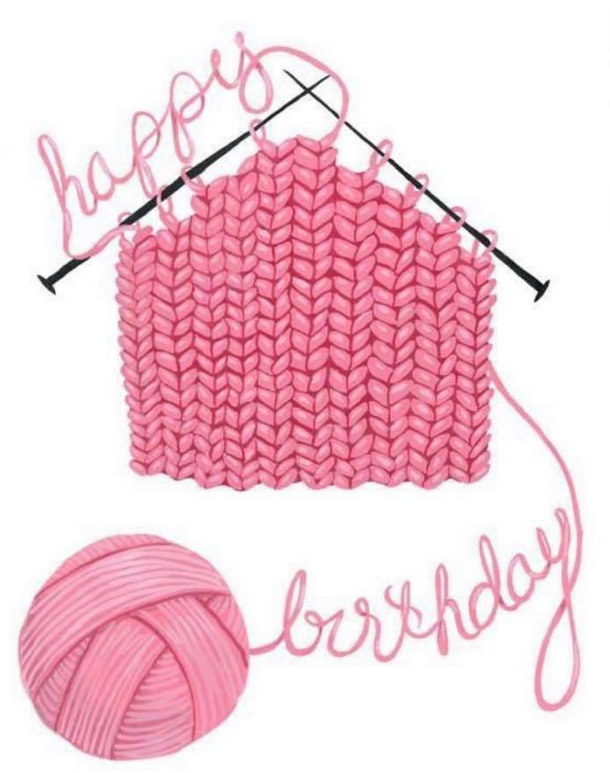
Happy Blog Birthday to Me!
In June of 2009 I started this blog as a challenge to myself.
The first entry reads in part "Someday soon I'm going to become a full time hand knitting designer. I'm going to write about this change in my life and hopefully look back to assess what I did right as well as the mistakes I make along the way."
I didn't quit my full time job at the time, however I did resign the following March and since then my life has changed in many ways for the better.
The blog has been part of that process and has added to my experience in many ways.
Writing a blog can be challenging. I have quite a few sites explaining grammatical rules book marked for all of the questions that come up. This month I'm joining a writers group because while my writing has improved I want to get better than I am currently, at expressing myself.
The entries in a blog need to be concise and informative. I've had to run series to address some of the topics I've chosen. Some of my posts have been mainly photos, short and sweet as a contrast. I get to test out different formats and styles of writing in this manner.
I've done a interview series which has turned out to be very popular and has lead to me making friends with others in my field that I wouldn't have met any other way.
When I look at the stats I see that people are reading me from locations all over the world. I often see google translator being used to convert my posts into Russian, Estonian and German.
The blog has made me more thoughtful, there is something in the process of writing that adds clarity to our thinking.
Happy Birthday to you my blog and many thanks for all the great things you have given me!
Labels:
Happy Birthday to my Bog
Friday, June 7, 2013
An Interview with...Elizabeth Smith
| http://www.ravelry.com/patterns/library/ruby-spice-cowl |
Once a week I post interviews with interesting people about their insights on their experience of working in the Knitting industry. I’ve noticed that every one of these individuals makes their living in a slightly different manner bringing their own unique presence to the Knitting world.
You can find Elizabeth here and here on Ravelry.
![]() |
| http://www.ravelry.com/patterns/library/woods-road-vest |
Where
do you find inspiration?
Just
about everywhere I’d say! I’ll often get inspiration for one design from a
number of different places, and the combination of those things results in the
final design. Living in the Portland, Maine area is really inspiring to me—not
just the landscape but the vibe and culture of Portland. When I’m brainstorming
a new design I’ll often be thinking of the fashion aesthetic we have in this city—a
combination of rustic meets downtown—being fashion-forward but also having a
very natural and rustic feel.
What
is your favourite knitting technique?
I love
seamless knitting, so any technique that enables this is one that I usually
love. Top-down sweaters, short row shaping or the three-needle bind off are
good examples—all of these techniques are easy and fun ways to accomplish
seamless knitting.
![]() |
| http://www.ravelry.com/patterns/library/lilac-trail |
How
did you determine your size range?
I try
to have a range of at least 6-7 different sizes with most of my designs. I like
to have as wide a range as possible within the confines of a particular design.
Do you
look at other designers' work or are you afraid that you will be influenced by
their designs?
Of course!
I love admiring other work, whether it’s another sweater design on Ravelry or a
knitted garment I see at a local boutique. I think it would be nearly
impossible to work in a vacuum and never admire or be inspired by other
people’s work when you are in a creative field such as this.
How do
you feel about the so called controversy of "dumbing down" patterns
for knitters?
I
think there are lots of different kinds of knitters out there so there is a
need for lots of different kinds of patterns. I am personally all for detailed
instructions and it’s something that I provide in all of my patterns because I
write for the beginner knitter in mind. Not everyone will like this writing
style, and that’s okay! But I know a lot of knitters that appreciate that extra
detail and it’s something I enjoy doing.
How
many sample/test knitters do you have working for you or do you do it all
yourself?
I do
it all myself. Many times I tweak a design after I’ve already started knitting
it so designing-as-I-go is an important part of my process.
![]() |
| http://www.ravelry.com/patterns/library/east-end-armwarmers |
Do you
have a business model that you have emulated?
I’m
not sure if I would call it a business model per se, but I have a business and
marketing strategy in terms of the kinds of patterns I want to create, my
target audience, and how I intend to reach my audience. I think finding a niche
is important in any industry, including the knitting design world. My education
and professional background is in marketing, so it’s just an ingrained habit of
mine to approach any work I do with my marketing strategy hat on at the same
time. I’m very much a left and right-brain kind of creative (which is probably
why I like designing so much!)
What
impact has the Internet had on your business?
The
Internet IS my business! Well, for the most part at least. I started designing
after Ravelry was created so I don’t know what it’s like to be a designer in
the pre-Ravelry days. Without sites like it (including Patternfish and now
Craftsy too), I’m not sure I would have even started designing because I
wouldn’t have known how to get started. These sites have made it possible for a
lot of knitters to make that jump into designing and I am so appreciate of
them!
![]() |
| http://www.ravelry.com/patterns/library/arlo--alice |
Do you
use a tech editor?
Oh
yes, of course. I have an excellent tech editor and I wouldn’t dream of
publishing a pattern without one. When I’m designing and writing a pattern, I’m
so involved in every little detail that it amazes me that errors still slip by,
but they always do. Having a good tech editor is priceless.
How do
you maintain your life/work balance?
I
don’t have much of a life/work balance to be honest but I love what I do for
work so that’s okay with me. I work a lot of different jobs which keeps me
pretty busy, but I enjoy all of them so I don’t mind not having as much “free”
time as I used when I worked a more traditional work schedule.
How do
you deal with criticism?
If
it’s constructive criticism I definitely welcome it and try to learn as much as
I can from it. You can’t make everyone happy all of the time, but I try to
learn as much as possible from all the feedback I get. Some criticism isn’t
always constructive and in those cases I just try to not let it get to me too
much. I think whenever you put your work “out there” you have to expect that
not everyone is going to always have nice things to say and it’s all about
learning how to deal with it in a positive manner.
How
long did it take for you to be able to support yourself?
I’m
not able to support myself solely on the money I make as a knitting designer,
but through the years the percentage has increased. Technically my job title
would be “knitting designer/yarn shop associate/software development project
manager/web marketing professional” (in no particular order!), so I wear a lot
of hats when it comes to how I make money. But I prefer it like this—having
multiple revenue streams where you aren’t relying 100% on any one income source
(and in my opinion is the more stable option in this economy). Knitting design fits well into this kind of
model since it can take a while to become profitable and it’s not always
consistent income throughout the entire year.
What
advice would you give someone who wants to pursue a career in knitting?
I’d say go for it! For me, it was a slow process—I didn’t quit my
day job on day 1 to dedicate myself to knitting design 100%. It’s been a very
gradual process for me even to get to the point I’m at right now (where I
consider designing to now be one of my part-time jobs). I had started by just fitting in design work
at night and on the weekends and then slowly I was able to dedicate a little
more time to it as the years went by. So if someone is interested in pursuing a
career in knitting but not sure how they can make it work with their existing
job or family responsibilities, I’d say just start in any way you can. Even if
it’s just something you can work on once a week or on the weekends, give it a
try and see where it might go. You never know where it might eventually lead
to.
![]() |
| http://www.ravelry.com/patterns/library/new-canaan |
Wednesday, June 5, 2013
More on Dumbing Down Patterns
I had coffee with a knitting friend recently. She is an accomplished knitter and we got talking about the pattern writing process. She has read some of the same threads I have read on Ravelry on what knitters hate about patterns. We discussed when we were first knitting we both would take extra notes and make charts to check off while knitting more complex patterns. Reverse shapings was not considered to be an impossibly difficult instruction. Knitters didn't think it was expected that the pattern spell out every technique. Many modern knitters seem to have much higher expectation of what patterns should provide in terms of detail. BTW the phrase "dumbing down" is not mine. It came from a conversation with several high profile designers.
My coffee friend reads my blog interviews and was struck by the differences in the responses to what has become my most controversial question. The question is, "How do you feel about the so called controversy of “dumbing down” patterns for knitters?"
Many designers don't understand what I'm asking. Many give very carefully worded responses to avoid anyone taking offense. It does appear that there is a cultural component as well as shifts in modern standards to pattern writing. Below I've added in two of my favourite answers.
Here is the response from Michelle Porter:
How do you feel about the so called controversy of “dumbing down” patterns for knitters?
I hope I’m not offending too many knitters out there, but I try to write my patterns for real dummies! I also include myself in this group!
If there is any way to miss-read, miss-interpret, count wrong, or
measure wrong – I will find it! So, I try to include stitch counts
whenever it changes and describe exactly where you are measuring. I
remember to state which needles you are using and if increases and
decreases are done in pattern, how and where. I hope all the questions
are answered on the pattern, with no ambiguity. I feel all patterns
should include a difficulty rating and “beginner” patterns should really
include nearly everything.”Experienced” patterns can get away with less
detailed explanations and an assumption of a degree of knowledge. Every
pattern should include a tension gauge done in the stitch pattern used
and an abbreviations key. I do try to keep my patterns for yarn
companies to 3 pages, though, so it can be printed easily on a folded
sheet. For my Fondle Patterns collection, I make them as many pages as I
need and include several photographs. I also like to use a flat photo
of the sample garment (not on a model) to help with the construction.
Sometimes my blog has more photos and notes than the pattern. If a
knitter still has questions, I am very happy to answer by email.
Michelle's complete interview can be found here.
Erica Patberg's answer is below. Her original interview can be found here.
How do you feel about the so called controversy of "dumbing down" patterns for knitters?
I
didn't know that there was a controversy. As an American knitter, I
tend to lean towards specifying more rather than less. Giving stitch
counts at the end of a row with increases or decreases, specifying the
type of cast on if it matters. In the Netherlands, where I live,
knitting was taught in schools until recently. There is an assumption
that knitters have more independent knowledge thus patterns are more
brief, giving just the essentials needed to knit a piece and leaving
more decisions up to the knitter. I think both styles of directions have
their place. As a beginner more step by step instruction can help you
to learn a new skill or complete a project. For publication, pithy
instructions keep costs down and allow for more designs in each
magazine.
Labels:
More on Dumbing Down Patterns
Monday, June 3, 2013
Lead and Lag Goals in Business
As a one person business I have to think very carefully about how I spend the many hours I work everyday. Early on I listed my patterns for sale on Patternfish only and more recently I've added the ability to purchase my patterns on Ravelry. The reason I delayed was administrative, to list on both sites doubles the time of pattern input for me. So the question with every choice I make is always, is it an efficient use of my time?
I get questions from many people outside the industry regarding my monthly revenue. The answer is I have no idea! I could take the time to calculate the numbers. I have all of the raw data.
I do keep a very simple spreadsheet of expenses and earnings. My assistant inputs the information for me and I do have a bottom line total that tells me what's happening in a more global sense.
I've realized that the monthly revenue question may be interesting to others but it would bring no value to me. I already know as I grow my pattern portfolio, my sales increase. Each new pattern added brings attention to the previously published patterns and they often sell additional copies.
Sometimes focusing on a specific end goal can be highly counter-productive. A story from a business seminar I took explained the limits of this. Briefly the narrative ran, that a company which made screws, shifted the focus to quantity. The result was, hundreds of thousands poorly made screws were manufactured, which could not be sold. The company quickly shifted focus back to quality, and then the workers produced one perfect unsellable giant screw. Coming from a corporate background I love the way the phrase "giant screw'" works on more than one level here.
It's hard to figure out what's most important, if your focus is on a narrow end target. The end number is referred to as the lag measurement in this cool video. The lead metric is what actually creates results. The video is targeting business applications however it applies to goal accomplishment in a much more global way and uses a weight loss example to demonstrate.
In my case, taking the time to calculate specific sales results would be a huge time suck and would be unlikely to change what I do daily. My measurements should be based on my objective, patterns published, because I can't get revenue if I don't publish!
Subscribe to:
Posts (Atom)