Showing posts with label Knitting Professionals. Show all posts

Friday, June 28, 2019

Patternfish - An Interview with...Me

This interview originally appeared in the Patternfish newsletter. I'm adding it to my blog as several other interviews I did were lost when their on-line sources disappeared. The interview was published in June 2011 so some of my responses are out of date.


Designer of the Month: Robin Hunter
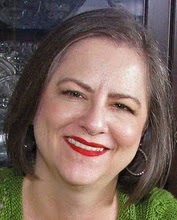
Robin HunterLike many other designers, Robin Hunter combined a lifelong love of textiles and fibre arts with a corporate career before happily retiring to provide Patternfish and the rest of the knitting world with her designs. A quick look through her patterns shows to what extent Hunter challenges herself. Shawls, socks, hats, and scarves in configurations at once unique and wearable are her trademark. We wait with anticipation for each of her new designs. We interviewed Hunter to find out about her designing history and views of the knitting world.

What inspires you? What are you passionate about? 
I look at everything for inspiration, art, theatre, fashion and the outdoors. I love bright strong colours. I live in a condo with a huge terrace and I garden in pots. The colours of the flowers are often an influence on the colours of yarn I choose. I've been passionate about fashion, clothes and the arts all of my life.

Which design is your customers' favourite? 
The two biggest sellers are the Prudence Crowley vest and the Evelyn Howard scarf. I'm working hard on growing my portfolio so my best sellers will change as I add patterns. I was very pleased that these two turned out to be popular as I feel strongly that they are true to my design aesthetic even though they are very different.

Which designers do you admire? 
The interviews I've done with many fabulous designers on my blog have widened my knowledge of just how many talented designers there are. I've found admirable qualities in them all so it's really hard to narrow down to just one or two. I especially admire those who push the envelope by developing new techniques or those who take an existing technique and raise the standard. I've taken a lot of classes in the past with wonderful knitters like Sally Melville, Debbie New, Lily Chin, Annie Modesitt and Maureen Mason-Jamieson so I will give them all credit for inspiring me.

Describe your perfect day. 
I get up at 6 AM with my husband, play with my cats and then snuggle into the corner of the couch to drink a great cup of coffee and read. I do a few quick household chores, some mornings I exercise and then I start working. Generally I work on the computer from 10 AM to 3 PM, blogging at http://knittingrobin.blogspot.com/, pattern writing, and developing course materials and lectures. I start knitting at 3 PM, either working on samples or swatching. Some days I spend time reading about knitting in the big three magazines or in books but I usually knit until 8.

In what ways do you spend your time that would surprise people? 
I doubt that I do anything very surprising, no bizarre or peculiar behaviours that I can think of and that I'm willing to share. However I'm a voracious reader. I read blogs, books (both fiction and non-fiction) and I'm a ballet and theatre fan. I don't drive which always shocks non-urban types; however, I live within sight of a subway station in Toronto and I walk a lot which is great for both my weight and my happiness level. I also like peanut butter and bacon sandwiches.

What is your favourite knitting technique? 
I'm a knitting generalist who skips from one technique to another. My interests lie in a good fit that flatters the wearer and adding details that make my work stand out as different. I have a fair bit of experience in pattern drafting and I'm very frustrated with the simplistic form that many existing knitting patterns take. There are a lot of small details that would make a big difference to the end result so I try to work out how I can best incorporate these into my patterns.

When did you start knitting? Who taught you? 
I started knitting in my teens and designing in my twenties. I'm not sure who taught me to knit as I have no recollection of learning. My mother and both of my grandmothers knit so it may have been one or all of them.

What's your design process? 
I approach design from several different directions but essentially I like to have design parameters. It can be the yarn itself, a silhouette that I've seen and want to adapt, a stitch pattern or a request from someone. The Pinwheel cardigan was an adaptation from a lace linen hat that I was asked to knit for a class. I was asked for a vest pattern for a magazine submission and that lead to 2 completely different designs, the Prudence Crowley vest and a more conservative design that will be published next Fall.

When did you start designing and what was the first design that you created? Which is the first that you sold? 
I no longer recall my first design since I have been designing for myself since the late 70's. I started by using patterns and adapting them. I was always the kind of knitter that liked a pattern but thought it would look better with a different neckline or another modification so I would change it up in some way. I'm self publishing and the very first pattern I sold was at a shop I worked at. Karen Dinner, the owner of the shop, encouraged me to publish more widely and put me in touch with Julia Grunau of Patternfish. The Patternfish business model worked for me because I don't want to give up my own copyright and the thought of running my own website didn't appeal to me.

Which is your favourite design? 
I love them all, they are my babies! I wear everything that I knit but I do end up with some favourites, the pieces I feel are the most flattering on me. My friend Mary Pat often models my designs in our Guild's fashion shows. When I see the designs without the influence of my own figure concerns, I love them even more.

Where have your designs appeared? 
Currently my patterns are available exclusively on Patternfish. (With the closing of Patternfish they are now all on Ravelry and I'll adding them to LoveKnitting soon.) I plan to expand into wholesale in the next year or so. Hopefully, shops will be interested in my patterns as well as my lectures and classes. I also will have a design in the magazine A Needle Pulling Thread next fall. I dislike working to deadlines as so much of my corporate career involved very tight timelines. At this point I haven't submitted to any magazines mainly for that reason.

Do you teach/do you like it? 
I love teaching! I find students very inspiring. They push me in directions that I wouldn't have thought to go on my own. I find the challenge of giving back very stimulating to my own process. At one level knitting is just yarn and 2 sticks and at another it's a complex layered web that has still has many hidden jewels left for me to discover.

Where do you think the knitting/crocheting/fibre world will be in 10 years/why? 
I think it will remain very much a niche market and sub-culture as it is today. The Internet has changed things forever. We are now all connected in a way that is allowing our culture to flourish. In the past there were highs and lows and we thought the knitting traditions might die, but I now have confidence that knitting will live on and evolve.

Do you look at other designers' work? 
I look at everything and I usually have one of two reactions. "Wow, why didn't I think of that" or "That would be better if you changed something".

How do you deal with criticism? 
I like constructive criticism; it truly allows me to grow because it gives me a direction to focus on. That's helpful and I can learn from it. So far I've been lucky; people have been really encouraging and kind.

What advice would you give someone who wants to pursue a career in knitting design? 
You have to be prepared to work long hours and have an alternative income source to get started. It's a creative pursuit for me. The market is changing right now as we go from a marketplace run by the traditional publishing world to an ever evolving model of self publishing. I think that if you are serious and focused there is potential for a fulfilling career but probably not one that will make you wealthy.

How do you maintain your life/work balance? 
That is turning out to be harder than I thought it would be. I seem to be working all the time. The good news is that I love it, it's not like working for someone else and to be honest it doesn't really feel like work.


The Prudence Crowley Vest


  • Evelyn Howard

Friday, March 8, 2019

An Interview with...Stephanie Earp

Black Sea (credit Dianna Walla)


Once a week I post interviews with interesting people about their insights on their experience of working in the Knitting industry. I’ve noticed that every one of these individuals makes their living in a slightly different manner bringing their own unique presence to the knitting world.

You can find
Stephanie here and here on Ravelry.


Galore (credit Joseph Baron)


Where do you find inspiration?
Often, in my own closet. I’ll look at the store-bought items I love and try to parse what it is about them that I like - is it the shaping, the colour, the fit? I do keep my eye on fashion trends, and I really like to browse street style posts on Instagram and Pinterest. I generally ask myself three things about my designs. Is it fashionable and contemporary? Is it impressive, as in, would a knitter want to brag about having made it? And is it special, something that you couldn’t buy off the rack?

What is your favourite knitting technique?
I’m having a moment with circular shapes in knitting, both in colourwork and lace, so right now I’m very into Estonian lace increases, creating many stitches from one.

Do you look at other designers’ work or are you afraid that you will be influenced by their designs? 
I definitely look at other designers, and I love to knit from other designers’ patterns. I learn a lot when I do, from better ways to phrase instructions in pattern writing, new techniques and even different layout ideas. There are only so many ways to design a sweater, or a shawl, or a pair of socks, and it’s inevitable that some designs will have similarities. I had a moment last year where I had a design almost ready to go, it was in tech editing, when a very successful designer posted a preview picture of an upcoming design that really did look a lot like mine. More than one person sent me a private message about it, so it wasn’t just my imagination. I was worried that if mine came out after hers, people would think I’d stolen the idea, so I rushed mine out and as a result, it had errors in it. And then the other design didn’t come out for another six months. I created a little crisis for myself out of nothing. So now I don’t worry about it and I extend the benefit of the doubt anytime I see similar designs. Sometimes things are just in the ether and more than one designer pursues the same path.


Sweet Vicious (credit Owen Campbell)

How many sample/test knitters do you have working for you or do you do it all yourself?
I knit my own samples 99% of the time, and I do run test knits through a group on Ravelry. Testing is a funny thing - most of the time, the pattern is fine. Maybe a little feedback over layout will come back, or something small like forgetting to include the phrase ‘bind off’ and the end of a cuff. But every now and again, a test saves you from disaster. I had one design that didn’t fit over anyone’s head. I mean, my sample did, but obviously something about my knitting style (very loose!) let me get away with it. If it wasn’t for my testers, I would have released it. I still feel bad thinking of it - all that work for a garment they had to rip! I’m extremely grateful for the time they invested.

Did you do a formal business plan? 
I haven’t yet, though I keep saying I will. I do have goals that I’ve written down, though. Most of them are not really financial goals, more about making connections, getting out to more events, doing more teaching. And now that I’m thinking of it, having those goals clearly established has definitely gotten results, so maybe it’s time to add some hard figures.

Do you have a mentor?
I do have a few mentors. I’m very lucky to have my friend Dianna Walla as a mentor, she’s been incredibly generous about sharing her expertise and experience with me. She’s told me she has a few people who did the same for her when she was getting started as a designer. So it’s cool, I feel like I’m part of a chain of people lifting each other up, and I’d like to do the same for others when I have more expertise to share. I also have a whole gang of amazing knitters to touch base with from working at my LYS, Espace Tricot in Montreal. The wealth of knowledge inside those four walls is crazy. 

Do you have a business model that you have emulated?
I don’t really have a business model I’ve emulated, but I do look at a few ‘personas’ that have inspired me. I think I found my public voice when I started listening to ‘My Favorite Murder’ a popular podcast that combines comedy and true crime. I’m definitely an extrovert and can have a dark sense of humour, and I worried about being myself on social media, in a community sort of renowned for introverts. But letting go of that and just being myself has made the social media aspect of this job so much more fun. In fact, I’d honestly say I love it. 

Do you use a tech editor? 
Oh yes! I need a tech editor, big time. I turn out some pretty terrible first drafts. And sometimes terrible second drafts. It took a few goes to find the right person for me - but I really did. My editor knows me well enough now to question anything and everything. 

Vionnet (credit Dianna Walla)

How do you maintain your life/work balance? 
Honestly, I don’t. I knit all day, and I knit all night, and then I dream about knitting. It’s probably not at all sustainable, but I just passed the one-year mark in doing this, and I figure I’m going to give it everything I’ve got for at least another year and see where that gets me. 

How do you deal with criticism? 
Ha! Poorly at first, and then after a sulk about it, I start to take it in and see how I can use it and grow from it. I try to not respond until I hit that second phase of things, if at all possible. 

How long did it take for you to be able to support yourself? 
I don’t yet, although I’ve had a few months that were pretty great. I need to get to a place where those good months are the rule, not the exception. I’m seeing this time as an investment in building a small business, and like any other business, I think it’s normal that it’s not earning me a living wage in its first year, but the next 12 months will have to change for me to be able to keep going.

What advice would you give someone who wants to pursue a career in knitting?
Work in a busy, modern yarn shop if at all possible. It gives you great insight into what people want to knit, what elements of a pattern they struggle with, and what yarns are out there.

What’s next for you?
I have several designs in the pipeline, in test knitting and tech editing now so they’ll be coming out over the next few months. I’ve been investing more time in submitting designs ideas to magazines, which has been fruitful, so I’m working on those too.

 
Straylight (credit Dianna Walla)

Friday, January 11, 2019

An Interview with...Asja Janeczek

https://www.ravelry.com/patterns/library/nellissimo


Once a week I post interviews with interesting people about their insights on their experience of working in the Knitting industry. I’ve noticed that every one of these individuals makes their living in a slightly different manner bringing their own unique presence to the knitting world.

You can find
Asja here and here on Ravelry.


https://www.ravelry.com/patterns/library/pinpoint


Where do you find inspiration?

Everywhere. Movies, magazines, street fashion, fashion pictures available online, sometimes it’s the nature that inspires me, the landscape, sometimes it’s the movie and a garment I see there, but it can be a music I listen to, which evokes the images of a design to my mind. But very often it’s a combination of a few that works the best for me. I am more a knitter than a designer, and what I mean here, is that I knit and discover while working on the new construction what I want to do next with it, rather than having a concrete vision of a garment in my mind and to find ways to bring it to life. I very often start knitting having only the raw concept, like for example, I want to make a cardigan, I cast on and I experiment and try different approaches on the way to see what works and what doesn’t. Since this approach to design requires a lot of trials and errors and unfortunately is time consuming, it’s not the most effective way to work, but I enjoy the process very much and I learn a lot along the way. This is probably why most of my sweater designs are so different from each other, because once I crack the code and I understand the construction I get easily bored with it and I want to try something else. For me having a challenge in front of me is the thing that inspires me the most.

But yarn and stitch patterns are somehow a huge part of it too. I recently learned to make swatches, like a lot, and not every swatch I make turns into design, but it’s there waiting for me, ready to inspire me when the time comes. My dear friend once told me that I am more like a musician who plays the piano but doesn’t know how to read the notes. And as funny as it sounds, it’s exactly how it is. I know how to make the purl and knit stitch, and the rest is just enjoying the process and experimenting, a cracking the code.

What is your favourite knitting technique?

I don’t have any favourite, as I very often switch between few, but unfortunately I am not a huge fan of cables. I would love to change that in the future and I hope that the 2019 will be a good year to give it a go. I hate to sew the garment, and I doubt it will change in the future, so as long as it’s possible I make the garments seamless.

Do you look at other designers’ work or are you afraid that you will be influenced by their designs?

Of course I do, I love to browse the ravelry and take a look at what type of designs are hot right now, and I don’t think we should be afraid of it, as a designers. It clearly shows us the trends in knitting industry that we should somehow follow if we want to succeed, but it is one thing to get an inspiration from a design that already exists, and to treat it as a starting point for your own idea, and totally different is to copy it. I am not afraid of getting influenced by existing designs, because we should get influenced. This is the way we designers challenge each other to make something new. I see a wonderful design that already exists and I make my own piece which is something totally different. There is a thin line in respecting copyrights that shouldn’t ever be crossed, but honestly, it’s getting harder and harder to make something new and fresh nowadays, because the industry is flooded with a variety of patterns, and even if you make a new type of construction, knitters very often choose the designs that they know how to make. So you may end up working very hard to make something completely new, and it may not even get noticed by the wider audience.

Like I said, it’s a thin line between getting influenced and inspired to make a new design, and to make the same piece but in a different way. You have to be cautious, self-aware, observant, but the best way, for me at least, to avoid creating similar items to the ones that already exist, is to work according to my imagination. I often start with the stitch pattern and I experiment. The worst case scenario is that I will come up with a design that will not be popular, but at least it will be mine.

How many sample/test knitters do you have working for you or do you do it all yourself?

I’ve been publishing my patterns since almost 5 years now, with an one year break in between, so there were many test knitters who were there with and for me along the way, but since I started a group on Ravelry there are probably 10 - 15 test knitters I really like to work with and I can rely on. Depending on the design there are between 10 to 20 person involved in one test knit, and there is often more than one pattern that is test knitted at the same time, so the group could be really large, but I discovered throughout the time that the more the merrier, because all the support and suggestions that test knitters bring with them to each test knit it’s absolutely irreplaceable. If I learned anything since I started writing up knitting patterns, and I learned a lot, it’s them who I am most grateful for.

As I already explained, as a knitter explorer I couldn’t really delegate making a sample on anyone, so I don’t have the sample knitter. Anyways, I am sure I wouldn’t enjoy it at all as the knitting itself is the highlight of my work. All samples I’ve ever designed I made on my own. But I imagine I could use a help whenever I crack the code and the most of the intriguing part of making the sample is already done, like the sleeves or collars. Maybe someday…?
Did you do a formal business plan?

Absolutely not. I still have problems with admitting the fact that whenever I knit I work, and even more, I am my own boss now. J But I have to go back a little bit to explain how the knitting has evolved into “work” for me.

I little before I came to live in Germany, I just got married to my husband and I just got my diploma in psychology I studied in Cracow, but I somehow landed in a small village with no perspective for me. And when I started believing that it will change for the better, life has happened and my Mum had a stroke. Unfortunately we lost Her few days later. I was 26 years old at that time and I just began the adult life and it all stopped at once. So I was traveling back and forth between my husband and my family living in Poland for a long time, I couldn’t actually start a life here in Germany living with a one foot stuck in Poland, I had to choose at some point, and it may sound funny and impossible but it was knitting that saved me in that rough time.

I picked up knitting, I already knew the basics so I quickly moved to more advanced projects, but I had to learn how to follow the knitting patterns. I started blogging about things I made, which opened a wonderful opportunity to find and keep in touch with Polish speaking crafters, who soon became my friends. And since I was always rather an explorer, I quickly started making my own things and designing, although I wasn’t aware I was doing it. Realizing that fact lead me to writing patterns soon after. I know that when you want something to happen, you start with a dream, and then goes the plan, and then you follow the steps you’ve planned to achieve your goals, your dreams. But it’s not always the way your life guides you. I have never even imagined I would knit for a living, but I am super grateful that knitting was there for me when I was in a need for something to save me. And that it is still saving me in an everyday struggle. I don’t know whether this knitting business I have will get bigger or not, the knitting will be there for me, and that’s fairly enough.


Do you have a mentor?

I don’t have the mentor who I could speak to, but I have few idols I admire and I get inspiration from.


https://www.ravelry.com/patterns/library/spring-bounty


Do you use a tech editor?

I tried once, but it didn’t end up well for me at least. Since I publish mostly in English, and I am not an English native speaker (I was born and raised in Poland), I gratefully welcome any native English speaker test knitter in my tests and gladly take all suggestions they have for me under consideration. Anything else, like grading the garment pattern, charts or drawings and pictures I do on my own. It has been working very good so far, but I don’t rule out the possibility of hiring tech editor in the future, when I find someone suitable and brave enough to work with me. Remember, each new design of mine means a new algorithm ;)


https://www.ravelry.com/patterns/library/wild-grass


How do you maintain your life/work balance?
It’s hard. There are times when I feel like I am working even when I sleep. Each time it happens I make a pause, I stop, either by going on a trip, or taking few days off, I try to avoid then all the work related stuff and take good care of myself, because after these very work intense days my creativity just vanishes. In order to be able to create, to design, I focus on me for a short time. It usually helps, but it takes time to heal. 


https://www.ravelry.com/patterns/library/flicorian


How do you deal with criticism?
My husband is a real blessing in terms of making the criticism more digestible. We talk a lot about opinions that somehow bother me, and either he proves me wrong and I have no other choice than to accept what was written or claimed about my work, or he just makes me laugh about it and shows me how truly this opinion that became somehow so cruel in my head is irrelevant to me and to our life. But of course, a lot depends on the subject of the criticism I am dealing with. If it’s a stating the fact about the mistakes I made, or the garment I designed, it’s hard to argue with it, you have to accept it and take a lesson.

Fortunately for me, those times when I am completely overwhelmed with opinions happen a lot and these are the most supportive compliments I get, and the times when I must deal with a real criticism are only a small percentage of many wonderful, heartwarming and appreciating comments I am super grateful for. The community of knitters are the most kind and supportive people!

How long did it take for you to be able to support yourself?

I am still not there yet. ;)


https://www.ravelry.com/patterns/library/odins-leaf


What advice would you give someone who wants to pursue a career in knitting?
You have to be creative and brave, that’s for sure, and enjoy the process of making and trust your instincts. It’s not always enough to have a good idea though, because you may work hard and leave your heart and the soul in everything you do and it may still not get you where you want to be, but being open minded and looking for opportunities and seeing so called failures as a one step towards your goals, that’s the hardest part.

I have learned that although you may think of yourself as a one person company when you are a knitwear designer, you will thrive when you are part of a larger project. So look for opportunities to team up with someone! I have been designing for a couple of years now, and there are still scary and challenging moments in this job for me, which I made even more terrifying in my head than they really are, but these are my tops of the mountains to conquer. Whatever it is that stops you from making the knitwear design your thing, name it and overcome it. You may end up living your dream, and I guess it is worth it to fight for. 


https://www.ravelry.com/patterns/library/wild-grass


What’s next for you?

I have been enjoying the travel and knitting combo last year a lot, so I guess these are my goals for next months, to travel in order to take part in the knitting events. I will be at EYF in Edinburgh in March, which I am so looking forward to, and I would love to visit Porto in Portugal and take part in Knitting with Friends in June. Those are the pleasures I have in my plans, but I am sure I will be knitting and would love to join up with the yarn companies and make few collaborations too. I am sure I will be knitting a lot. I just can’t imagine my life without it. 


https://www.ravelry.com/patterns/library/shanel


Friday, November 23, 2018

An Interview with...Lisa McFetridge

Upcoming publication please see the note at the bottom of the post.


Once a week I post interviews with interesting people about their insights on their experience of working in the Knitting industry. I’ve noticed that every one of these individuals makes their living in a slightly different manner bringing their own unique presence to the knitting world.

You can find
Lisa here on Ravelry.


Where do you find inspiration?
I find inspiration everywhere that I can see the play of different colors, including, but not limited to:  store displays, walks in the woods, flower gardens, wallpapers.  Pretty much everywhere.
What is your favourite knitting technique?
I am a stranded knitter.  I like to use traditional motifs from Scandinavia and Fair Isle but many of my motifs are mine, created as I need them to execute a new idea.  A good example of this is my collection "Exploring World Cultures" which takes a look at many different cultures, many with no real knitting traditions.   Once I have found motifs / stories relating to the country, I turn them into motifs and create a piece that tells a story about the country and its history and folklore.  (See the Ravelry Bundle "Exploring World Cultures") This is the type of stranding design I love.  To make a design that is efficient and tells a story but doesn't look childish.
Do you look at other designers’ work or are you afraid that you will be influenced by their designs?
That is a great question.  I don't look too much at others work mainly because I knit small pieces only.  Hats, mittens, cowls etc... as I like to move quickly onto the next piece.  If I need one of these pieces, I design them.  BUT, I am influenced by everything I see, especially play of color.  I am more likely to notice color combinations than the design.  My mantra when teaching stranded design classes is "Color changes everything"   When someone posts a photo of one of my own designs, I am often taken aback at how their choice of color changes the final product.  Any knitter who takes a pattern and makes it his/her own by changing colors, or making pattern modifications to suit their needs, is a designer and I am influenced by what they do!
Two of my most popular designs are inspired by Olympic Hats - The Latvian Hat from 2018 and the Slovak Folklore Hat from 2014.  
How many sample/test knitters do you have working for you or do you do it all yourself?

I have had many over the years.  It depends whether or not  I have lots of new elements in a piece if I have it test knit.  I find testers on Ravelry and have had a wonderful experience with the process.
Did you do a formal business plan?
No.  When my youngest was small, I began designing.  This was in the paper publishing world.  It was labor intensive, printing patterns, flyers, doing mailings.  In the end, making money was difficult.  I taught a lot at that time in local shops.
I stopped publishing for about 10 years, then discovered Ravelry.  I still remember figuring out how to put a pattern up and creating my designer profile.  About 5 minutes after putting it up, I had my first sales.  I was blown away at how easy it made the whole industry.
Now, of course, there are so many patterns available as well as free patterns to compete with, but still, it makes a one-person business much easier to run.  There are now many other sites now, Etsy, Craftsy, LoveKnitting, Patternworks.  I sell on many of these as well as WEBS.
In truth, my business plan has evolved over time.  I have geared my business toward charity.  Nearly all the money I make with my patterns goes to charity.  I don't really advertise this fact though I have many patterns that explicitly state that all proceeds go to charity.  I have created many hats for specific events, the most well known being the Boston Strong hat created after the Boston Marathon Bombing.  All proceeds to the victims fund and also a large volunteer effort to put a hat into the hands of every victim who wished to have one.  Photos of some of these folks in their hats are shown at the end of the movie "Patriot's Day".   
Do you have a mentor?
My truest mentor is Susan Shabo, a designer and my first knitting teacher and a cheerleader for me over time.  She is a wonderful person.

https://www.ravelry.com/patterns/library/latvian-team-hat-2018
Do you use a tech editor?  
I used to, but since my pieces are all small, I have a formula for sizing and find that I don't need a tech editor unless I have something so new or different that I am not confident.  Usually in this case, test knitters turn up issues in the instructions.
How do you maintain your life/work balance?
I set aside a certain number of hours a week to work on design.  After that, I volunteer.  I work for a dog rescue, a homeless shelter, I dance with Alzheimer's patients and am currently training to be a hospice volunteer.


https://www.ravelry.com/patterns/library/autumn-glow-hat--cowl
How do you deal with criticism?
Initially it stung.  Now I take it in stride.  The Internet is a wonderful thing, it brings so much to the knitting community, allowing connectivity and sharing of ideas and advice.  The flip side is the anonymity, folks can say things in a way that they wouldn't if they were sitting across from each other.   
I have had few issues in this vein, one after I published a simple hat using a traditional tree motif.  A raveler saw the hat and commented that I had stolen the design as she had knit one similar from another pattern.  I responded that I had not seen the other pattern, but that since it used a simple, traditional motif, there were probably lots of similar hats.  It was fine in the end.  I try not to make it emotional or angry, as it solves nothing.  
How long did it take for you to be able to support yourself?
I have never tried to support myself, always considered it "extra money" and have been very happy with what I make.  My background is in computers, so I could make more money in computing, but this gives me money and the flexibility to do the other things I like in life. 

https://www.ravelry.com/patterns/library/wizard-in-a-blizzard
What advice would you give someone who wants to pursue a career in knitting?
It is a niche business and some folks make a true living at it.  I think of it like sports.  Everyone has a team they love, merchandise they love to buy, but when it comes down to it, there is only room for a limited number of players who can become Superstars.   I do it for the love of design and am rewarded with followers and purchasers of my product.  I won't live in a mansion because of it, but I have raised a lot of money for charity, I have met some of the most amazing people, I got to teach on a knitting cruise and get to do what I love.
My advice:  Be ready to work hard, have a real business plan so you can measure goal attainment and give yourself time to "become".  You have to survive the first few years of losing money or breaking even before you can assess your real future.  Working for yarn companies if you can find a partner, is a big help.  Stick with it and you get to something you love.
What’s next for you?
It's winter.  New Indie yarns.  More hats.  It never gets old.  There are so many designs that percolate in my brain.  Time to knit...

https://www.ravelry.com/patterns/library/blythes-snowy-day-cowl


The “Storyteller’s Gift Cowl” is so named as the knitter creates the gift of a story to the recipient.  Use the charts here or create some of your own.  Many here are versions of ones used in many of the hats in my World Cultures Hat Series - motifs from around the world, many not meant as knit motifs, but created from folk motifs.  Knit a cowl using the charts shown here or make up a new combination of charts.  A blank chart is included for personal use.  When finished, wear it.  When the right time comes, find someone who can use the warmth of a hand knit hug.  Gift the cowl to that person, wrap it around his or her neck.   It may be someone you have never met, or someone you know quite well, someone in need of your hand knit support.  That person may choose to pass it on in the future.  One day you might receive one back... 

The first cowl I made to give away has a special story.  A friend lost her adult son in workplace accident.  In the family’s grief, they did courageous thing and donated his organs.  Four people were saved.  My friend is the first recipient of a Storyteller’s Gift Cowl.  All the motifs are here:  A trio of hearts, one healthy, one broken and one large heart representing her son’s gift; a happy pup, Mingus, her son’s favorite; music motifs representing his work and love of music;  stars, sun & moon, a connection to the song “Close Your Eyes”;  the word MOM (WOW upside down) she is both to me;  an anchor for Hope; a flower from a knit class we were to attend together in Vermont at the time of her son’s passing.