Friday, July 15, 2011

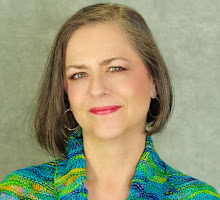
An Interview with...Stephannie Tallent

Once a week I post  interviews with interesting designers about their insights on their experience of working in the Knitting industry.  I’ve noticed that every designer makes their living in a slightly different manner bringing their own unique presence to the Knitting world. 


You can find Stephannie here and here.


Where do you find inspiration?
Sometimes I find it while learning new techniques, stitch patterns etc – I’ll learn or see something really nifty and want to incorporate into a design. What I’m starting to do more now, since I’m focusing on collections as opposed to single patterns, is to decide upon an overall theme, create a mood board (this part is really fun for me), then go from there.  The themes come from all sorts of things, but of the three I’m currently working on, one is an architectural and design style, one is inspired by a particular film director, and the other an area and time period.

What is your favourite knitting technique?  
I love cables and Bavarian twisted stitches best – no surprise there!  But I also like stranding and lace.

How did you determine your size range?  
For women’s sweaters, I try to offer XS-3X.  That sometimes means having a multitude of charts & stitch pattern variations to keep things proportional.  I’ve gotten a lot of good feedback on having larger sizes (and for modeling the sweaters in larger sizes).


Do you look at other designers’ work or are you afraid that you will be influenced by their designs? 

I sometimes do.  I don’t worry about being influenced.  It’s fun to see what other people are coming up with.  It’s gotten to be more a matter of lack of time.  I am trying to do more book reviews and participate in more blog tours, so I do get to see more that way.

How do you feel about the so called controversy of “dumbing down” patterns for knitters?  
Hm.  I get the impression that the more popular patterns are simpler (as well as free), at least when you look at Ravelry and the popular projects. However, I hope and believe there’s a market for intermediate patterns.  Having said that, I really don’t like classifying patterns as beginner, intermediate, etc.  I try to list skills required for my patterns rather than classifying them.

How many sample/test knitters do you have working for you or do you do it all yourself?  
I just graduated to having sample knitters!  Right now I have 2 fantastic people giving me a hand with samples.  I also have a group of people who’ve tested for me in the past who are actively testing new patterns.


Did you do a formal business plan?  
I have a plan that outlines goals, design plans, etc.  It includes some information regarding advertising and marketing, but it’s not a business plan per se.


Do you have a mentor?  
Not formally.  I had one assigned while AKD was still around, and she was very helpful.  I have several other people of whom I can ask questions.

Do you have a business model that you have emulated?

No.  I think this business – designing – has so many options right now.  It’d be nice, honestly, to have some resources with specific examples on this.  Shannon Okey’s book (The Knitgrrl Guide to Professional Knitwear Design) is extremely useful, but it doesn’t (and can’t) cover everything (and it’s already 254 pages!).

What impact has the Internet had on your business?  
Well, I can honestly say I wouldn’t have gotten into this without Ravelry, let alone the Internet.  

Do you use a Tech Editor?  

Absolutely.  I tech edit myself, and I swap tech editing with a couple other designer/editors.  I would never dream of releasing a pattern without it being seen by an editor.  I think when you’re designing a pattern, you get into it so deeply that your eyes just gloss over errors, typos, etc.  Maybe, just maybe, if you sit that pattern on a shelf and don’t look at for several months, then work on a bunch of things in between, you can go back and edit it, but…

How do you maintain your life/work balance?  
Not very well; it’s something I need to work on.  I consider myself a ‘laidback Type A’ – kinda like in Harry Met Sally, when Harry’s telling Sally she’s the worst sort –  high maintenance who thinks she’s low maintenance.  Working from home, if I’m home I feel like I should working, and there’s an endless list of things to do ancillary to design work, let alone all the designing and knitting.  

How do you deal with criticism?

Ugh.  Not well.  I take it to heart.

How long did it take for you to be able to support yourself?  

Hah.  I’ll let you know in a couple of years, if ever.  Honesty, I make more in a couple days of vet work than in a month of design work and tech editing.

What advice would you give someone who wants to pursue a career in knitting?
Learn as much as you can about your chosen area, and keep learning.

Be in a situation where you don’t need to rely upon any income from it (whether that means you have a second job, someone who supports you, you’re retired otherwise with enough savings, etc).


Wednesday, July 13, 2011

Make it Flatter

The schematic


The sweater


I've had two different questions come up recently about the same sweater silhouette pictured above. Question one was regarding what figure type does this sweater flatter? Some Knitters think that the way this garment hangs is very flattering due to the long diagonal lines that the front creates. Others think it makes the wearer look heavy, and wanted to know how to determine if it would look good on them. In terms of figure flattery the long diagonal lines should be flattering, however for this silhouette the factor to consider is the fullness of the torso. If your torso curves out away from your spine it is unlikely to make you look your best. If you have a midsection that is straight and perpendicular to the floor the garment tends to drop from the shoulder over the bust-line and hangs straight down. There is a space between the wearer and the sweater at the front. It therefore can take advantage of the long diagonal lines, especially from the front view. On a rounded torso the diagonal line advantage is canceled out by the viewers tendency to see relationships of the body to the garment. It can look like the garment is too small and is pulling open because of a sizing issue. Remember that the pattern photo has been taken on a tall, very slim model  which is why most Knitters do not foresee this potential problem when they choose the pattern.Your posture can also have an impact on the amount of space between the garment and the body so assess by looking at both your front and side views in a mirror.

If you have already made something like this try wearing it with a darker garment as an under layer. The torso is more likely to look as though it is receding and that will make the wearer look slimmer.

The other question has been "Why is the schematic wrong?" The schematic is inaccurate due to the technical execution of the garment. Every one of the examples that I was shown was a pattern with garter or seed stitch borders that had been knit at the same time as the garment. These stitch patterns make great borders as they lay flat but typically they do not match the row gauge of the body of the sweater. That means that the border is longer at the outside edge than it is at the side where it meets the garment. If you want the fronts to hang straight, a border that is picked up and knit separately or knit and sewn on will work better. Normally you would work with a smaller size needle when creating the bands separately. An alternative partial solution would be to slip the first stitch of every row to tighten up the edge of the border, that will stabilize the edge but it is still going to be longer than the garment. 

I have one more slightly fiddly fix. You can still knit the border at the same time with a set of smaller DPN's, (be sure to choose a non-slippery needle that won't slip out of the work). It will create a firm edge with no join between the band and the body of the garment. It means that you will switch between your regular needles and the band needles as you reach the borders of each front section. Just let go of the needles not in use, in the same way that you would in a circular project with DPN's. 

To determine the best possible choice of size for the DPN's.... you need to do a swatch. But you knew I was going to say that didn't you?

Monday, July 11, 2011

How to Make Yarn Stitch Markers


I've been making yarn stitch markers lately because I've gotten so frustrated with the tiny ring markers popping off of the smaller size needles. I'm starting a lace shawl and I needed two different colors to mark the borders and center bits from the basic stitch repeat.

Here how I make them. I used a heavier weight yarn in these samples for the photography, however I normally use fingering weight leftovers.  I also recommend using a wool yarn as opposed to any slippery yarn that the knots can work themselves out of.

Fold the yarn to create a loop

Make a loose knot by crossing the yarn strands from the ball over the folded loop.


Pull the folded end through the loop to make a knot

Place it on a needle and snug the knot up to the needle

The completed knot

Repeat until you have more stitch markers than required.

Trim the excess yarn, leaving a short tail so that the knot will hold.

I always make extra's to put in my project bag. I also make more than one colour to mark off different sections of the work. Use a needle one size up from the project needle to create markers which are a little loose on your needle. If you do use a yarn that knots slip out of you can put a drop of fray check or clear nail polish to secure the knot. Just be sure to let it dry thoroughly before putting the markers on your needles.

Friday, July 8, 2011

Being an Entrepreneur Means Working Any 16 hours a Day You Want!


I read the title of today's post a while ago and laughed at the time, unfortunately I don't recall the original source but I can attest that it is true. 

A little while ago at our Pro-Knitters meeting we talked about the fact that we frequently get questions from others about how much work do we really do? One member told us her friend was shocked to hear how many hours she puts into her business. I personally work more hours a day than I ever did when I was working for someone else...and yes some of that is knitting time. Unfortunately there is no way to do this without spending many hours knitting and swatching. Some of my knitting is done right in front of my computer while I write or chart step by step what I'm doing. Some is done in front of the TV, so that knitting is often worked on in the evening and on weekends when my husband is home. 

So the question is why do we do this? 

I realized some time ago that I'm most content when I work a lot. On the days that I goof off and put in fewer hours, I find myself feeling vaguely dissatisfied at the end of the day. I've discovered that this work is essential to my happiness and it allows me a level of creative expression that I could never get any where else.  I haven't written much about the search for fulfillment part of my blogs title page, however it is clear to me that that's exactly what I'm getting from the work I'm doing.

In essence - this means that my 16 hours a day schedule will continue.


Wednesday, July 6, 2011

Knitting Maxims, Myths and Personal Rules


Have you ever noticed that common maxims that are true often have an opposite that is also true? 

Look before you leap versus he who hesitates is lost.

Absence makes the heart grow fonder versus out of sight out of mind. 

Deeper analysis tells us that while both are true we often need to look more closely to understand why that is the case.

As an example this quote: "Absence diminishes mediocre passions and increases great ones, as the wind extinguishes candles and fans fires." Francois de La Rochefoucauld

Here's my list of knitting maxims, myths and personal rules that I hear frequently. The personal rules are the most dangerous, leading to many a knitting disaster. You will notice a few that are exact opposites. When you are having trouble with your knitting projects you might want to rethink some of these, especially the personal rules.

I don't need to do a swatch. I have perfect gauge.

Row gauge doesn't matter. 

Row gauge is critical to success.

But I'm always a size "X"!

Only old ladies knit.

Only cool young hipsters knit.

That you will be the only knitter in the world that can make stocking stitch edges that will not roll.

Yes - I can knit that item in the (extremely short) specified time. 

Knitting is easy.

Knitting is hard.

You must hold your needles in the correct way.

There is no one single way to hold your needles.

I only knit with....(fill in the blank with a needle type or yarn).

You must complete every project.

You must abandon projects that aren't working.

Monday, July 4, 2011

Hard Work is it's Own Best Reward


The last year has proved the truth of  the title of this post over and over again to me. It's been a year of phenomenal personal growth. I've worked (played with yarn) many more hours a day than any other time in my life. I'm so focused on knitting, designing and teaching that I dream about it almost every night. 

I'm also very surprised to discover that I'm a writer as well. I started this blog as a way of tracking my progress since leaving the corporate world. Now I catch myself writing posts in my head and I rarely go anywhere with out a pen and notepad to jot down blog topics and design ideas as they occur to me. 

This quote proved to be very illuminating to me. "A writer writes not because he is educated but because he is driven by the need to communicate. Behind the need to communicate is the need to share. Behind the need to share is the need to be understood." Leo Rosten

I think the sharing part is what's driving me most right now.

My reading has changed as well, about half of it is now business related. I still love my mysteries and I can hardly wait for my library to get the newest just published Inspector Wexford. I'm working my way concurrently through (in order) Miss Marple, and Poirot. Since I'm almost done with Wexford I'm starting Colin Dexter's Inspector Morse from the beginning. The nonfiction part of my reading varies widely from lots of knitting technique materials to positive psychology, fashion, marketing and any other topic that piques my interest. 


What are you reading, any good suggestions?

Friday, July 1, 2011

A Field Guide to Knitters Part 4

Knit Picks Project Bags


Part 1 is here. Part 2 is here. Part 3 is here.

Fashion Knitters (Effingo knitcreo)

Description 
Fashion Knitters typically focus on knitting accessories and garments. They prefer their projects to be mainstream but slightly unique with an "edge". They have little interest in home decor projects or knitting for children or babies. Colour choice is carefully considered as they must have something in their closet that the knitting will worn with. Their closets and drawers are often over stuffed with clothing and accessories. They are likely to employ specific closet strategies, either grouping by colour or garment type to assist them in finding specific items in their vast wardrobes. Those who live in large urban areas wear a lot of black. They frequently wear matching accessories. The fit and flattery of every project is assessed and modified as necessary for the individual.Their knitting magazine numbers rival only their stash of fashion magazines


Habitat and range
Fashion Knitters are likely to be found watching "What not to Wear". They shop everywhere assessing high end and low end sources for upcoming trends.They love going to movies that are costume dramas as they know next seasons runway fashions will be impacted if the movie is a hit.


Vocalizations
This Knitter often answers to the name "Fashionista". They always understand phrases like "zebra is the new leopard." Fashion magazines provide updates about the latest trends that are discussed in groups of fashion Knitters.

Social Knitters (Amicabiliter knitcreo)

Description 
Some variates of this Knitter only knit at social gatherings. They will pull out the same pair of socks at every grouping because they don't knit at any other time. The other more common variety is an obsessive Knitter who has a different project at every occasion. They are usually working on multiple projects, as not all are suitable to carry away from home. Socks are a common carry around project due to their small size. They are frequently seen carrying double pointed knitting needles tubes.

Habitat and range
These Knitters are often observed at coffee shops, yarn stores and guild meetings. In Toronto they have an annual subway Knit-a-long event. You can learn more here.

Vocalizations
Social Knitters have vocalizations common to all Knitters; what are you making, where did you get the yarn, what's the fibre? Most can list off all of the items on the Knit Picks travel and storage section by heart. The merits of the various knitting bags are often debated and most of these Knitters own many types.

Field Guide to Knitters:
Part 1
Part 2
Part 3

Part 4
Part 5