Friday, October 1, 2010

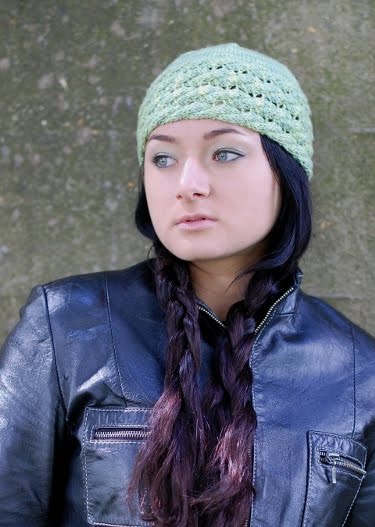
An Interview with...Woolly Wormhead


Once a week I post  interviews with interesting designers about their insights on their experience of working in the Knitting industry.  I’ve noticed that every designer makes their living in a slightly different manner bringing their own unique presence to the Knitting world. 


You can find Woolly here and here on Ravelry.

Where do you find inspiration?
Inspiration comes from all around me – I'm very much a 3D person and have acute spacial awareness, so even the simplest of shapes takes on a sculptural form in my mind. I particularly love the shapes of shells and succulent and sea creatures; forms that come from nature that have the most amazing clarity and mathematical structure. And circles and spirals. Anything with circles in or on gets my attention!


What is your favourite knitting technique?
Oh, I don't think I have a favourite. I love seamless knitting, but that doesn't have to mean knitting in the round. I love the challenge of kitchener stitch and have used that a great deal in my work (my first book, 'Going Straight' was a collection of Hats knit sideways and grafted) If a technique can give me a professional finish or perfect shaping I'm pretty much going to love it. I'm really into alternate cable cast-on as a cast-on for ribbing's at the moment, as it's so quick and extremely versatile. 


How did you determine your size range?

I include as many sizes as possible, normally a minimum of 3. I have a personal design rule, in that all of the sizes must come out of 1 skein or 100g of the given yarn. This often means that I'll reconfigure a design if the yardage won't work for all sizes. There's a bit of a bee in my bonnet about the general sizing of Hats, in that one size does not fit all, or even most. I myself come from a family of large headed people, and after years of finding most Hats (even men's!) too small I've come to appreciate the value of a graded Hat pattern.


Do you look at other designers' work or are you afraid that you will be influenced by their designs?
I do look at other Hat designs, as I like to see what else is going on in my area. I do worry that I may absorb someone else's idea and do try to avoid designing something that looks like the work of another, but at the same time I know that's near on impossible to achieve. We all absorb ideas and inspiration from the things we see, consciously or not, and it is how the design process works.

How many sample/test knitters do you have working for you or do you do it all yourself?

I have a small army of test knitters, and we operate through a private chat group. They don't all knit each pattern all of the time, but every size is test knitted. They are a fantastic team.

Did you do a formal business plan?  

Nope. My business has grown organically, and I'd like it to stay that way! I appreciate that a business plan will work for many people but they don't work for me.


What impact has the Internet had on your business?
My business wouldn't exist without the Internet. It grew from blogging and my love of knitting, traveling and Hats. I received so much support and encouragement from my readers and I can't thank them enough. There's a new book out called 'Brave New Knits' which is all about the impact of the Internet on knitting and knit designing and I'd really recommend it.

Do you use a Tech Editor? 

Absolutely! I've started using 2 for each pattern, as it helps tighten the net that little bit more and prevent errors getting through. I have a few different editors that I call upon, and each has a different perspective to bring to the pattern.


How do you maintain your life/work balance?
With difficulty! This is the next thing on my list to sort out, as work is increasingly creeping into my family time and it needs readdressing. It is difficult to divide; customer service often dictates anti-social hours, and most creative jobs won't fit into a 9 to 5 regime. When the ideas strike, they can't be ignored.

How do you deal with criticism? 

I'd like to say after 5 years of being in this business that I've developed a thicker skin, but the truth is that some days criticism still gets to me. Constructive criticism is welcome and I'll always ask for feedback. It's the random things flown out without much thought that sometimes throw me off track. Mostly though I remind myself that we all have entirely different tastes and priorities and provided the majority of my customers are happy and that I'm doing the best I can, then I'm happy. 


How long did it take for you to be able to support yourself?

About 3 years? Currently, what I earn from knit design supports my family, though we do live a very simple lifestyle that can afford us both to be at home with our son and manage on a low income. It's incredibly satisfying being able to live off my wage, but it's a huge responsibility too.


What advice would you give someone who wants to pursue a career in knitting?
It's tough, but it can be done. Know your market and your product. Don't design what you think people want, design what you need to design – your work will be that much stronger for it. Don't feel you have to be published in X, Y or Z magazines to get a good reputation, and don't submit a design for the sake of submitting – if these paths work for you then great, but they don't work for everyone. Without sounding like an old hippy


Wednesday, September 29, 2010

Knitting and Tattoos

I'm not really a big fan of tattoo's but it seems like getting one is a trend amongst women of a certain age. Of course we all know how very popular they are with generation Y as well. If I was ever going to get one some of these knitting related tattoo's just might be the one for me. What do you think?


Monday, September 27, 2010

New Shawl Pattern up on Patternfish

Introducing the Tiers of Lace Shawl.


I created this unusual tiered shawl after seeing a similar silhouette sewn from organza. 


The upper tier grows with additional yarn over stitches that have no corresponding decreases over 3 pattern repeats. The second tier starts, after the stitch count increases over two rows, by multiple yarn over stitches. There are more details over here on Patternfish. 

A big Thank you goes out to Deirdre who knit the sample.


Friday, September 24, 2010

An Interview with...Leigh Radford


Once a week I post  interviews with interesting designers about their insights on their experience of working in the Knitting industry.  I’ve noticed that every designer makes their living in a slightly different manner bringing their own unique presence to the Knitting world. 

You can find Leigh here and here on Ravelry.


ETA After I posted Leigh's responses she realized that she had accidentally sent me the draft instead of the completed version. I updated the answers as of Monday Sept. 27th 


Where do you find inspiration?
Everywhere.  Nature.  I love French, Spanish and German versions Elle Décor.
  
What is your favourite knitting technique?
I love to combine intarsia and felting.

Do you look at other designers' work or are you afraid that you will be influenced by their designs? 
When I’m working on a book, I go out of my way not to look at current magazine and new books.  
 
How do you feel about the so called controversy of "dumbing down" patterns for knitters?
 

This is a tricky one to answer…as a designer I want to include techniques that will make the design more interesting or make the garment more flattering, but including these often raises the skill level and results in more questions from knitters.
 

How many sample/test knitters do you have working for you or do you do it all yourself?
I do most of my own knitting. I like being able to respond immediately to what’s happening on my needles and make adjustments as the work progresses.
 

Did you do a formal business plan?
 

No.

Do you have a mentor?
 

I had the good fortune to begin my knitting career working at Interweave Press and had the benefit of learning from professionals such as Ann Budd, Melanie Falick, and many others.  I also have the support of family and friends that believe in me and my work.

Do you have a business model that you have emulated?

 No, but I keep remembering a piece of advice I heard Gert Boyle, President of Columbia Sportwear say was the key to companies success:  “Early to bed, early to rise, work like hell and advertise.”

What impact has the Internet had on your business?
 

Overall I think the internet has had a tremendously positive impact.  It provides an opportunity to market my books and individual pattern sales on my website, http://leighradford.com/. 
I’m just starting a blog, http://leighradford.wordpress.com/, marketing a line of market bags constructed from upholstery remnants and other fabrics that would otherwise end up in the landfill.  I’m in my thesis year completing my BFA in painting. The blog will also have an occasional post of what I’m working on at school.  I’ve been bringing my knitting background into my painting and sculptural practice with some pretty fun results.

 
Do you use a Tech Editor?
 

Yes.  Using a Tech Editor is a mandatory step in publishing a pattern.


How do you maintain your life/work balance?

As a self-employed, creative person who loves to make things, balance can be elusive. My creative practice is more with who I am, but time away from “work” even if work is something you love, is crucial.  With being in school now, my down time come in a couple hours here or there rather than a full day off.  I make a point to get to the art museum gallery or get outdoors and go for walk.

How do you deal with criticism? 

It’s never fun with someone posts a negative review.  At first these were hard not to dwell on. I’m designing because I’m compelled to do so, not to please anyone else. I’m creating patterns for projects that I like and enjoy making. If I can’t handle the occasional snarky comment about my work, then I’m in the wrong business.

How long did it take for you to be able to support yourself?
 

I have had to diversify…I freelance in graphic design and marketing as well as I haven’t found knitwear design to be sustainable on its own.


What advice would you give someone who wants to pursue a career in knitting?

I think the biggest shift for me was dealing with what was once a hobby, was now a job and that raises the bar and requires more of you than when you are knitting for yourself.

Design work that you love and enjoyed making and resist to urge to try to design for the latest trend.  Knitting is such a tactile experience, we want to enjoy the process as well as love the end result.  I think when you can combine these two things, you’ve got a successful project.

Most of the designers I admire have a strong sense of garment construction and know how to work with knit fabric so that if flatters the body.  I think this is an extremely versatile skill.  I don’t have this background, but wish I did.  I have begun to make paper mock-ups of new designs and write my pattern with my paper pattern at hand.

Plan to spend 50% of your time on administrative tasks.  What I mean here is looking for freelance opportunities such as submissions to calls for design from publishers and/or yarn companies, invoicing, keeping up with your blog, etc.

Last, but not least, work hard and have fun! 


Wednesday, September 22, 2010

KnitTrade - I was there


Last Saturday I attended KnitTrade, the brand-new trade show started by Deb & Lynda Gemmell  of Cabin Fever fame.


As described by them "This is a trade show for people working in the knitting industry. It’s primarily a platform for smaller, independent wholesalers to show their goods to shop owners. Smaller, independent companies offer unique products and accessibility to the owner. Come and meet us. If you are a designer, hand-dyer, pattern writer or a knitting industry worker you are welcome to be a vendor and sell your product and services or register to come in and shop. A Vendor Permit or other proof of business is required. Shop owners and their staff will need to register. There is a small fee which will be returned to you at the door as Vendor Bucks to spend on the floor. And yes, there will be shopping. Vendors will be happy to sell you product on a cash and carry basis as well as take orders. We hope you will join us in promoting our industry."


I attended as a designer and went with my friend Mary Pat who was working a booth for Lucy Neatby. I spent some time last week preparing a handout which gives my bio and a list of workshops that I can teach. I gave it out to anyone who expressed interest so hopefully it will lead to some teaching opportunities. I spent some time at the beginning of the show wandering the floor and enjoying conversations with many of the vendors who took booths. I love how so many people in the knitting world are ready to chat and share information that is so educational for me as a newbie. My vendor bucks were spent on hand dyed yarn from the Painted Fleece. I also took the opportunity to collect business cards from people who said they will do interviews here so watch for those in the coming months. There was a good variety of business's there so I'm planning to add to the designer and dyers series.


Later on I joined Mary Pat at Lucy's booth and helped out there whenever she was already busy with another visitor. Lucy is an amazing designer, very prolific and has an outstanding reputation as a teacher. She is also representing a yarn from Denmark called  Kauni and she has developed some gorgeous patterns that take advantage of the very long colourways in each ball.


The show was very successful attracting a large room of vendors and many buyers from all over Ontario. I expect that next year will be even bigger and better! 


Many thanks to Deb and Lynda for including me in their very first KnitTrade.

Monday, September 20, 2010

Knit Your Very Own Dog


Knitting designers are very imaginative. I recently came across the latest book of two British designers, Sally Muir and Joanna Osborne. It's a very amusing take on knitted toys.


There is an interesting article about the duo here in the Telegraph. It turns out that they have an interesting past first coming to notice when Lady Diana Spencer wore their black sheep jumper to the polo at Windsor in 1981 during her engagement. The red jumper with one black sheep in a flock of white had been a present from a friend.The iconic jumper is now part of the permanent collection at the V&A. 


I can see the advantages of the knitted doggies - no dog hair on the furniture, no walking or doggy dirt cleanup and no Vet visits required. 


You can find their website here and see some of  their more traditional work as well.

Friday, September 17, 2010

An Interview with...Stephanie Earp


Once a week I post interviews with interesting people about their insights on their experience of working in the Knitting industry.  I’ve noticed that every one of these individuals makes their living in a slightly different manner bringing their own unique presence to the Knitting world.

You can find Stephanie's yarn here and she is on Ravelry here.


Where do you find inspiration for your colourways?

I started out with a small line of very saturated bright colours, and since then my inspiration comes mainly from trying to create colourways that work in tandem with them. I don't tend to think about my colourways in isolation, I'm always thinking about how they would pair up with something else. I love colour work - even it's just stripes - so I think that prejudice comes through in my dyeing choices.

 
What is your favourite dying technique? 

 
It's hard to describe - my technique is a combination of dip dyeing and kettle dying. I used to do a lot of hand painting when I started dyeing and I still love it, but for me, I found it very difficult to get consistent colourways and saturated colour using that technique. I really wanted to be to provide consistency - if a customer bought a yarn from me year ago and decided to come back for more, I want the skein they get to be close enough that they can incorporate it into the same garment. It's such an obsession for me that I usually put aside odd dye lots for my own use and won't sell them.
 
How do you choose the fibers that you work with?

I work with animal fibers because I'm dyeing out of my house and the acid dyes that get such great results on wools and silks are relatively harmless. I'd love to expand into plant fibres and artificial fibres - one day when I'm rich and famous and have my own dye studio away from home.

 
How did you determine what weights of yarn you stock?

I started out with sock yarn because, well - people are really into sock yarn right now! I wonder if the craze will last, and I hope it will because you can kind of go nuts colour-wise when stuff if meant for feet. I also dye lace weights because I love working with it, and I recently added a fingering weight wool that isn't meant for socks - it's more of a Shetland 2-ply, and I'm starting to design stranded patterns to go with it. I don't do worsted weights because they are expensive to stock and I tend to prefer solids and heathers in worsted and bulky weights. I may change my mind on this eventually, but for now I'm sticking with the skinny stuff.

 
How do you come up with names for your yarn?


Ha! Good question. All our yarns are named for elements on the periodic table. Well almost all. My partner Pete came up with the idea, and we decided our regular colourways would be elements, and our special one-offs would be molecules. A few of the one-offs have become regulars and kept their molecular names. I named one colourway - a very dark blue - Carbon, but Pete lobbied for Carbonite, the stuff Han Solo gets encased in in 'The Empire Strikes Back', and it stuck.

 
Could you give us an idea of how long the process is to dye a batch of yarn and prepare it for sale?

It depends on my goals - when I'm getting ready for a show, I can crank it out. I can probably dye about 35 skeins an hour if I push myself, then a day or two to dry, depending on the weather, then I re-skein, checking for knots and flaws, then packaging it with labels... I'll put it this way, if I get a special order or someone wants more of a colourway than I have in stock, I can usually get it out the door in 3 days.

 
Do you look at other dyers' work or are you afraid that you will be influenced by their yarns?


I do look at others dyers' work and I'm as much of a yarn addict as the next guy, but I've never tried to replicate another dyer's work. I think that because of the way I approach filling out the colours in my line, I'm more likely to look at paint swatches than yarn for my next inspiration. I have sometimes spotted colourways similar to ours in other lines and I get this moment of fear, like 'why do I bother, look at this beautiful yarn that someone else made' but usually after closer inspection, I'm relieved to see that there is something unique about our stuff. Most semi-solids rely on differences in intensity - ours have different hues. It's subtle but it makes a difference.

 
Are you a knitter as well?


Oh boy am I. I knit almost constantly. I'm also pushing myself to expand my designing. I've always designed for myself, but I'm now writing patterns, and grading them for size. Which is like going back to school and majoring in math. It hurts, but it's worth it.

 
Did you do a formal business plan?

 
I would say I did an informal business plan. Pete and looked into pricing and did a projection of what it would cost to start up, how much money we were willing to lose in the first year and what goals we wanted to hit. Now that we're in our second year, we check in about once every four months to see how we're doing. Our goal now is not to lose money, which can be a tightrope act sometimes, but we manage by keeping inventory quite low.

Do you have a mentor?

S'n'B type of person - I can't knit and talk at the same time. Pete is a great partner - in business and love - but he is not a knitter. If anything, starting the business helped me get to know the people I admire in the knitting world. Kate Atherley of wisehildaknits.com who has designed patterns for us, Glenna C of knittingtostaysane.com who has used our yarns for her patterns - and in passing, Stephanie Pearl McPhee, Lucy Neatby and many other awesome knitters who have stopped by our booths at various shows. Maybe I should place an ad on Ravelry: Mentor Wanted!

 
Do you have a business model that you have emulated?

Not really - I admit we sort of make it up as we go along. Which is not advice - just a fact.

 
What impact has the Internet had on your business?


I would not have even considered this business if it wasn't for the Internet. We don't wholesale and we don't have a storefront, so the Internet is it for us. If the Internet dried up and disappeared tomorrow, I'm afraid we would too.

 
How do you maintain your life/work balance?


I'm not sure I have really. Van Der Rock is not my full-time job by any stretch, in fact it sort of comes in third of my three jobs. It's the job I do at night and on weekends and in the few hours I have off between working for a local film festival and writing a twice-weekly television column. The nice thing about being a TV critic is you can knit while you work.

 
How do you deal with criticism?

I tend to shrug it off. The great thing about the 'net and the increased accessibility of hand dyed yarns is that if you don't like what I do, you can go elsewhere. And the thing is, when you are confident that you've tried your hardest and done your best, criticism kind of bounces off you. I've had people tell me our sock yarn is too expensive, but I've done the math and that's what it costs. Some people will see the value and pay for it, others won't. Criticism that I do take seriously is something about the quality of the product. I had a colourway that I got multiple reports about - it was running like crazy in the blocking process. I worked on my process until it didn't run. That stuff, I always want to hear about.

 
How long did it take for you to be able to support yourself?

 
Ask me again in ten years.

What advice would you give someone who wants to pursue a career in hand dying yarns?

Keep your day job? No seriously, a few things. Don't try to compete on price - you'll lose. Charge what your work is worth and if it's good, you will find customers. Use your yarns - factor it into your business plan that you get to keep a bunch of this glorious yarn you dye for your own projects. You will learn more about what you are doing right - and wrong - from using the yarn to knit, weave, crochet, whatever - than from anything else. If you can make beautiful things from your yarns, others can too - and often photos of your finished objects are the best ad you can give your work.