Friday, July 2, 2010

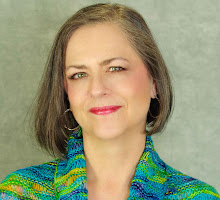
An Interview with...Kate Atherley


Once a week I post interviews with interesting designers about their insights on their experience of working in the Knitting industry. I’ve noticed that every designer makes their living in a slightly different manner bringing their own unique presence to the Knitting world.


You can find Kate's blog here and you can find her here on Ravelry.


Where do you find inspiration?

I love traditional techniques and patterns, and I enjoy reinterpreting them for modern tastes. For example, I have used gansey stitch patterns and construction for socks; and I love using very traditional Shetland stitch patterns in modern colours.

What is your favourite knitting technique?

I'm going through a lace phase at the moment. If you're asking about straight up technique, I would have to say my most favourite and comfortable technique is working in the round on dpns. It feels so very natural.

How did you determine your size range?

Being a petite sort myself, I always ensure that I design petite-friendly sizing. For women's garments, I tend to start with a 30 inch bust measurement and go from there. A pet peeve of mine is socks that come in only one size - I have a size 6 foot, and a very good friend of mine has a size 11 foot - one size fits all is a filthy lie! If we're going to the trouble of knitting something, it should fit well and precisely. For garments, my size range has been greatly increased through my work with Knitty - Knitty insists, very fairly, I think, on a broad range of sizes.

Do you look at other designers' work or are you afraid that you will be influenced by their designs?

This is an interesting challenge. After all, there are only so many stitches and constructions and techniques. I had an experience just the other week that shows that even if you don't look at other designers' work, you might still be copying. I had been working on a beginner-friendly lace shawl, and I landed on a stitch pattern that I thought was manageable and interesting, and the shawl was going very well. When it came time for the edging, I chose one of my favourite simple but elegant patterns, and was happily knitting away. A few days later, I was browsing some of my favourite blogs, and found a friend of mine working on a previously-published shawl that is almost exactly the same as the one I was working on. So I think it's a risk you run either way, producing something that looks like something else.

How do you feel about the so called controversy of "dumbing down" patterns for knitters?

Kate emailed me about this question to ask (Can you clarify this question for me? I'm not sure I know what you are referring to. I do want to discuss this, however - I have some very strong opinions on how patterns are written. If what you are referring to is taking something that's written in the style of EZ or the European magazines (one size only, that sort of thing), and turning it into a recipe that's detailed, clear and helpful for knitters of all levels, then I would have to say that this is a wonderful development! What's the controversy?)


I emailed Kate back "The dumbing down question was a result of two different conversations with 3 BIG name knitters. The choice of words was a result of one designers actual words. The general thought-line was that while Knitters want really inexpensive or free patterns they strongly criticize any pattern that does not explain every technique individually. So where does a pattern end and a technique lesson begin? It was also observed that some Knitters won't buy reference books or even go online to look up techniques. The term "spoon feeding" was also tossed around. The question was included because of those conversations which I felt were a little skewed to the negative viewpoint.To be honest I was just curious how the majority of designers feel about those issues."

Kate says "I tend to see the other side of things... patterns that are incredibly vaguely or poorly written. This is the problem with a lot of self-published patterns online. I had a student in one of my classes pay $5 for a pattern on Etsy that didn't even have gauge info. And there's a lot of designers out there who are self-publishing who don't bother getting it technically edited or proofread. We're doing knitters a disservice if we let bad patterns go out there - if a pattern doesn't work, knitter are more likely to assume it's their mistake or issue, and we're risking them giving up knitting entirely. I have spent two hours (paid) with a student recently who needed help deciphering a pattern published on the Craft Yarn Council of America site that's very poor. Take a look: http://www.craftyarncouncil.com/oct_knitproj.html See how it states cast on 51 sts right near the top? So that's what my poor knitter did. Except that you need to cast on 99 sts, and it says that further down.

(This sort of thing makes me very cranky.)

It's a very interesting discussion - I can't say I've seen a lot of knitters being totally helpless or being unwilling to look stuff up. The internet has made this so much easier, so they don't have to buy books or do any "difficult" research, so it's all a bit more accessible. I do see knitters needing help with techniques, absolutely, and I really don't think we can explain absolutely everything in a pattern - but for the most part, I think the industry errs on the side of not explaining enough.

My livelihood depends on people enjoying this hobby, and if the patterns are poorly written or difficult to follow, they won't enjoy it, and I'm out of a job. I'm happy to provide extra info to keep 'em knitting. Will I explain how to knit and purl? No. But will I explain how to do a Russian Lace bind off, or which increase I mean when I say "M1". I also teach a Pattern Reading class, in an attempt to help knitters feel more confident about tackling a pattern.

Again, though - I haven't had the same experience as these other designers. Maybe I've not had enough years of the same repetitive silly questions, and maybe because I started in this industry as a teacher, I'm more forgiving... ?

OK, enough ranting."

How many sample/test knitters do you have working for you or do you do it all yourself?

I have a group of three or four knitters I call on to help me out, but for the most part I do the work myself - knitting the item is the way that I work it out.

Did you do a formal business plan?

Formal? Not business school formal, but I do have a plan. Like so many others, knitting started as a sideline for me. When I realized that I couldn't manage my two lives, I built a plan for what work I'd need to do to bring in regular income and grow my business. Am I keeping to it? Mostly! Some stuff is going faster, some slower, but at least I have goals.

Do you have a mentor?

Not in the knitting world specifically; the man I consider my mentor comes from my old like, back in the technology industry. I do make a point of exchanging ideas with a few of my favourite LYS owners - I have learnt a lot from them, and value greatly their openness.

What impact has the Internet had on your business?

A lot of business is still local - I do a lot of teaching at stores in and around the Toronto area - and so that's not specifically Internet-dependent. That having been said, as a teacher, I love the power of the Internet as a communication and teaching tool - I definitely use my blog as a teaching support, and love the other references out there like knittinghelp.com that I can refer my students to. And as a designer, I love that I can publicize and sell my designs all over the world. And I love that I can stay in touch with other designers and shops and publications and friends.

Do you use a Tech Editor?

God yes! I sometimes even deliberately use a non-technical editor - that is, I have someone who isn't a knitter, or isn't a strong knitter, to review my patterns to see if they make sense. My hubby has proofread a lot of my patterns, and he couldn't knit to save his life.

How do you maintain your life/work balance?

I do a terrible job at this! But given that a large part of my work - specifically, the actual knitting - can be carried around with me, and done while in the car, or when out with friends and family in bars and restaurants, or when visiting, or at the game, or the movies, it's ok that I'm working all the time. My family and friends are very tolerant!

How do you deal with criticism?

I can learn from all feedback, positive and negative. Feedback about problems with a design, or a disappointing class, or a poorly written pattern is critical to help me improve what I do. There are times when someone may simply not agree with me. We all have a right to have an opinion, and I welcome any and all reasonably stated opinions - and I will likely have an opinion right back!

How long did it take for you to be able to support yourself?

I am fortunate that my partner has a steady job with benefits, so I can handle the vagaries and inconsistent flow of income that comes with being freelance in a creative field.

What advice would you give someone who wants to pursue a career in knitting?

The same advice I would give to anyone in any field: know your strengths and weaknesses. Use your strengths to help others, and get someone to help you with your areas of weaknesses. Me, I know that I'm great with the numbers so one of the things I do is technical editing; and I'm terrible at layout and photography, so I use others to help me with that.

Wednesday, June 30, 2010

Designer Secrets - The Drop of the Fabric


Occasionally I read postings on Ravelry about garments that "grew" after completion. My next pattern is for a scarf that gets longer once it is worn as it is a lengthwise design. I've included a note to warn the knitter about the difference between the flat and the hanging gauge.


I have a shawl that I made from a novelty yarn a few years ago and I wear it as a scarf as well because just turning it and letting it hang... completely changes its gauge. During the last poncho craze I tied two edges together with black satin ribbons and wore it as a poncho. Take a look at the photo at the top of the posting and the one just below for comparison. You wouldn't think a piece of knitting could change that much would you?


Drop is often a problem for many Knitters and the first time they encounter this property of knitted fabric it is an unwelcome surprise. The knitting lengthens due to the hanging weight of the fabric. It also becomes much narrower. On a garment the body inhibits this property to some degree but it means that sleeves can become too long and hems end up in unintended places. Shoulders can narrow on sleeveless tops or pull down being dragged out of placement by the weight of the sleeve. The amount of drop can vary and is due to the stitch pattern, the yarn fiber, the density of the knitting, the size of the garment and the direction of the knitting construction. The drop is more pronounced at the top of a garment than it is at the bottom meaning that the designer may use more than one gauge for the various parts of the design. A cap sleeve could be based on a flat gauge while the body might be based an a hanging swatch with weight added to simulate the weight accumulating over the length of the garment body.

Yarn substitutions of different fibers can create this problem on a pattern that would have had no drop with its original yarn choice. Patterns normally adjust for drop but the specifics are hidden between the details of gauge, the knitting instructions and the finished measurements and can lead to Knitter dissatisfaction with the end product. Samples are rarely knit in every size and that is the only way to be sure how drop will affect each one. Most samples are knit for 34" bust sizes so the adjustments for the larger sizes are done mathematically on a percentage basis. It may mean that the drop will be much greater on larger sizes.

Has this happened to you?

Monday, June 28, 2010

Knitty Yarn Roundtable


Last Thursday I attended my first yarn tasting event at The Purple Purl. It's put on by Knitty and was a great deal of fun. More than 25 Knitters assembled to test and comment on 5 different yarns. We all rotated around the shop from table to table knitting the yarn at each station and then each of us filled out a review with our comments on the yarn. The feedback will be collected and then posted to Knitty. Here's an example of the information they share.

The Purple Purl is in the east end of Toronto and I live in the west so I had not been into the shop before. I had seen them at both the DKC Knitters Frolic and the Kitchener-Waterloo Knitters Fair. The shop is lovely and is a cafe as well so you can have a drink and a snack while you ponder your potential purchases there. The staff is very friendly and relaxed and makes everyone feel welcome. They have a good amount of stock and a number of sample garments are displayed around the store. They also have a sign at the front which proclaims that they are crochet friendly as well.

As we moved around the tables I got to chat with a number of Knitters which of course is always fun to do. Most of the talk was of the G20 conference going on in the city. Our downtown has been heavily impacted by the security arrangements and a few Knitters canceled due to traffic restrictions. I also met Kate Atherley in person who is Fridays interview. Kate and I have had a number of email conversations so I was delighted when she suggested in one that we met for coffee to talk in person a few weeks from now. I didn't know she would be attending the event so it was fun to have a pre-meeting before our coffee date.

At the end of the evening there is a draw and I went home with a copy of The Alchemy of Color Knitting. There were a number of books, knitting accessories and skeins of yarn in the draw so everyone went home with something. I hope to attend this event again in the future as I really enjoyed it.

Friday, June 25, 2010

An Interview with...Shannon Okey


Once a week I post interviews with interesting designers about their insights on their experience of working in the Knitting industry. I’ve noticed that every designer makes their living in a slightly different manner bringing their own unique presence to the Knitting world.


You can find Shannon at
knitgrrlstudio.com

Where do you find inspiration?

It sounds cliched, but EVERYWHERE. I'll give you a funny/gross example: http://www.ravelry.com/patterns/library/exploded-view">Exploded View was inspired by frog dissections. The thought of 'opening up' the sweater to allow for some really cool user-friendly customizations was appealing, and then I worked out a way to make it function nicely as a pattern. I really love printed fabric, although I don't do a lot of colorwork knitting -- if nothing else, seeing new color combination's helps give me ideas for new ways to juxtapose color and texture.

What is your favorite knitting technique?

I love cables. http://www.ravelry.com/patterns/library/rivulet-2">Rivulet, my most popular sweater pattern, uses cables for its shaping, which is something I like to do as it's both visually interesting and functionally useful. I have plans for some more extensively cabled design patterns in my design notebook at the moment, it's just a question of when I'll have time to work on them.

How did you determine your size range?

I try to offer the broadest possible size range I can or, barring that, I write my patterns in such a way that they encourage the knitter to think and to do his or her own customizations for a perfect fit. When I was editing [UK-based monthly print knitting magazine] Yarn Forward, our size range was 30-50" on EVERYTHING, and we were making moves towards expanding the range even higher as I left. I'm not a small person, I am firmly on the plus side of the scale right now, so I really do sympathize with the majority of knitters who are in the same boat. I think it's important to offer a broad range of sizes so long as it doesn't have a material impact on the design itself.


Do you look at other designers’ work or are you afraid that you will be influenced by their designs?

Of course I do! I think anyone who says otherwise is being disingenuous. Even if you don't sit down and study other handknit designers' patterns, you can't help but be influenced by the designs you see in fashion magazines, on runways, etc. I don't fear being influenced by another designer's work -- I work my own way, I have my own process, and presumably so does everyone else. You can't help but come up with different end results. Similarities are usually the result of a greater overall trend at work; for example, the large number of 'infinity scarf'-type patterns last fall.

How do you feel about the so called controversy of “dumbing down” patterns for knitters?

I don't agree with dumbing down anything for anyone, and especially not knitters! Knitters are clever people. They do, however, consistently underestimate their abilities. I see this again and again when I teach, and it's very frustrating for me. In the larger scheme of things, I think that everyone who is providing patterns to the knitting world -- be they individual designers or large publishing companies or somewhere in between -- they need to acknowledge that publishing the same old thing over and over does no one a favor. My personal joke is that there are too many "50 Easy Projects for Size 50 Needles!" books out there and not enough Teva Durham/Norah Gaughan/etc-level books that challenge knitters and push the medium forward. I want to see less of the former and a lot more of the latter!

How many sample/test knitters do you have working for you or do you do it all yourself?

It varies. I have a few sample knitters who work for me off and on, and I've hired outside firms such as http://www.fairtradeknitters.com/">Fair Trade Knitters when a deadline did not permit doing all the work myself. I do knit a lot of my own samples but I'm actively working on moving away from that so I can increase my output.

Did you do a formal business plan?

I have a business plan but I'm not so sure you'd call it formal! A bank manager would probably fall over reading it. (Though, for the record, my bank manager did let me videotape a promotional video for my new book with $1000 in one dollar bills stacked up next to a garden gnome, so maybe mine's more open-minded than most). I find my accountant to be a very good source of pushes-in-the-right-direction when we do the taxes every year.

Do you have a mentor?

Yes and no. I've had mentors for specific aspects of my business and life as a designer -- for example, I call Jillian Moreno my 'fairy knitmother,' because she really helped me out when I was signing my first book deal contracts. I do, however, have a small private mailing list of other designers to call on when I have questions or problems, and that's been invaluable -- we can help each other out on tough problems, or even just serve as a cheering section for one another as needed. I also find that some of the other designer-focused mailing lists I'm on serve a mentor-like purpose, too, but only the private ones...no one will really open up on a public forum when the subject is touchy.


Do you have a business model that you have emulated?

No. I started full time design work in 2004 when I simultaneously signed 2 book deals at once (Knitgrrl, and Knitgrrl 2). I then went on to write, edit or co-author 10 other books. It's only recently that I've moved towards the single-pattern-sales model that is more common these days. If anything, I've done it the reverse way that one would expect!

What impact has the Internet had on your business?

The internet is and will continue to be a major part of my business. My knitting website split off from my personal one in 2004, and I was blogging about knitting on the personal site even before that. You could say I was an early adopter, technology-wise. Being a part of Knitty at the beginning definitely helped as well. And now, with Ravelry, and my http://knitgrrl.ning.com">online teaching website, I find the internet to be an integral part of the way I not only make my living, but also communicate with the knitters who make up my audience.


Do you use a Tech Editor?

Absolutely. I can't imagine NOT using a tech editor. That way lies ruin...

How do you maintain your life/work balance?

This is something at which I am very very bad, if you're looking at it from the outside in. My work IS my life, more or less. I am constantly thinking about it, constantly scribbling down notes to myself or sending an email about something or planning a new project, or... However: I have started a new "no computer on weekends" rule which my boyfriend calls "Shannon's Amish on weekends." This also encourages me to pull out the needles and experiment instead of concentrating on clearing my inbox and any number of other tasks I have to do.

How do you deal with criticism?

That depends on what kind of criticism it is. If it's warranted (there's a problem with a pattern, whatever), then I accept it, make whatever changes or fixes are necessary, and move on. If it's not warranted, I ignore it. "Phantom disagreers" on Ravelry? Not worth worrying about. Complaints about the facilities where a class was held? Unless I'm in charge of that facility or event, it's not something I had control over, so I can't change things -- sorry. I constantly ask myself "is this something that I can fix, or have fixed? is this issue within my control?" If it isn't, then it's not worth spending time on. I don't mind criticism as long as it's something I can reasonably be expected to address. This might sound a little harsh, but seriously -- the more time you spend worrying about the people who don't like you, the less time you have to allocate to the people who do.

What advice would you give someone who wants to pursue a career in knitting?

Funny you should ask. My new book, http://www.cooperativepress.com/2010/03/pre-order-the-knitgrrl-guide-to-professional-knitwear-design/">The Knitgrrl Guide to Professional Knitwear Design just launched at TNNA (The National Needle Arts Association, aka the largest knitting trade association) this month. It's the first-ever book targeted to designers of all experience levels who want to sell their work professionally, whether to magazines, publishers, or direct-to-consumer. It's over 250 pages long, and it includes interviews with more than 30 top designers, editors and professionals in the industry. I decided it was time for someone to write a book for designers that would put them on the right path -- there are plenty of "what NOT to do" examples in the book that are based on personal experience, or stories from other industry people I know, such as magazine editors, yarn company owners...you name it. I think one of the most useful sections in the book is the part that asks the reader to really evaluate what it is he or she likes to do and how to make that a part of your design career. Very, very few designers are making a comfortable living selling patterns alone -- many have other sidelines (whether it's teaching, or writing books, or...), and most have more than one of those!

If you want to pursue a career in knitting, it's doable, but you need to be realistic -- it takes a lot of hard work to get to the place you want to be!


Wednesday, June 23, 2010

New Pattern


I've got a new pattern up. You can find it here

Warning - knitting little flowers is highly addictive! Ask me how I know.

I had trouble moving on to my next project after I did these as all the little bits of gorgeous yarns left over from other projects keep calling to me.


There are several options on this pattern as I know some of you prefer to only knit. The chain can be done as I- Cord or as crochet. You can use beads or embroider French Knots for the flower centers.


Have fun and please send me some pictures if any of you make this project.

Monday, June 21, 2010

Designer Secrets - The Hand of the Fabric


The hand of the fabric is a term not generally used by Knitters. It's a definition that generally exists in sewing and clothing manufacturing venues. It is however a nuance of fabric creation that Knitters would benefit by understanding. It refers to the characteristics of the fabric being created. Many of those qualities are determined by the fibers that you are working with. The gauge that the yarn is knit at will also have an impact on "hand" as well as the original spinning method used for the yarn. It has a large impact on whether you will be happy with the end product coming from your efforts. Understanding the qualities of hand will also help you to achieve successful yarn substitutions. A stunning design can be ruined or enhanced by yarn choice. A gorgeous yarn can be wasted when used in a project that fails to showcase its best qualities.

Yarn falls into three categories: protein, vegetable or synthetic. Each one of these categories has specific qualities related to that particular category. The length of the staple fiber also has an impact on the resulting fabric. I'll do some future posts that will focus on individual fibers.

Hand really just means how does the knitted fabric feel. The following are terms that you should become familiar with to begin to educate yourself on the concept of hand. Many of these are intuitive but if you start analyzing your swatches while thinking about these qualities I guarantee that your end results will be improved. What you are aiming for is an overall comparison of performance between all your knitted fabrics in relative terms. Do this after your swatch has been blocked and you have achieved the correct gauge. Take your swatch and think about these qualities. Is it stiff, crunchy or does it drape. Will it stretch out of shape becoming to long? Do you need to compensate and knit the pieces shorter? Is the surface smooth, rough, scratchy or fuzzy? Crush it in your hand. Do wrinkles appear or does it immediately pop back to its original shape? Is the knitting springy? Are the stitches lofty or flat? Is it soft enough to wear against bare skin or will you need to have a garment between the knitting and your body? Did you knit a swatch with a border? If you did compare how the yarn behaved when different stitches were used. What about temperature? Some yarns feel cool to the touch and make great summer projects. What about pilling? Is this a yarn that abrasion will cause pilling under the arms? Is it stretchy or limp? Is the swatch thin or thick? Are the stitches close together or so far apart that you can see the yarn between the column of stitches in stocking stitch?

Do this analysis on all of your projects both on the swatch and on the finished item and think about how you could improve each project. The subtlety of what you are learning will improve all of your future knitting projects. I promise!

Friday, June 18, 2010

An Interview with...Barbara Gregory


Once a week I post interviews with interesting designers about their insights on their experience of working in the Knitting industry. I’ve noticed that every designer makes their living in a slightly different manner bringing their own unique presence to the Knitting world.


You can find Barbara here http://barbaragregory.com/


Where do you find inspiration?
A recent project was inspired by a conversation with another knitter, a pair of earrings, a beaded purse, a photo of a decorated building in India, a knitting shop sample and a two particular balls of yarn. I love color and pattern. Sometimes I have a yarn in colors that I want to use together and will doodle and experiment to find a pattern in which to use them. Other times I start with a concept or pattern idea and then look for yarns and colors that would make them work.
What is your favourite knitting technique?
At the moment it is mosaic knitting. I love how easy it is to work and although it limits the motifs that can be created I am still managing to come up with new ideas.


How did you determine your size range?
Sample garments are ususally requested in a small size so I start with that and then grade the other sizes — maybe one smaller and then progressively larger. Some publications have their own guidelines which may specify a certain range or number of sizes. And there have been times when a deadline has dictated to me “this size you’re working on now — that’s the last one.”
Do you look at other designers’ work or are you afraid that you will be influenced by their designs?
I have no fear of being influenced by other designers and do browse as many magazines and pattern books as I can. Anything I might take from another designer’s work will be filtered through my own design sensibility. I’m always interested in other designers’ construction and how they might solve certain difficulties.
How do you feel about the so called controversy of "dumbing down" patterns for knitters?
Every knitter starts as a beginner, and some are timid about their abilities. There is certainly a need for patterns that are simple, easy, quick to knit. That doesn’t mean that all patterns must be written with a beginner in mind. As I’ve said above, one of the things I love about mosaic knitting is how easy it is. But I’m aware that there are plenty of knitters who look at my designs and think “too hard for me”. Any of my patterns that use this technique include notes explaining the basics and I always chart the patterns fully (as opposed to some mosaic charts which only show RS rows).
How many sample/test knitters do you have working for you or do you do it all yourself?
I have a friend who has test knit for me informally but I don’t like to write a pattern that I haven’t knit myself.
Do you have a mentor?
I have been given help, support and encouragement by a number of generous and friendly knitters but don’t have one I would single out over the others.
What impact has the Internet had on your business?
Oh, it has been huge. I get a lot from the internet: information about yarns, patterns and techniques; comments and feedback on my patterns; news about publications or calls for submission. And of course the internet allows knitters to see my designs and buy my patterns.


Do you use a Tech Editor?
For my self-published patterns I do use a tech editor. Anything published elsewhere would be submitted and then tech edited by their staff.
How do you maintain your life/work balance?
It’s something like a crazy quilt of random pieces stitched together to make a whole.
How do you deal with criticism?
Luckily I haven’t had a lot to deal with. If someone discovers an error I would prefer to find out and correct the problem as soon as possible rather than have more knitters encountering the error. In a case where a knitter has a problem understanding a pattern it might indicate things that could be written more clearly, or suggest tips that could be included.
How long did it take for you to be able to support yourself?
I’ll let you know when I find out.
What advice would you give someone who wants to pursue a career in knitting?
I don’t give career advice because I don’t presume that I am doing it “right” or that my way of doing things would work for someone else. As for knitting design, my advice would be to keep the well of inspiration full. Ideas come together when you have a lot of input. Try people-watching, window-shopping or gallery-hopping with your eyes (and notebook) open.