Friday, October 29, 2010

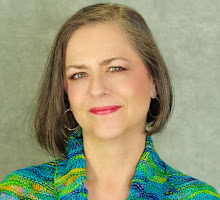
An Interview with...Melissa Morgan Oakes


Once a week I post  interviews with interesting designers about their insights on their experience of working in the Knitting industry.  I’ve noticed that every designer makes their living in a slightly different manner bringing their own unique presence to the Knitting world. 


All Photography (c) by John Gruen, from Toe-Up 2-at-a-Time Socks by Melissa Morgan-Oakes, used with permission from Storey Publishing. 

You can find Melissa here and here on Ravelry.


Where do you find inspiration?
I find inspiration everywhere. We live in a pretty rural setting and I find nature to be particularly inspiring, but I am also fascinated by more urban settings as well. Really, life inspires me!
 
What are your favourite knitting and crocheting techniques?

I adore cables. The texture and the light and shadow they catch when done in just the right yarn makes me a little giddy. And although I am known as a knitter, I learned to crochet first and have always had a fondness for broomstick lace.
 
How did you determine your size range?
For the most part I rely on Craft Yarn Council (http://www.craftyarncouncil.com/sizing.html) standards in determining the size of a specific garment. I try to be as inclusive as possible and like to offer options. My objective is to try to create a minimum of five sizes for garments and two for socks. Sometimes that’s reasonable and other times it is not.
 
Do you look at other designers' work or are you afraid that you will be influenced by their designs?

I peruse others work in the form of magazines and books the same way any knitter does, but I don’t intently study it. The exception to this would be Elizabeth Zimmermann whose work I will cheerfully immerse myself in deeply and regularly. Even when knitting for myself I tend to design rather than use someone else’s pattern, or I will modify an existing pattern significantly. It’s important to stay abreast of trends, and you can’t really do that without looking around you a bit at what others are doing.
 
How do you feel about the so called controversy of "dumbing down" patterns for knitters and crocheters?
Not every person who bakes wants to bake and decorate a 12-layer wedding cake from scratch. And not every person who bakes uses a boxed mix, either. Neither is better than the other, they just have different goals and approaches. As long as both of them are satisfied at the end of the day, it really doesn’t matter. I don’t think it’s ‘dumbing down’ a pattern to work to make it achievable and desirable by the mainstream. I think there needs to be a wide range of patterns in a wide range of skill levels. I think those skill levels need to be clearly stated on the pattern, and I think knitters need to be realistic and honest about their proficiency when choosing a pattern.
 
How many sample/test knitters and crocheters do you have working for you or do you do it all yourself?
Right now I have five or six people that I rely on to help with sample and test knitting. When I am working on a single project it’s a little easier to knit it all myself, but larger projects like a book require a more intense approach. Although I would love to knit them all myself - and in the first book I did knit over half before conceding defeat and getting help – it’s nearly impossible with the timing of things to keep my hands in everything. I am very, very grateful for the extra hands I have!
 
Do you use a Tech Editor?
I have an amazing technical editor, Tamara Stone-Snyder. I am, I will admit, a bit of a flake. I draw pretty pictures, and knit pretty things, and write a pattern that makes sense to me. This doesn’t mean it makes sense to the rest of the world. Knowing there is someone on my team who cares passionately about creating patterns that are clean, without error, and ‘understandable by most’ is a huge asset. She has worked with me on two books; Toe-up 2-at-a-Time Socks and the book that I am currently working on, as well as on some of my self-published patterns. She brings a technical perspective and attention to detail that I lack, and I am very grateful for that.
 
How do you maintain your life/work balance?
Working from home is probably one of the most challenging things I have ever done. While my spouse heads off to work each morning in a space separate from home I remain behind. Initially the day to day intrusions of life, like furnace cleanings or “quick” errands fell exclusively into my lap. That has shifted over the past few years and we share those things between us now – just because I am home doesn’t mean I should have to let the furnace guy in every time he shows up. If I am expected to take time out of my work life, then other adults in the household should as well. I think the hardest part has been explaining to family and friends that this is a “real” job and that I can’t just jump up and go play any time I choose. It’s a bit reminiscent of my stay-at-home homeschooling mom days in many ways! And I have become very good at separation. Free time is free time. If I am off, work will be ignored with very, very few exceptions.
 
How do you deal with criticism?

Most of the comments I get from knitters are overwhelmingly positive. But as in all of life, there are always individuals who are displeased, either rightly or wrongly. Maybe someone has had a bad day, or maybe they’re flummoxed by a technique that isn’t presented in the best way for them, or maybe there’s a human error that was overlooked or created in the process of delivering things to print. For the most part I try not to take the angry comments personally, and I base my responses in technical facts. I stop and consider and let my better nature answer the angry email or Ravelry post. It’s natural when frustrated by something you don’t understand but think you should know to be defensive and angry. We’ve all been there, and I understand that. Since most of my interactions with knitters are email based, it’s also really easy to convey a tone in email that wouldn’t be there in reality. Maybe the knitter is pleading, and just “reads” angry. Constructive criticism positively presented is always welcome. I’ve had knitters report technical errors in a way that made the error clear and expressed their frustration but without taking it as a personal assault. Those are among some of my very favorite emails.
 
How long did it take for you to be able to support yourself?

That hasn’t happened yet, and I am not sure that it ever will. Because I had no plan I went from relative obscurity to one book contract, then another, and another I haven’t had a lot of time to focus on the things that would bring more remuneration. Knitting and craft books do not net the kind of income people think they should, or expect them to. I knew this going in and I accepted it as a means to an end – getting 2-at-a-Time Socks into the lexicon was important to me, and I accomplished that. Money, as my spouse can attest, rarely crosses my consciousness. I am more driven by desire, need, or morals and values. The second book followed soon after the first, and now a third which will take me beyond the bounds of socks and knitting two things at once and into, I hope, a larger knitting life. I have begun teaching more around the country which has helped a great deal and I hope to take some time off and do some individual patterns, but for now the income from my knitting life isn’t enough to count as a truly independent living. Unless I were living in a significantly smaller house and had significantly fewer mouths to feed, then maybe!
 
What advice would you give someone who wants to pursue a career in knitting and crocheting?
I think the biggest thing to bear in mind is that when knitting progresses from your hobby to your business you will lose some of what drew you to it in the first place. The ‘sit and knit happily in a pressure free chair’ time becomes harder to gain as the work demands much of your time. At the end of a day immersed in writing about, thinking about, talking about knitting sometimes the last thing you want to do is knit. That shocked me as I had always relied on knitting as the relaxing thing at the end of the day. Making space for personal knitting is essential to me now. Design what you love. Don’t try to “be” anything or anyone you aren’t. If you don’t love it, don’t do it. Learn to accept rejection with a big smile and forge ahead anyway with a new plan, or you won’t get out of the starting block!


Wednesday, October 27, 2010

What will they Knit Next?

Just in time for Halloween!


Yes it really is knit.


You can find more details and photo's here.

Monday, October 25, 2010

Woodstock Fleece Festival


I visited the Festival on Saturday with one of my knitting friends.
This is from their own website. "The Woodstock Fleece Festival is an annual event that invites fibre artists and others to join together in an atmosphere of appreciation, learning and camaraderie.  The show will incorporate workshops and demonstrations from top instructors.  Exhibition booths will be selling everything from raw fibre to quality finished goods.  It is also a great place to have lunch!"

You can find their website here

This festival was a little different from the other shows I've attended this year. I was at both the DKC frolic and the Kitchener-Waterloo Knitters Fair. When we arrived the first thing we saw was livestock, alpaca's, goats, sheep and rabbits. I'm a city girl so I don't normally get to see where most of my fibre comes from. The show had fewer vendors than the others I've been to but this is just their second year and the vendor list was much longer than for 2009.Clearly it's a growing event and its attracting a good variety of vendors some I'm familiar with as well as many that were new to me. It's also an event that spinners would enjoy as there were roving's available at many booths as well as spinning wheels and accessories. 

There was a lot of alpaca available. I'm very fond of alpaca I love it's drape and the combination of lightness and warmth. This shawl is knit from fingering weight alpaca that was kool aid dyed.


The pattern is available here. The pattern shows a commercially available yarn that the test Knitter used for my sample but any fingering weight yarn will work.

I also had the opportunity to talk to a lovely woman (I forgot to ask her name) from the Alpaca Fibre Co-operative of Ontario about why we tend to see only the natural colours of alpaca. She told that generally alpaca is seen as a natural product and at this point the growers are not keen on the idea of chemical dyes. The natural colours are beautiful, gorgeous grays, creamy naturals and camel shades which are supposed to be the upcoming hot fashion colour. 

I did buy some yarn and Wanda took home some square sock needles. I'll be interested to hear how she likes working with them.

There were also vendors selling finished products like sock's, mittens and sweaters. A few yarns stores were there and some of the hand dyers were represented. As well as many others too numerous to list. You can see the complete vendor list here.

Friday, October 22, 2010

An Interview with...Kennita Tully


Once a week I post  interviews with interesting designers about their insights on their experience of working in the Knitting industry.  I’ve noticed that every designer makes their living in a slightly different manner bringing their own unique presence to the Knitting world. 

You can find her website here and she is on Ravelry here.  


Where do you find inspiration?
The yarn itself always inspires me. Sometimes I just look at it and stitches pop into
mind. It's crazy. Other times I pour over my favorite stitch pattern books and, with a
certain yarn in my hands, patterns just seem to leap off the page. My best knitting high
is to have the whole day ahead of me with new yarns to swatch. Companies that send
me yarns in the mail unexpectedly really make my day. I absolutely love to swatch. It's
soothing- like sketching or playing scales on the piano.

What is your favorite knitting technique?
At any given time, I never have just one, but I do really love movement in knits. Right
now, I am hooked on cables that wander over the garment at will. I also love intarsia
and color studies. Sometimes I will get a yarn in at the shop and fall in love with the
entire palette. I love the challenge to use as many colors as possible in a design.


How did you determine your size range?

I make every effort to include a full range of sizing in each design. Some designs,
however, just aren't compatible with sizing up or down in even increments. Stitch pattern
multiples have a lot to do with realistic sizing options. If there are sizes missing in one of
my designs, that's why. Owning a yarn shop has brought me closer to knitters who
choose my designs. I've learned a lot from them. I know there's a growing demand for
plus sizes, but I also hear a fair clamor from the smaller “peeps”, too.

Do you look at other designersʼ work or are you afraid that you will be influenced by
their designs?

I absolutely love looking at other designersʼ work and watching how they grow and/or
mutate. I've never really thought about the possibility of being influenced, although
everything we perceive influences us in one way or another.

How do you feel about the so called controversy of “dumbing down” patterns for
knitters?

I truly can see both sides of such an issue and could probably write pages on it. Over
the years, wonderful things have happened in the knitting world- knitting conferences,
cruises and camps with access to many teachers and techniques; online "lists"; blogs, Ravelry, u-tube! But the early days of these changes also intimidated a lot of people in
the process, too. Thatʼs a shame. In much the same ways young people have more
needs and expectations, I think today's knitters need or expect more, too.

How many sample/test knitters do you have working for you or do you do it all yourself?

Once upon a time I was a full time freelance designer and I had up to seven knitters
working for me. Then a crazy thing happened. I opened a yarn store in my studio, which
over the years led to more self-publishing than freelance. Right now, it's just me and
occasionally one or two other long-time knitters I've had since the beginning. Now Iʼm
moving toward full circle again as I begin to work through self-publishing my designs, so
who knows.

Did you do a formal business plan?
Not “formal" but a definite plan. I constantly revise.

Do you have a mentor?
Not a formal mentor, such as an assigned one or interning, but when I first started
submitting designs for publication, I thought of Nancy Thomas as a mentor of sorts. That
would probably surprise her. She was then editor of “Knitter's” magazine. She accepted
my first (2!) proposals to a hand knitting publication. I later went on to work with her at
other companies as well. I continue to value and respect her opinion tremendously.

Do you have a business model that you have emulated?

No, I've just been learning as I go and moving forward.

What impact has the Internet had on your business?
It has undoubtedly had a huge impact, but one thatʼs very hard to gauge. I started
designing back before I had a computer, and I was late to pick up on the blogging world.
I think a lot happened very quickly in those years, and I still have a lot to learn. The
Internet is probably the most encouraging factor of my decision to self-publish my
designs. Itʼs also been wonderful for communication.

Do you use a Tech Editor?
Since I started out doing freelance solely, I never confronted the need. However, I'm
currently working on a huge collection of my designs (more than fifty at last count!) to
self-publish. I'm now finding myself in need of one or two or three tech editors. Please
inquire within!

How do you maintain your life/work balance?
I'm not sure I do; ask my husband. I suspect he would tell you my work IS my life. It's
simply not something that can be shut off. But at the same time, I can and do still wind
down and find time to relax with family and friends.

How do you deal with criticism?
Constructive criticism is always welcome. I have an art background, so the whole
critiquing process is a healthy part of it all. I donʼt find it's often encountered on a
professional level, however.

How long did it take for you to be able to support yourself?
I wouldn't describe myself as entirely supporting myself right now, but if I truly had to, I
probably could- but certainly not anywhere near the lifestyle I've become accustomed
to.


Follow your heart, keep communication open and never miss a deadline


Wednesday, October 20, 2010

Not Working!


I haven't gotten any work done since last Thursday when I picked up Cici. She's from an ad for free kittens on Kijiji. I met the young women who lives with Cici's mother at a subway station passenger pickup and took her straight to our vet for a checkup and to confirm her viral status for FIV and FeLV. Since we already have George and Gracie living with us they have to be protected first. Great news came Friday morning Cici is negative for both viruses. She does have ear mites so we had to keep her away from the others until Monday morning. That's enough time for the first treatment to work and start to kill off the mites. She will get a second dose in four weeks.

We kept her in our spare bedroom with my husband and I alternating between rooms and keeping George and Gracie company until Monday morning when I started the introduction process. There was a lot of hissing from George and Gracie. I spent a whole day hovering over Cici ready to jump in if anybody got too aggressive. By Tuesday afternoon things were settling down so I got to do some knitting and hopefully I can get back to my more normal working schedule today. George and Cici have started to play a little but he seems to be very unsure as to what exactly she is. Kittens hop and move around in a way that can be different from cats, add to that her tiny size and her ability to perch on very little things like the top of his triangle scratching post and I can see his confusion. He seems to look at me with an expression of " what the heck is this thing?"

Gracie is taking longer to accept Cici we have had a fair bit of growling along with the hissing but I can see her getting curious. Gracie is most definitely a more timid cat and is clearly afraid. She is usually a sort of goofy cat as she has stubby little legs, she is just a little plump and has a very expressive face with beautiful long whiskers. I can already see that Cici is a very calm little kitten. I turned the vacuum cleaner on in the bedroom and came back to see if see was frightened by the noise and found her leaning around the hallway wall to see what the noise was. Gracie runs away in fear whenever I vacuum. I have every confidence that once everyone gets to know each other that they will be the best of friends.

Monday, October 18, 2010

Skill Levels - What do they really mean?


If you are choosing a knitting project you will notice that many patterns give you a rating of the perceived level of difficulty of the project. How this determination is made is often unclear.

As an example this info is from the Craft  Yarn Council

Skill levels for knitting
Beginner
Projects for first-time knitters using basic knit and purl stitches.Minimal shaping.
Easy       
Projects using basic stitches, repetitive stitch patterns, simple color changes, and simple shaping and finishing.
Intermediate   
Projects with a variety of stitches, such as basic cables and lace,simple intarsia, double-pointed needles and knitting in the round needle techniques, mid-level shaping and finishing.
Experienced   
Projects using advanced techniques and stitches, such as short rows,fair isle, more intricate intarsia, cables, lace patterns, and numerous color changes.

You will notice that the descriptions above assume that you already know what is basic vs. advanced.

This is from knitty.com. (Look at the bottom of the page)

Mellow
Suitable for beginners. Relaxing, not mentally taxing. 
Tangy
Fun things with zing. A twist, even. Friendly and unintimidating: very knittable by most knitters
Piquant
A little something for the seasoned knitter. Daring but not exhausting. Probably not tv knitting.
Extra Spicy
Suitable for those with a lot of experience. Or patience. Or both. These babies have teeth. Hoo boy.

I love these descriptions for their humour but I'm not really any further ahead in my understanding.

I flipped through a few of my pattern books and magazines and noticed that some don't bother listing skill level and even more label patterns with skill levels yet don't supply a definition. There are a lot of complaints about the publishing inconsistencies in the knitting world and this is another area that has no clear rules. On my own patterns I've been listing skills required as opposed to a difficulty level, however once I load a pattern into Patternfish I have to choose a level. I'm sure if you have read this far you are wondering what my opinion on this is. Having taught many classes and assisted lots of  Knitters when I worked in my local LYS I think the labels are misleading. I once had a customer tell me how very limited her skill set was as she pulled an amazing traditional steeked Fair Isle sweater of many many colours out of her bag. I've also had the opposite experience of someone telling me they were an expert yet when we talked further they were missing many very basic skills. So I recommend that you ignore the ratings, review the pattern to see how many new things you would need to learn (if any) to complete the project. Consider if you like a challenge or want a simple TV or commuter type project to work on. Give some thought as to where you will find assistance if you need it and if you want to just knit or will enjoy the research and swatching process if it will be required for the completion of the project. Often your LYS or knitting teacher can help you determine if you have the skill set required or if you are willing to put in the necessary work to develop that set, but please remember ultimately the process is very simple and it is just the variations of technique that make something appear to be difficult to you. 

Friday, October 15, 2010

An Interview with...Sarah Montie


Once a week I post  interviews with interesting designers about their insights on their experience of working in the Knitting industry.  I’ve noticed that every designer makes their living in a slightly different manner bringing their own unique presence to the Knitting world. 

You can find Sarah here, here on Etsy and here on Ravelry


Where do you find inspiration?
Yarn, color, shapes, nature, technique, need, ready to wear. 
 
Yarn: I often say I am “yarn inspired”.  It was easier to make up my own pattern rather than try to fit the yarn I wanted to use into an existing pattern.  Most recently I have been fascinated by the silk or wool and wire yarn by Habu and Lion Brand. 

Color: My last pattern, Sea Glass Shawl Cardigan, was inspired by color.  I wanted to use a yarn that reminded me of the color of sea glass.  After selecting the yarn, I decided on a simple shape inspired by a current ready to wear trend that I thought would fit the yarn well.
 
Shapes: I like to take simple shapes and create garments out of them.  I teach a lot of knitting and the new knitter is amazed that you can make a rectangle into a shrug, I turn them into a designer right away.  I am fascinated  with circles.  Circles represent movement which I love in a knitted piece.
 
Nature: I often relate a lot of my projects to the sea/beach since that is what gives me such comfort and peace. 
 
Technique: Sometimes I want to work with a particular technique, for instance felting.  I have some very simple bags perfect for the the beginner knitter or beginner felter.  Rather than experimenting with the technique further I find myself more interested in trying different color and texture combination's in the same simple bag.  I am also working on an entrelac bag.  It may be my only entrelac pattern.
 
Need: Sometimes I want to design something for someone (family member) in particular or when I am designing for Plymouth Yarn company I am trying to fill a particular need. 
 
Ready to wear: I enjoy looking through the fashion magazines and shops for inspiration and trends.  Right now cowls are trendy, they are quick and easy and fun.  You can pack a lot of technique into a small piece.

What is your favorite knitting technique? 
If I had to pick something, I would say seamless knitting.  I don’t like the finishing part of knitting, I like to spend my time knitting, not finishing.  I think  a lot about the enjoyment of actually making a project when I am designing it, not just the finished project.  I have seen too many projects abandoned because the knitter is not enjoying it. If I try to find a constant in my work, I am drawn to simple shapes and what can be done with them.  I often write patterns based on “concepts”.  Patterns that you don’t really need to match gauge or use specific yarn, rather you are following a concept.  If I had the opportunity to write a book, it would be about “concept knitting”.


How did you determine your size range?
My designs are rather personal and I tend to design things that I like and that suit me, a 5’2” size 6-8.  I am working on expanding my scope and my most recent designs range from extra small to size 3X.

Do you look at other designers' work or are you afraid that you will be influenced by their designs?
I have an extensive library of knitting magazines and books, but I don’t tend to look up everything by a particular designer.  I want to make sure my designs are my own and not influenced by anyone else’s aesthetic.  

How do you feel about the so called controversy of "dumbing down" patterns for knitters?
I am not aware of the controversy, but one of the challenges in writing patterns is to try to please everyone, or trying to figure out who to please.  How much knowledge should I take for granted and how much information should I spell out.  I also teach knitting so I know there are a lot of beginner knitters who want patterns.  I do some very simple patterns and I am surprised that they are sometimes my best sellers.  I add a stitch glossary explaining techniques and terms on all of my patterns for the knitters who need it.  I let the difficulty of the pattern dictate how much explanation I put in the pattern.  Also when I have my test knitters knit the patterns they will point out anything that is not clear to them and I can make changes.

How many sample/test knitters do you have working for you or do you do it all yourself?
I knit everything myself, sometimes more than once.  I also have friends who do some test knitting for me and also proofread everything for me.  
 
Did you do a formal business plan?
No, I also had a catering business for 10 years and didn’t have a business plan, but I always started small with no borrowed capital.
 
Do you have a mentor?
Back in the 70’s I had a good friend who owned a yarn shop.  Her shop had a great atmosphere and I learned a lot from her.  She encouraged me to try new things and also get a couple of knitting machines and design and sell sweaters.  I even helped her out with a Glamour magazine   deadline she had one time, 3 hand-knit dresses on the cover.  I don’t really have a current mentor, but the Internet and Ravelry have been a great source to see what other people are doing and to learn more about the business of designing.
 
Do you have a business model that you have emulated?
No.  

What impact has the Internet had on your business?
The Internet has been incredible.  My original intention was to sell kits of my patterns and yarn.  I started with a website, but then there was the issue of getting people to my website.  Unfortunately, I am not very computer savvy and rely on my kids to help me.  Once I got involved with Ravelry and Etsy I discovered selling patterns as a PDF.  It is amazing to me that people all over the world have bought my patterns.  I am still willing to sell kits, but knitters, even though they often want to knit the sample they see in a store, still want to buy the pattern and the yarn themselves.  Unfortunately, I don’t keep on top of  my website as much as I should.  

Do you use a Tech Editor?
 
No

How do you maintain your life/work balance?
It is difficult to juggle because I think everyone around me, including myself, tends to not think about the fact that I am trying to run a business.  It takes a lot of time to write patterns and try to keep moving forward.  I struggle with what is the best and most efficient way to grow my business and do I really want to grow it at the sacrifice of more time (and less knitting time)?

How do you deal with criticism?
I  try to take any criticism as constructive.  You can’t please everyone.  Some knitters want everything written out as much as possible, row by row, and some knitters like a pattern written in more of a short hand style.  I just try to work on a style that is consistent for me and consistent with convention so that when I get repeat buyers they already have an idea of what to expect.


How long did it take for you to be able to support yourself?
I don’t, but my husband says he’s ready to retire anytime.
 
What advice would you give someone who wants to pursue a career in knitting?
Be flexible.  Be prepared to change with the changing times and be adaptable.
Fortunately I don’t have to “put food on the table” ,  I can follow my passion and see where it leads me.