I'm not a big fan of pattern difficulty ratings. I feel they are too vague. The only knitters they really work for are the experienced ones. They are the knitters who have the knowledge to understand what descriptions like "Easy: Projects using basic stitches, repetitive stitch patterns, simple color changes, and simple shaping and finishing" really mean. What I think a basic stitch is and what another knitter thinks it is, varies widely based on their previous knitting experience. I list an experience level in my patterns, but only because it's become a standard to do so and Ravelry and Patternfish make me.
I've already had a test knitter suggest I up a difficultly rating on a sample she knit for me. I did because I trust her judgement and she is an amazing knitter. I list the skills required in each pattern so knitters can more easily determine if the pattern is one they want to try. Many of my patterns include the skill: maintaining
a stitch pattern while working shaping.
Whenknitting your first projects, often a scarf, which has no shaping, you continue knitting on the same number of stitches you cast on. Every row of the stitch
pattern will begin and end as written in your pattern. Once you are ready to move on to other projects you will
increase or decrease stitches to create shaping and patterns will say "while maintaining stitch
pattern...".
Now you have additional stitches outside of the pattern repeat. With some stitches it is very clear, you can look at your
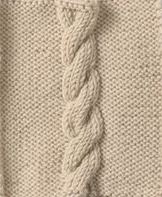
knitting and easily see where you are within the stitch pattern. An example would be cable stitches worked in straight vertical columns. Patterns do try to give specific directions for every detail,
but sometimes the best option is to establish a stitch
pattern and have the knitter keep it going. Often this is impacted by the size range. The more sizes, the more instructions and pattern pages which would be required to detail every size individually.
It's important to learn to understand your stitch pattern and understand by
looking at your knitting what comes next. Most knitters refer to this as reading your knitting. Your first opportunity to do this is on your swatch. When you knit the swatch, pay attention not just to following the stitch instructions but also to how each stitch relates to the ones on either side and below. Chart instructions naturally encourage knitters to understand this relationship, which is why they are so popular.
As you can see in the above photo, it can get much more complicated. Essentially what you are being asked to do is to think ahead of the knitting and understand how future rows relate to the row you are currently knitting and adding or removing stitches from. I'll be continuing this topic in future, so please check back for more.
I've also read on this topic extensively. As a teacher and as a committed life long learner it's very important to me to understand the process for learning.
I recently read Josh Kaufman's The First 20 Hours: How to Learn Anything... Fast! It's a fun book with some quick summaries of how to improve your learning which Josh demonstrates by taking on the challenges of learning to program a web application, play the ukulele, practice yoga, learn to touch type on an alternative keyboard, windsurf, and study the
world's oldest and most complex board game Go. I was most interested by the advice regarding motor skill development and how I could translate this to knitting skills for my students.
Josh has 10 principles for rapid skills acquisition.
1) Knitting teachers often have stories about novice students who tackle complex projects for their first project because they want the item passionately. Josh calls this choosing a "Lovable project".
2) "Focus your energy on one skill at a time" Let's call that putting your new knitting skill on project status for a little while.
3) He suggests that you "Define your target performance level". What exactly is your goal? Do you want to knit a baby blanket as a gift or knit yourself a sweater. Do you want to knit for stress reduction or be a social knitter to join the knit group at your coffee shop? Do you want to learn a new technique such as brioche or Orenburg lace? Be specific.
4) Next is "Deconstruct the skill into sub-skills", what things do you need to learn to accomplish your goal? Does your chosen goal require a new cast on or perhaps you need to know magic loop?
5) "Obtain critical tools" Yahoo! a trip to your LYS is next.
6) Eliminate "Barriers to practice" this refers to things like having your resources available, sending the kids out to play, ordering in dinner rather than cooking as well as overcoming the internal fears that turn up when we try new things.
7) "Make time". If you want to learn new skill you need to carve out the time to do so. Take a class or spend some of your knitting time doing swatches to learn new techniques that are in your reference books or on YouTube videos. Plan out when you will use your 20 hours and make it a regular commitment.
8) "Fast
feedback loops". Here I go again, swatch, it takes a long time to get to the last row of a project to test out three different cast offs for your project. By the time you get there you are likely to fall back to your standard version. Try them out first on samples so you can compare and improve your technique.
9) "Short bursts". If you are struggling with a new skill and it feels difficult, set a timer for 20 minutes and keep going until the timer goes off. Maybe you want to switch from English to Continental or Portuguese style knitting. You will need time to establish new muscle memory.
10) "Emphasize quantity and speed". Don't try to be perfect at first, skills build more with the quantity practice at the beginning stages of acquisition. I'll be sharing some principles of effective learning to help more with your skill development soon. Part 2 is here.
email contact robinknits(AT)gmail(dot)com
I've been knitting my whole life. I don't even remember learning. I started making garments for myself in my teens and then explored sewing, tailoring and millinery. I want to teach knitters about fit and flattery and turn them into fashion stars!
On my blog you will find lots of interviews with knitting industry professionals, how to tutorials and a variety of posts about what's going on in the knitting world.
I love to come out and speak at shops and guilds. Here's what the Downtown Knit collective said after one of my talks:
“Robin Hunter’s inspiring talk, “The Barbie Factor,” left everyone in a feel-good mood at the conclusion of the May meeting. Heads were nodding in agreement all around ... as she tackled a multi-faced problem faced by many knitters—why don’t we knit for ourselves? She touched on many topics including fashion, body image, media and how it all relates back to our knitting.”
You can see my patterns on http://www.patternfish.com/des/robin_hunter and you can find me on Ravelry at http://www.ravelry.com/people/knittingrobin
My YouTube channel is here:http://www.youtube.com/user/robinknits?feature=mhee