Monday, December 9, 2013

Where to get Ugly Christmas Sweaters


You may have noticed that my most popular post is one from  December  2010 about ugly Christmas sweater parties. You can see that post here. The popularity of the post makes me think my readers need to know about this site.

The Site says it has:

THE WORLD’S LARGEST SELECTION OF UGLY CHRISTMAS SWEATERS. SERIOUSLY.

Looking for an ugly Christmas sweater? Look no further! You’re one click away from ugly Christmas sweater paradise.
There appear to be hundreds to choose from! If you can't find one that you love (hate) enough, just google ugly Christmas sweaters and you will find a few more retailers.

Friday, December 6, 2013

An Interview with..Tabi Ferguson


Once a week I post interviews with interesting people about their insights on their experience of working in the Knitting industry.  I’ve noticed that every one of these individuals makes their living in a slightly different manner bringing their own unique presence to the Knitting world.

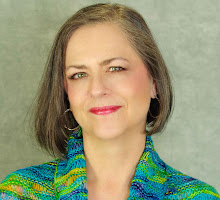
You can find Tabi's yarns at Sericin Silkworks  here and here on Ravelry. 

Where do you find inspiration for your colourways?
Every trip to the dye pot is different. Sometimes it’s the inspiration of the day... Sometimes it’s something from one of the fashion/design/architecture blogs I follow. Sometimes I think about a favourite customer’s colours, wondering if the yarn will end up in their hands.

How do you choose the fibers that you work with?
When I created Sericin, I envisioned the type of finished projects that would be created from my yarns: heirloom shawls, fine weaving, elegant accessories, perhaps a few fine sweaters. Truly special pieces in your wardrobe.  I’ve always been attracted to silk and the luxury fibers that work best with it so I have been hand dyeing cashmere, qiviut, mink, and buffalo for a few years. I’m intrigued by how dye takes to different fibers. I source many fibers in their natural colours rather than bleached, which is most common in the industry. Natural colours take the dye subtly creating intensity and warmth.

How did you determine what weights of yarn you stock?
Because the fibers I work with are naturally very fine, I stock only lace weight and light fingering weight yarns. Nothing above sock. I have vague fantasies about weaving with my hand dyed yarns someday...

Could you give us an idea of how long the process is to dye a batch of yarn and prepare it for sale?
Silk takes a little longer to prep than other fibers as it requires overnight pre-soaking. If I know I want to dye the next day I have to make sure I have the fibers soaking the night before. So, it’s a 3 day process. Soak, dye, dry. Then inventory, label and photo although this is usually batched with other finished yarns and fibers.

Do you look at other dyers’ work or are you afraid that you will be influenced by their yarns?
With the Internet it’s impossible not to look at other dyers’ work, and there are certainly some dyers’ work I admire but every trip to the dye pot is unique and everyday’s inspiration is different, so I don’t think I’m influenced. I also work with different fibers than most dyers, possibly different dyes and I mix from powder every time so results are different.

http://www.etsy.com/shop/sericin

Are you a knitter as well?
Absolutely! And a spinner. For me, spinning was the key to understanding fiber and yarn. Access to hand dyed silks for spinning is what led me to dyeing. Dyeing yarn was the next logical step. I also create designs to accompany my yarns.

Did you do a formal business plan?
I don’t have a formal business plan, but I start the year with a budget and show/event plan. I lay out a dyeing schedule usually a few months in advance of each show and try to introduce one or two new products a year. Everything is inventoried when it comes in, after it’s dyed and when it sells to try and keep on top of things so tax time is as painless as possible.

Do you have a mentor?
I don’t have a specific mentor but I find inspiration and support from my friends many of whom are knitters and spinners. I love the fact that we all have different strengths and styles. Can I do a little shout-out here to my friends? Linda Choo, a prolific lace designer and hand spinner. I don’t think she sleeps. SelinaS, also a designer with a very mathematically astute brain. I love seeing how her clever patterns work. Laurie B who spins sheep and quietly knits up a storm. Karen Crouch and her wonderful crew at Shall We Knit? in Waterloo. Local guilds are also a source of inspiration and motivation. There are so many talented people!

What impact has the Internet had on your business?
I have primarily been focusing on shows for the last few years because I enjoy the interaction and inspiration I get from my customers. However the Internet has been a large portion of my business as well. I’ve had an Etsy shop since 2007, I opened Sericin on Etsy in 2010. Ravelry is an amazing phenomenon. As a retired software developer, I’m impressed by its architecture and design. As a knitter/spinner/designer/indie dyer, it’s a godsend. My plan for 2014 is to grow the Internet/Ravelry/Etsy side of the business. I’m not giving up shows though! They’re too much fun.

How do you maintain your life/work balance?
The few weeks before a show are a little crazy, but I find if I keep on schedule I’m OK. I always try to finish up with 4 or 5 days to spare from dyeing for the little things that always pop up and to mentally relax so I’m fresh for the customers. I try to maintain a healthy, active lifestyle and I’m exceptionally lucky to have a wonderful partner, Matt Kadey, who is a cookbook author and recipe developer, so I’m very well nourished.

How long did it take for you to be able to support yourself?
Sericin doesn’t support me, but it does provide a significant portion of my living expenses so I do rely on it.

What advice would you give someone who wants to pursue a career in hand dyeing yarns?
That’s a tough one. There are inherent dangers associated with dyeing that are always in the back of my mind. I try to minimize the environmental aspect: no plastic wrap, reuse gloves until they break down, dyes fully exhausted and natural mordants.  I mostly use chemical dyes but in the fall I do a batch of natural dyes. If you’re going to do large scale dyeing, make sure you have proper ventilation and a dedicated area. While we get carried away creating beautiful colours, always keep in mind that you have to sell all that beautiful yarn too. The marketing and selling is just as large, if not a larger part of the business as the actual dyeing. 

http://www.etsy.com/shop/sericin

Wednesday, December 4, 2013

What is the single most important fitting consideration for knitted garments?

http://www.ravelry.com/patterns/library/the-anne-meredith-cardigan

Someone recently wanted me to answer the question which is the title of this post.

I'm sure my answer is based in the training from my sewing, pattern drafting and tailoring background. My preferred garment is one with a set in sleeve. I consider the armhole area to be the most important critical part to be fitted correctly to the body. It is equally important in raglan style garments. All areas of fit are subject to design, ease and personal preference variations that change over time according to fashion. Even the armhole varies greatly according to fashion. Remember the over-sized garments with dropped shoulders that were popular in the 80's?

At this fashion moment we are using a relatively close fitting silhouette so that's going to be the assumption in this post. As an aside, I'm seeing a lot of over-sized coats trending on runways so we may be seeing a shift in the future.

Garments intersect in many places and are interdependent where they don't intersect. As an example, the width of a neckline is limited by the width of the shoulders. It must be a smaller measurement. Seams must be joined and while we can gather or pleat one edge to make it fit to another there are technical limitations to making those joins function and flatter the body. So ultimately each part of a garment has an impact on another cascading down to every section.

In my own experience I have found that the armhole depth measurement has made the biggest visual difference in the fit of my garments. See this post on a method to get an accurate measurement.

The shoulders of a garment act like a hanger. Every garment hangs from the shoulder so I think the fit at the shoulder point is critical. The shoulder edge impacts the armhole. The armhole impacts the length of the sleeve. A deeper armhole means a shorter sleeve from the wrist to the upper arm. The longer the armhole the shorter the body to maintain the same total length to the hem.

Shoulder slope has an impact. If it's ignored you can get bunching or a hem that does not hang straight at the outer edges. See this post for more on shoulder slope.

A too deep armhole creates a sloppy upper torso. It makes your arms look shorter and creates unflattering bunching around the lower part of the armhole just above the bust line. If the armhole does not intersect at the correct point with the shoulder it visually widens the torso and again shortens the arm.

In the photo at the top of the post, my garment is shown on a mannequin that is a little smaller than me and has a slightly more sloped shoulder. It fits me very well. In the photo collage below the shoulders are too wide and the armholes are too deep. Note the gathers that appear at the shoulder line or under the armhole. See how some of the garments fold vertically at the edge of the shoulder line? There is nothing wrong with these garments, it is just a mismatch between the garment size and the model's size.


I think this area is critical because visually it falls into the picture frame that others see when they engage with us and look at our faces. It's what they see when we sit down for a conversation.


Monday, December 2, 2013

Do You Always use the Yarn Specified in a Pattern?

Yarn: https://www.etsy.com/shop/emilyparson          Pattern:  http://www.ravelry.com/patterns/library/the-louise-laxton-shawlette

Do you prefer patterns to specify specific yarns or just a yarn weight?

I've been getting conflicting advice on this. I think it's because everyone has different paradigms in mind when they answer the question.  Some of my advisers tell me that the exact yarn must be specified and available.

Yarn distributors know patterns sell yarn so they think patterns should be written for the yarn.

Yarn store owners want patterns that sell yarn in standard weight DK, worsted etc. so they can move stock.

Yarn companies want patterns that sell their yarn. They often develop patterns specifically planned to make substitution difficult. They may develop yarn with non standard gauges or combine two yarns in a design to make unique projects.

Indie dyers use standard weights of yarn as their base because they can't afford to do a lot of pattern support. They want patterns written for standard weights. They often use free patterns and have a project knit in their yarn as a promotional sample. 

http://www.ravelry.com/patterns/library/the-prudence-crowley-vest

My best selling pattern (in the photo above) was done in a yarn that was discontinued the same week that I published the pattern. Since I've been designing that has happened to me several times. The last time it occurred, the yarn company discontinued the yarn three weeks after providing it to my client. The result for my business has been I am focusing on standard weight yarns because I want to sell patterns.

I choose the yarn for the photo at the top because of it's absolutely amazing colour. The irony is... the depth of colour is not truly reflected on a computer screen. I want to sell patterns so it's a standard weight, 4 ply fingering.

Yes, I do spend far too much time thinking about this kind of thing don't I?

Friday, November 29, 2013

An Interview with... Justyna Lorkowska

Once a week I post interviews with interesting people about their insights on their experience of working in the Knitting industry.  I’ve noticed that every one of these individuals makes their living in a slightly different manner bringing their own unique presence to the Knitting world. 


You can find Justyna here and here on Ravelry.

Where do you find inspiration?
I know it might sound cliché, but everywhere. Sometimes I come across a beautiful stitch pattern that stays in my mind for a long time waiting to become a garment. Sometimes it's the yarn, its color, drape - it might sit there in my stash for a year and then bam I have some knitting epiphany and I make a sweater from it in a week. Finally, and I know it will not sound very magical, I'm actually forced to create because I need a particular knit in my own closet. Most of my designs came to life because one of my kids needed a hat or a jumper or because I couldn't find anything I liked in the stores.

What is your favourite knitting technique?
At the moment I'm fascinated by short rows. This technique never ceases to amaze me. It's just wonderful that short rows allow you to shape your garment to accommodate for almost every knitter's figure. Additionally, when you start playing with them you can create really amazing shapes of knitwear. 
  
Do you look at other designers' work or are you afraid that you will be influenced by their designs?
I enjoy looking at other designers' work very much. I just love seeing how they use different colors, yarns, stitch patterns; it's truly inspirational.

How do you feel about the so called controversy of "dumbing down" patterns for knitters?
Knitting patterns I used to know before being introduced to Ravelry were a lot different. Polish knitters can improvise and are very independent, very often they don't need instructions telling you how to make every single stitch (they can even make the whole garment out of memory!), so I must say I was surprised at how detailed English patterns can be. Such patterns are very good for beginners who want or need some hand holding, but at the same time these instructions can make more experienced knitters a little lazy. This is why I like making new designs - there's no template, no stitch counts, just me, yarn and my imagination.


The Vampyre

How many sample/test knitters do you have working for you or do you do it all yourself?
At the moment I have a group of fantastic test knitters whose help is invaluable to me. Most of them have been with me since the beginning of my designing career, but I also love working with newbies as they bring a lot of fresh insight. Their number varies depending on the design. For example, when I make accessories I do not need so many testers.

Do you have a mentor?
Many people I've met since the day I put knitting needles in my hands have had a huge influence on my creations. First it was my mom who taught me the first knits and purls, then it was the whole knitting community: knitters, designers, my knitting friends - they show me if I'm doing the right thing.
  
What impact has the Internet had on your business?
Enormous. Firstly, because I learned a lot about new knitting techniques from the Internet. Knitting in Poland, the country where I live, is still connected with the stereotype of an old lady knitting socks from some thick coarse wool. Unfortunately, the Polish knitting industry is not very well developed and most knitters turn to the Internet for knowledge about new styles, techniques or even to buy yarn. At the moment my business exists thanks to the Internet but I hope that one day knitting in Poland will become as popular as in the UK or the US, with numerous workshops and festivals.

Do you use a tech editor?
I admit that when I started writing my patterns everything was more like child's play, but it has changed since that time. Now I'm trying hard to make my patterns as comprehensive as possible with a team of test knitters and recently a tech editor.


Casual Lace

How do you maintain your life/work balance?
Oh, that's a hard question because I'm pretty bad at it. We have two small children so I work whenever they allow me to :-). Thankfully my husband helps me a lot, not only with the kids, but also with my work. He's the one who first discusses an idea for a design with me, chooses yarn, and then when the garment is ready he patiently takes a lot of photos. We also manage Lete's Knits website together. And when we finish our work we try to spend some quality time with our children - though I confess to having a small WIP bag with me all the time (because you never know when there's time to make one more stitch, right? :-)

How do you deal with criticism?
I believe that good and constructive criticism is needed if you wish to improve your skills. If you wish to be better and write better patterns you need to listen to others' feedback even if it's not something you'd like to hear.

What advice would you give someone who wants to pursue a career in knitting?
You know what they say? Where there's a will, there's a way. Knit and learn, listen to other knitters, find your own style and make it happen!


Goldilocks

Wednesday, November 27, 2013

Hand Knit Gloves - Motif Placement

http://www.ravelry.com/patterns/library/the-sylvia-dering-infinity-scarf-and-gloves

An interesting question came up recently about glove design. I've knit many pairs of gloves for myself. I frequently work with the yarn leftover from other projects. I haven't published very many glove patterns, mainly because I hear knitters find them too fussy to knit. I do teach a class on how to knit gloves and the question that came up was about pattern placement. 

A student brought a pattern with her that had a single motif on the back of the hand. Her question was why was it not centered?  The answer is that the motif can be centered in one of two different ways. The first method centers the motif across the total number of stitches between the side of the baby finger and the side of the index finger. That total is normally 1/2 of the total number of palm stitches excluding the thumb gusset. This method seems to be the one most often used. The second method is to center by measurement. The baby finger is smaller than the others which shifts the center of the back of the hand over slightly. In my case the mid-point is just off to the outside of the tendon (baby finger side) that runs down my middle finger. Some glove designers choose to center motifs this way instead of by stitch count. I personally find this measurement method looks more correct to my eye when using a single motif but I know many knitters who would disagree with me. When the pattern used is not a single motif the centering of pattern works best across the total number of stitches. It's often difficult to assess which method has been used in the pattern photos unless there is one taken with the glove laid flat. If you would like to see and compare a lot of glove variations you can check out this search in Ravelry

If you would like to read more about knitting gloves and learn about the various tips I share with students, I have a 5 part series with links listed below:


Part 1 can be found here. 
Part 2 can be found here.  
Part 3 can be found here.  
Part 4 can be found here.   
Part 5 can be found here.  

If you enjoy reading my blog, I'd really appreciate it if you would tell your knitting friends or share links to your favourite posts online with Twitter, Ravelry or Facebook. Word of mouth is really helping to grow my business as knitters respect the views of other members of our community. Thanks!