Friday, September 13, 2013

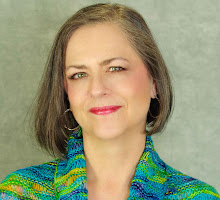
An Interview with...Kate Gilbert

 
http://twistcollective.com/collection/index.php/component/content/article/86-winter-2010-patterns/835-halliard-by-kate-gilbert


Once a week I post interviews with interesting people about their insights on their experience of working in the Knitting industry.  I’ve noticed that every one of these individuals makes their living in a slightly different manner bringing their own unique presence to the Knitting world.


You can find Kate here and here on Ravelry.

What was the initial inspiration for Twist Collective?
As we say on our about page 
( http://www.twistcollective.com/collection/about ), Twist Collective was originally conceived as a publication that brings together the talented work of designers and writers, showcases their work professionally and pays them fairly. I think that last part is really the most important. While knitters and other fiber artists are most certainly not exclusively female, the craft has long been disparagingly labeled as “women’s work” and the people who do it were expected to be happy to receive little or no compensation. 

PDF patterns were rapidly becoming a norm for customers and there was really no better time to start looking at alternatives to print magazines that pay a flat fee regardless of the success of the pattern. By offering royalties, and selling only individual PDF patterns, instead of a print publication, we could better compensate the many individuals that make a good quality product, possible. 

In return, customers only buy the products that interest them, giving the designers and publisher immediate feedback on what they like and what they don’t. 

http://www.twistcollective.com/collection/index.php/component/content/article/90-fall-2011-patterns/939-autobahn-by-kate-gilbert


Could you tell us about the steps required in starting an online knitting magazine?
Starting a publication is huge, so huge I’m not sure I would have done it if I had known just how much work it would be. Ignorance is bliss, right? Of course, every magazine is different and how much prep work is needed will depend on the resources you have available, your business model, your available time and how much money you have, but for us, it involved the technical aspects of creating the site (design, hosting, domain, programming, etc), choosing a name for the publication and creating a logo, finding designers for the first edition, planning a schedule, sourcing yarn, hiring photographers and models, getting tech editors, creating PDF pattern and chart templates, planning shoots, doing layouts, contracts, reaching out to advertisers, setting up a system for tracking and paying royalties, and testing testing testing testing everything with the hopes that the launch will be a success. I’m sure there’s more I’ve forgotten. It took us 6 months to get the first edition out and I hardly remember sleeping during that time.

Even with all that prep, the magazine has evolved and improved based on what works and what doesn’t. You have to have a plan but you can’t be so fixed on it that you can’t adapt.
We'd like to know something about your Twist Collective team, how did you find such an amazing group?
This runs the risk of sounding like one of those boring awards show speeches where everyone and their dog groomer is mentioned, so I’ll try to avoid being too dry here, but I’m pretty proud of my team.

I’d have to start by mentioning my mom, Cynthia, who deals with all our advertisers and does most of our customer support. I’m not sure I could run this magazine without her. 

Carly, who does our social media work, has been helping me answer knitting emails since before I started Twist. The voice of our blog, twitter, and facebook, is often her voice and I think she brings a great energy to her role.

Fiona Ellis introduced me to our features editor, Daryl. I know our programmer, Eric, through a college friend, our head tech editor, Sandi, has a reputation for being great. I was thrilled she agreed to join our team. Marnie has been designing with us since the first edition and we quickly became friends. I asked her to join the team a few years ago. 

I’m leaving out so many important people, like Irene, and MJ and Alison and Robin, whose roles are invaluable, not to mention the other tech editors, photographers, models, and people who have pitched in for testing and sample knitting and more.  The amazing thing is, almost everything is done by email and an occasional video chat since the team lives throughout North America. 
Have you had a mentor to advise you?
I worked in publishing before starting Twist so I already had some understanding of magazine publishing. Honestly, I’m not sure there would have been anyone who could have mentored me. There are not that many people who have started successful knitting magazines who have the free time to help someone else start one as well. Instead, I focused on finding an amazing team who was committed to seeing Twist succeed.
Please tell us about your views on compensation for designers.
As I mentioned before, PDF patterns were becoming more and more the norm, in 2008, when we launched. Designers were starting to see the benefit of being able to sell their patterns online and magazines were beginning to test the waters with reissuing older patterns for online PDF sales. 

Publishers have to recoup their initial investment in producing the pattern, but I didn’t think that had to mean that designers should lose the right to ongoing compensation for pattern sales. Under our contract, designers received an agreed upon percentage of every sale of their pattern, even after the exclusivity period. With our relatively short exclusivity period and generous royalty payments, we believe that designers are motivated to come up with and submit great designs and we are motivated to style and edit them to their best advantage, producing great quality patterns for knitters.
What features make a successful design to your way of thinking?
I suppose that anyone who knew the answer to that question would be able to retire early. There’s always a certain risk — both for the designer and publisher — that a design just won’t appeal to customers. We want to give our readers a selection of designs that will appeal to them, without looking like we’re rehashing stuff we’ve already published. 

There are certain things we take into consideration while reviewing proposals: 

Items need to be seasonally appropriate. We’re not going to run a big wooly cabled coat in our Spring/Summer edition nor a light little cotton tee for the winter edition. So a design might be amazing, but if it’s seasonally inappropriate, it may be passed over.

We also try to find garments that are practical. Can someone wear a bra with the item? Is it a style that’s so trendy, it’ll look dated before we publish it? Knitters come in all ages and sizes and we want them all to find projects they’ll love. 

Lastly, there needs to be something special about the item that makes it stand out. Knitting is expensive and time consuming. Each piece needs to have something that makes it worth the investment in time and yarn. 
How would a less well known designer get published in Twist?
Aspiring designers bring a great enthusiasm to their work. We’ve accepted quite a few designs, over the years, from people who have never published a design before or who have only self published patterns.

As a general rule, we encourage new designs to start with accessories. Working under deadline, with assigned yarn introduces challenges that the new designer may not be accustomed to. Adding in the challenge of grading a pattern and knitting to a particular sample size, may be biting off more than he or she can chew. We do look at a designer’s portfolio and read their bio and if we think a design is more ambitious than the designer may realize, we may turn down the design. It can be bad for a new designer to have a pattern be hugely successful but full of problems. That initial reputation can follow them around for a while. Better to start smaller and build up to the more complex designs. 

When it comes to getting noticed during submission review, be sure you read all the instructions for submitting. Sending in your submission in the wrong format or excluding important information may suggest that the designer is not going to follow directions, read the style guide or meet deadline. Treat your interactions with the same professionalism you would bring to any job interview. It costs us and the companies that give us yarn support, a lot of money to accept a design, so we have to make sure we are working with people who take the process seriously and can deliver on what they’ve agreed to, in the time agreed to. 

If you don’t have a lot of experience in designing but you have other related skills, we consider that as well. Are you great with numbers? Have you worked in other areas of the fashion industry? Do you have some impeccably knit original pieces you can show us in your Ravelry notebook? All of those may be a selling point for an aspiring designer.
How many hours a day do you work and how do you keep your life in balance?
I gave up on the idea of work/life balance about 5 years ago, which is why you might see my sister or daughter modeling, my mom answering emails, my father calculating royalties, my neighbors and friends pitching in for testing and modeling and why I’m usually up at the crack of dawn and working until the wee hours, almost every day. 

But I wouldn’t do it if I didn’t love it. While it’s exhausting work and there are days and weeks where I might question my own sanity, it’s also been hugely rewarding and has allowed me the flexibility to be home when my daughter is home, and get her to all her activities and events.

What do you enjoy most, running Twist or doing your own design work?
While designing patterns has taken a back seat over the last few years, I still love to do it and I can’t imagine ever stopping. But creating the magazine spreads, managing shoots and putting together a cohesive color palette for each season and story, is designing too. As long as I’m designing something, I’m happy.
We've seen many cycles in the knitting industry of the market increasing and then falling again. What are your thoughts on where things might be headed now?
It's funny, having lived in the US, France and Canada, knitting has been perceived as "hot" at all different times, so I take the cycle with a grain of salt. All I can do is keep publishing designs that I feel are interesting and beautiful and hope that the knitters keep coming back to knit them.
Do you think Twist has had the impact on the knitting world that you envisioned?
Twist started at a time of flux in the industry. Back then it was more common for designers to sell all the rights to their pattern and receive a flat fee. I can’t say if Twist played a role in the move towards more royalties and allowing the designer to keep the rights to their pattern, but I hope, minimally, that we added legitimacy to the model. I think it’s a big step towards making it possible for designers to make a living off of their hard work.

Wednesday, September 11, 2013

Twist Collective Fashion Show September 18

Please visit my blog again on Friday for an interesting interview with Kate Gilbert of Twist Collective.


Monday, September 9, 2013

Shoulder Slope - Fitting Part 1


An individual's shoulder slope can have an impact on the fit of garments. Take a look at the photos above of Reese Witherspoon and Morena Baccarin.  There is quite a difference between the two isn't there? Morena's extreme slope causes wrinkles to appear at the shoulders of some garments. Take note of the wrinkling across the shoulder line in the photos below.


The other result of an extremely sloped shoulder shows at the hem of garments that hang away from the body. It creates the change from a straight hem to a curved one marked by red in the drawing to the left.

Check back next week and I'll show my method for measuring shoulder slope accurately. Part 2 is here.

Friday, September 6, 2013

An Interview with...Faina Goberstein

http://www.ravelry.com/patterns/library/vienna-4


Once a week I post interviews with interesting people about their insights on their experience of working in the Knitting industry.  I’ve noticed that every one of these individuals makes their living in a slightly different manner bringing their own unique presence to the Knitting world.


Faina is a very busy designer she currently has 13 new unreleased designs that are in publishers' hands.

She teaches at STITCHES, she will be at Interweave's Knitting Lab in San Mateo, Oct 31-Nov 3, and teaches at yarn shops around the country and abroad.

Be sure to check out her class Sizing Knitwear Patterns on Craftsy.com.


You can find Faina here and here on Ravelry.


http://www.ravelry.com/patterns/library/textured-pullover-7


Where do you find inspiration?
I would say that I do not have one definite source of my inspiration. I always loved fashion, so when I see beautifully made clothes (sewn or knitted) either in a fashion magazine, a movie, or just on a street, it catches my interest and makes me happy. I also love architecture and different shapes (I guess my engineering and math backgrounds comes through here). I take many pictures of buildings when I travel and sometimes my inspiration comes from it. Other times, it could be just the color of the yarn or it’s fiber content. It is almost like the yarn is talking to you and tells you what it wants to be. So, all of the above inspires me.

What is your favourite knitting technique?
There are many. I love texture of all kinds. It could be brioche, cables, slip-stitch techniques, or knit and purl combinations. I also like lace and combination of lace and texture.


How did you determine your size range?
This depends on many factors. When I begin any new design, I do not think about it. I basically go from size 30 to size 64 with 2-inch increments. If the stitch-pattern repeat is small enough, it is actually possible to stay with almost as many sizes. If a stitch-pattern repeat is 8 sts and more, it makes it hard to grade for sizes and preserve the integrity of the design. In this case, I have to eliminate some of the sizes that are not possible to leave without drastically changing the design.

Another factor is publication’s requirements. When I design for my own line of patterns FGDesigns (http://www.ravelry.com/designers/faina-goberstein), I make my own decisions and offer a good number of sizes. If I design for a magazine or a book, the space for a single pattern is a huge issue. In this case, I do what is required within the constraints that I mentioned before.

Do you look at other designers' work or are you afraid that you will be influenced by their designs?
I always look and admire other designer’s work. This is our industry and we need to know each other’s work. I have a very strong sense of what I like and want in my design, so I am not afraid to be influenced by someone’s design. 

There are many stitch patterns, constructions, and shapes of collars, pockets, sleeves, and cuffs. None of them is a copyright issue. How you use it in one design is where it becomes an issue. This is exactly what I like in design: choosing out of all possible shapes the one that fits and flatters the body when it is put together with a certain texture and stitch pattern placement. That is what allows us to create a unique design.

How do you feel about the so called controversy of "dumbing down" patterns for knitters?
I think that we should have patterns for all levels of knitters. 

Like in any craft, we have people who are eager to know more and more about knitting or crochet, so we should teach them by offering challenging patterns where they can learn a new technique, construction, and how to read charts. We should not “dumb down” these patterns because we will not serve this group of people and our designs will not be what they are. At the same time if person wants to stay with what they know and they do not get bored with it, they should be provided with enough patterns to do just that. If they do get bored, there is always the next level to reach.
I think as designers, we choose our knitter and design for her/him, so I do not see this issue as a controversy since we have so many patterns out there.

http://www.ravelry.com/patterns/library/lace-stockings


How many sample/test knitters do you have working for you or do you do it all yourself?
Until recently, I always made my own samples. I think about 3 years ago I started to contract sample knitters when I am overwhelmed with deadlines. I still knit many projects myself, but a good knitter can help to produce more designs… I have one very skillful knitter Irina whom I trust completely and, since she has spoiled me, it is not easy to find a match. I am looking, though.

Did you do a formal business plan?
No, I was not that formal about my business until recently. Now I am thinking that I should be more businesslike. A few months ago I took a good look at what I do and what is available for a designer/teacher/author in our industry. It is not possible to do everything in our very diverse field. My plan is in my head at the moment, but I am very confident in what my business should look like. This helps tremendously to say no to things that are not fitting into this plan. I would recommend to anyone who is new to this business to make this plan as soon as they get a good feel for what they want to do.

http://www.ravelry.com/patterns/library/11-cable-panel-dress
 

What impact has the Internet had on your business?
Huge impact. It is my most valuable marketing tool. I have my website (http://fainasknittingmode.blogspot.com) where I also interview designers on my The Designer’s Studio page (http://fainasdesignersstudio.blogspot.com) and do reviews of the books and products, and I use Ravelry (http://www.ravelry.com/designers/faina-goberstein), Facebook (Faina Goberstein), and Twitter (inasilver).

Do you use a tech editor?
Absolutely. I do grade for sizes myself and try to write good patterns, but as we all know, we do not see our own mistakes. I would never publish a pattern without a check by a tech editor. It is a must for me.

Could you tell us a little about your book, The Art of Seamless Knitting?


Sure. My friend and co-author Simona Merchant-Dest and I see it partially as a reference book that can be viewed as a step-up from or a complement to a book on how to knit seamlessly. The book’s emphasis is on the adaptation and application of such stitch pattern families as Cables, Lace, and Texture for some popular and less known seamless (or nearly-seamless) garment constructions. In the book you will find many tips and suggestions for a custom fit, an existing pattern adaptation, or an original design. We offer a nice collection of 11 elegant and timeless designs. We hope that these designs alone make it worth buying this book.

The next three photos are of garments created by Faina's co-author Simona Merchant-Dest.


http://www.ravelry.com/patterns/library/lace-cardigan-30


http://www.ravelry.com/patterns/library/textured-jacket-2

At the same time, we use these designs as a teaching tool for explaining various techniques as a project is worked in one of the seamless constructions. In this book you will find topics such as placement of stitch patterns, combining different techniques, invisible decreases within the stitch pattern, a perfect fit, couture finishing techniques, choosing a cast-on and a bind-off, adapting a pattern to make it yours and many more.

We both like seamless constructions and want to share with our readers our acquired knowledge. It would make us very happy to know that we helped people to master these constructions. Here are photos of our designs from this book.

How do you maintain your life/work balance?
It was never hard for me to maintain this balance. I am very lucky that my husband is a creative person himself. We do a lot of things together, but respect each other’s space. Our son and daughter saw us working full-time at the college changing parenting shifts. Our family live was always integrated with day work and other interests. Now our children are grown we have more time to do what we love. 

http://www.ravelry.com/patterns/library/eilat

How do you deal with criticism?
I am a professional and welcome any constructive criticism that can better the outcome in my work. At the same time, I learned long time ago that I couldn’t please everybody. If I see that the criticism is of some value, I would take it in consideration. Otherwise, I respect any person’s opinion and do not get frustrated. I always know myself if I did a good job.

How long did it take for you to be able to support yourself?
If you are asking about my knitting career, I still can’t support myself doing just that. This is my supplemental income. I have a MS in mechanical engineering and first worked as a design engineer. Later I began to teach math at the college. My designing was always my creative outlet and I never thought of that as a main income. 

http://www.ravelry.com/patterns/library/east-bay
 
What advice would you give someone who wants to pursue a career in knitting?
I would strongly recommend coming to TNNA, even if it feels that you are spending your money, but did not earn it yet. It is the best investment you could make. That’s where you get to know people in the industry, make contacts, and get prospective jobs. 


http://www.ravelry.com/patterns/library/welted-peerie-shawl


Wednesday, September 4, 2013

Another Famous Sweater? Part 3


This just may be the ugliest of the famous sweaters series.

The story about the sweater has floated around the Internet for years.

The original posting says:

"I found this sweater at the Salvation Army thrift store on Valencia Street in San Francisco a few years ago. It cost me $3.75. It has proved to be a good investment.

The tags sewn to the inside of the sweater read as follows:

1) "M" a relative size, this sweater stretches a lot as can be witnessed below.
2) "Handmade by l'americaine" (!)
3) "100% ACRYLIC, hand wash cold, do not twist or wring. reshape. dry flat touch up with warm iron on reverse side as necessary. do not dry clean. rn 50148. made in Korea."


Part 1 is here.
Part 2 is here.


Monday, September 2, 2013

Tech Editors


Finding a good tech editor is critical to a designer. The big question is what does good really mean?

For many designers it helps to identify your own pattern writing deficiencies and personal style. 

I seem to be fairly good at the numbers, my errors are less often about calculations and more likely to be about typo's and transposing digits. Sometimes my number errors come about as one design decision can cascade down into changes in numbers further along in the pattern. I grade across a series of sizes and I also work through the numbers size by size. Sometimes I adjust things because it improves the design visually by making changes of 1 or 2 stitches. This means that on occasion my numbers don't run in a sequence. Some tech editors insist that they should. My pattern drafting background makes me want to argue this point. However I know that many knitters will question a pattern that doesn't run in sequence.

Editors often want to make hard rules; such as all measurements fall in half or quarter increments. Most of the time I can live with that but on occasion I've used quarter increments on inches when the row gauge count and patterning worked out that way mathematically.  I know that knitters alter patterns and I've had students ask questions about the rounding of measurements in classes. These issues are why I don't feel hard rules are always the best choice for every situation.

I've discovered after working with several different editors that my preferred style is a collaborative personality. I don't want an editor who just fixes things. I want to understand what's right, what's wrong and the many nuances in between. When I started writing patterns I expected it to be simpler. I expected to be able to find a clear right answer. Now that I have a few years experience I recognize that it is never that straight forward. I use many resources when I make a decision on all the possible variations I could choose to use in my patterns. In many cases it is difficult to find definitive answers.  

If you are a pattern writer struggling with the editing process try to distance yourself from the work. Constructive criticism is about the work not about you. It should be a learning opportunity for the writer. The editor who had the highest number of negatives when reviewing my pattern was the one I learned the most from in a single edit. The editor who had only one change to a pattern, expressed it to me in a manner that made me feel I was a bad little girl getting my knuckles rapped with a ruler. I knew instantly I wasn't going to learn from her and moved on.  

If you are a knitter struggling to understand a pattern please understand that we pattern writers get better the more we write. You can help us by asking questions.