Monday, July 20, 2015

The Economics of Knitting - Classes


One of the the very kind compliments I frequently get on my classes is that I share so much information and new technique skills. That compliment was recently followed up with a question. "Why do the American teachers have so little content in their classes?" I'm in Canada and we do get foreign teachers here at some events but we are a large country with a small population. Many teachers are locals even at our larger venues.

That one did throw me for a moment. There is a lot pressure from students for small classes and a lot more pressure from venues for larger classes. Larger classes mean more profit. I set myself a personal standard which includes knowing that every student, even the really experienced ones leave my classes with some new knowledge. 

Increasing class numbers creates a problem for me because  my teaching plan timing is based on student numbers. More students means less material can be covered. As it is, I also have to adjust during the class based on student skill level which varies widely between classes and between students and is completely unknown in advance. 

After I thought about it, I realized the person asking the question had been attending some of the big knitting events with large classes in the U.S. She is also a very experienced knitter and very open to new information. I shared my insight with her and suggested she might want to focus on different kinds of classes to see if she can find a better fit for her learning requirements. I also thought to myself "whew I'm glad that started with a compliment and wasn't a complaint about my class".


Friday, July 17, 2015

An Interview with...Anna Kuduja

 
http://www.ravelry.com/patterns/library/vool-flow

Once a week I post interviews with interesting people about their insights on their experience of working in the Knitting industry.  I’ve noticed that every one of these individuals makes their living in a slightly different manner bringing their own unique presence to the knitting world.

You can find Anna here, here on Facebook, here on Pinterest and here on Ravelry.

http://www.ravelry.com/patterns/library/tallinn-shawl


Where do you find inspiration?
In many paces. I cannot say anything particular. I look what other people do but also read a lot about history and theory of fashion, fashion design etc. I regularly browse knitting magazines in several languages. I look at what people wear.

What is your favourite knitting technique?
All my knits are seamless. This is the main feature of my design. As for some particular techniques, I use provisional cast on a lot, sometimes three needle bind off. I have developed my own techniques for binding off that give you different degree of elasticity and are combinable with each other.

How did you determine your size range?
Probably, intuitively. I usually have patterns from S (bust circumference 84 cm) to XL (bust circumference 120 cm) but when asked, I can do XS or XXL. It varies, of course, because sometimes stitch patterns you use give you, say, 86 cm or 119 cm but this is not a problem.
 
http://www.ravelry.com/patterns/library/kahevarviline-double-coloured


Do you look at other designers’ work or are you afraid that you will be influenced by their designs?
Of course I look! And not only knitting designers but also fashion designers in general. We all get influenced by everything. It is normal. There are no pure cultures or pure languages, everything is in context. You go out in the street, you see people around you wearing particular things, you see architecture, objects around you. I am an analytical person and want to observe and draw my conclusions.

How do you feel about the so called controversy of “dumbing down” patterns for knitters?
I live in a country where knitting is taught at school. Everyone knows elementary things about knitting, even if one does not knit. I believe that a pattern is not a textbook for knitting. When I write patterns for the Estonian craft magazine Käsitöö (Handicraft), the editor deletes things like "remember, if you are knitting in the round, to get stockinette you have to knit all stitches in all rounds". True, you cannot be equally appreciated by all audiences in that case but I have been often told by some knitters that redundant information distracts. Imagine you are quite advanced or at least have an intermediate level in some language. You are reading a book and coping fine but every word or almost every word has an English (or whatever is your language) equivalent in footnotes. It distracts your attention. But you would not give this kind of text to a beginner either, you need a different type of text. When I teach my methods, I always emphasize that one has to think along. If one does not wish to think, it is fine but then I hardly can be useful to such a knitter. I teach strategy: how many stitches is a secondary or even a tertiary question. What am I doing and why? What kind of advantages or limitations this particular construction has? Where to increase or decrease and why? What is a right proportion and pace of increases to get a nicely falling tube collar? And so on. These are the questions one has to ask. Recently I have started practicing pattern recipes or design-a-longs. Many knitters like this. Take my recent design Improvisatsioon: http://www.ravelry.com/patterns/library/improvisatsioon . You have the same construction principle, same number of stitches to cast on etc but three different stitch patterns. And if you want a different lace stitch, the pattern explains what criteria this lace stitch has to have. So, to sum up, I am not "dumbing down" patterns. I may lose some audience but I also gain another audience.

https://www.pinterest.com/annaverschik/tallinn-fashion-week-2014-mattis-meekler-anna-vers/


How many sample/test knitters do you have working for you or do you do it all yourself?
It depends. It is difficult to find testers for larger sizes. Sometimes I ask a fellow knitter just to read the pattern and to determine whether it makes sense. Usually I have some fans who ask for a pattern and then I tell them: fine, but would you test it for me?

Did you do a formal business plan? Do you have a business model that you have emulated? How long did it take for you to be able to support yourself?
I will answer all business related questions in one. I am a professor of linguistics in Tallinn University and this is where my salary comes from. So I don't have to think about business and surviving. What I get for my designs and teaching is a nice addition, so I can afford buying yarns, books and magazines.

Do you have a mentor?
No, I would not say so. I appreciate advice now and then, especially from Finnish-Estonian designer Suvi Simola who also has a similar analytic approach to knitting.
 
http://www.ravelry.com/patterns/library/rattajalg-tyre-tracks

Do you use a tech editor?
No. When my patterns are published in magazines, the editors do it according to their format.

How do you maintain your life/work balance?
So far it has not been a problem. I live in a small country (1.3 million population) where everyone knows everyone and many of my colleagues at the university do handicraft and appreciate what I do. It gives you energy. And I think that if you like what you do, you cannot separate your work from the rest of your life.
 
https://www.pinterest.com/annaverschik/tallinn-fashion-week-2014-mattis-meekler-anna-vers/

How do you deal with criticism?
Depends what kind of criticism but I have not had any serious cases.

What advice would you give someone who wants to pursue a career in knitting?
Be yourself, find your style and aesthetics. Be brave. Be analytical. Reflect. Look around. I am afraid I cannot give any practical advice on running a business.
 
http://www.ravelry.com/patterns/library/waterfall-collar-formula

What’s next for you?
I would place myself metaphorically on the intermediate ground between knitting design and fashion design. When I design my knits, these are not just isolated pieces of clothing: I imagine how I (or anyone) would wear it, with what, how I would style them, what jewelry goes together etc. I believe that personal style comes from within and have a strong feeling what is mine and what is not and what could be tried out. It was a great experience to participate in Tallinn Fashion Week in 2014 together with a young fashion designer Mattis Meekler: he made clothes from fabric and I made knitwear for our collection "Textures".  I would love to work together with a fashion designer. It is possible only if you have similar aesthetics. It was also a wonderful experience when I was invited to give a lecture about knitting to the future fashion stylists, students at Estonian Art Academy. So I would like to continue writing my patterns and teaching and, on the other hand, try to find a way of cooperation with fashion designers.

https://www.pinterest.com/annaverschik/tallinn-fashion-week-2014-mattis-meekler-anna-vers/

Wednesday, July 15, 2015

How to Become a Knitting Star


I've been lucky enough to get to teach knitting a lot. I've taught everyone from absolute beginners to knitters who are masters in their own right. It's a great deal of fun and I've learned a lot from all them. Not everyone has the time or money to take an unlimited number of classes. I think we can be learn an awful lot on our own by keeping my Knitting Stars rules in mind.

1 Be curious.
2 Challenge yourself to learn new skills.
3 Use everything you knit as a learning opportunity.
4 Teach someone else what you know.
5 Try new techniques, compare variations.
6 Don't let perfect be the enemy of good. 

7 Read about knitting in books and on blogs.
8 Don't forget about YouTube.
9 Ask yourself, what if I did it this way instead?
10 Swatch everything (you knew I was going to include that one didn't you?).


Friday, July 10, 2015

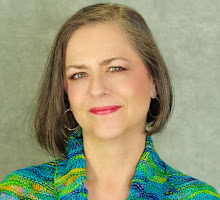
An Interview with...Allyson Dykhuizen

http://www.ravelry.com/patterns/library/sweater-of-broad-shoulders

Once a week I post interviews with interesting people about their insights on their experience of working in the Knitting industry.  I’ve noticed that every one of these individuals makes their living in a slightly different manner bringing their own unique presence to the knitting world.

You can find Allyson here and here on Ravelry.

Where do you find inspiration? 
Lots of places! I love seeing cute outfits girls are wearing in Chicago and figuring out how to make them look just as cute with knitting. And I LOVE cruising Pinterest!

What is your favourite knitting technique?  
It changes all the time, but right now I'm loving plaid colorwork and applied i-cord. 

How did you determine your size range?  
I listen to the garment. I try to have a big range of sizes, but some designs just don't work in some sizes, so it just totally depends on the look and feel of the design. 
 
http://www.ravelry.com/patterns/library/the-sweatshop-of-loves-slouchy-beret-pattern

Do you look at other designers’ work or are you afraid that you will be influenced by their designs?  
Ha, of course I look at other designers' work! I'm get so much inspiration when I see a great knitwear design - I want other designers to feel the same way about my work. You've got to see what other people are doing so you can keep up.

How do you feel about the so called controversy of “dumbing down” patterns for knitters?  
I don't really pay attention to knitting controversy. It's SO dramatic! I do my thing and hope knitters enjoy the way I write a pattern. 

How many sample/test knitters do you have working for you or do you do it all yourself?  
My knitting group in Chicago comes to my aid when I ask for help! I'm getting better about asking for help with sample knitting, but yes, I do the majority of it myself. I can't write a pattern without knitting it because I make so many changes while I'm immersed in the process of knitting it. I'd have a really hard time not being able to have that time. But if I need a sample for something else, something that I've already worked out or an additional sample, I ask for help! 

http://www.ravelry.com/patterns/library/workshelter-lace-striped-sweaters
Did you do a formal business plan?  
Yes! I plan everything. I write down everything. Holla Knits is in it's 4th year and I'm always rewriting and adjusting it's business plan. It's so important to be able to get your ideas and plans down so you can reference them as you grown and change. 

Do you have a mentor?  
I don't! 

Do you have a business model that you have emulated?  
I don't. My business model for Holla Knits was just trying to fill a hole I thought existed in the knitting world, and it grows and changes. I LOVE when other sites pop up that use Holla Knits as a business model! That feels really good.

http://www.ravelry.com/patterns/library/reservoir-mitts
Do you use a tech editor?  
I do! I do most of it myself, but I have a tech editor that I ask for help, and that I give patterns to if they're too much for me to handle. 

How do you maintain your life/work balance?  
Ha, I do not! My life is my work - work being knitting and creating!, and my work is my life. I take work breaks by doing other work. I love it! So it's not really work to me like work is to other people.

How do you deal with criticism?  
I try to learn from it and grow. I also think a lot of just blind criticism that's flung into the Internet doesn't need to hold a lot of weight for me. But the thoughtful criticism I try to learn from and change so me and my work evolves. But you're never going to make everyone happy, and I'm more than comfortable with that. 

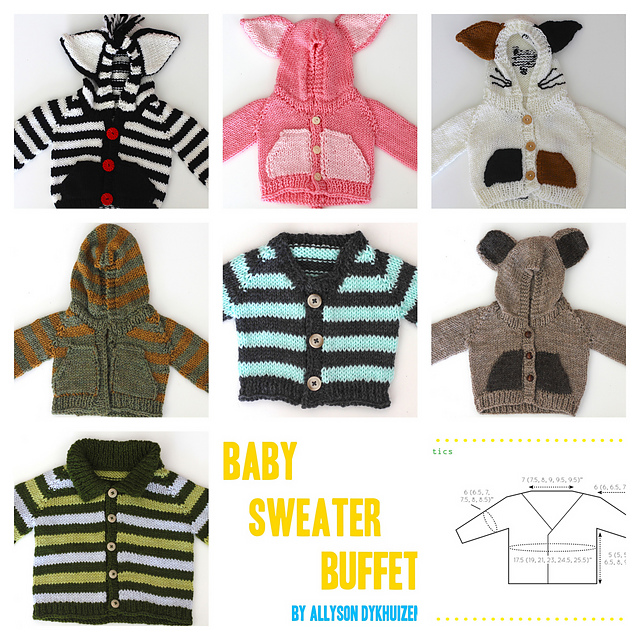
http://www.ravelry.com/patterns/library/baby-sweater-buffet
How long did it take for you to be able to support yourself?  
I fit my life to my small income, and learning how to do that was actually really easy. I'm not a spender - I don't shop or buy things I don't need. So I save and match my lifestyle to my income instead of trying to match my income to a lifestyle I don't really need. I'm very comfortable with it!

What advice would you give someone who wants to pursue a career in knitting?  
You've got to LOVE it, you've got to LOVE being yourself on the Internet because that's what sells patterns. You've got to be comfortable and committed to your style and vision, and do that well, to find your audience. You've got to be good at living on tiny income! You've got to be OK with working constantly. 

What’s next for you? 
My book, Midwestern Knits, comes out in August! So I'll be working on the marketing plan and getting that finalized and out the door. I've got two more Holla Knits collections in 2015, so I'm headed into the designing and tech editing process of both of those collections. There's always a lot going on over here! 

http://www.ravelry.com/patterns/library/new-girl

Wednesday, July 8, 2015

“I just want to knit and I want it to be easy”

I’m having a little phase of “I just want to knit and I want it to be easy”. I’ve put aside a heavy textural garment planned for the fall and I’ve been doing triangle scarves. I knit two out of stash yarn. I showed them to Patrick of Signature yarns and now I’m finishing the second of two new samples for him for fall release.

Here's a few partial photos as a teaser for what's coming. 


Monday, July 6, 2015

This Stuff Makes Me Crazy - Why Fit is so Important for Hand Knitters

Why is it OK for retail knits to fit horribly? I follow the KnitGrandeur blog because I frequently see awe inspiring knitting but this post makes me crazy.  The topic of the post is multi-directional knitting. I love the ideas however the sleeves are making me squirm. I've added the offending photos below.  If I knit a garment like this I can't imagine what my knitting friends would say.


Disclaimer: I have short arms, too long sleeves irritate me more than the average person because I catch my self constantly pushing them out of the way.