Wednesday, February 29, 2012

Are Knitting Patterns being Dumbed Down?


One of my readers recently commented "I regularly read your blog, and you provide a plethora of information, but I feel you need to provide an explanation of why you feel there is a controversy with the "dumbing down of patterns." I personally find beauty in a well executed simple knit as well as the most complex lace shawl. I don't see a controversy."

I agree that simple is often the most beautiful. The question really refers to the specific details of pattern writing as opposed to designing. It's in all of the designer interviews, and originally came from a conversation with a group of designers. The words "dumbing down of patterns" were used at the time. It is the one question that stimulates the most in the way of conversation with the various designers behind the scenes with me. Usually when we discuss the topic it is an off the record conversation. I think the original discussion was due to the frustration designers sometimes feel as patterns frequently turn into lessons instead of just patterns. This is due to techniques having to be explained in detail as knitters have increased the expectation of what a pattern should include. As well, the demand for expanded size ranges adds to the amount of work required for every pattern, while limiting design variations. At the same time, compensation for the work of designers has remained static. Most  designers struggle to earn a living and often, when we do, it is not from design work. It is especially of concern to self publishers as magazines normally include a separate how to section.


Since I've been doing the interview series, I've noticed that the designers who have a strong opinion on this topic are always the ones who have been publishing the longest. They are, therefore, the most aware of the changes that have occurred with the shift in consumer expectations. New designers often don't respond at all which tells me that this is a question that only makes sense if you are aware of the industry’s evolution. The changes also seem to have occurred mainly in North America. European designers rarely have much to say on this topic.

Designers struggle for balance with the amount of technique detail. The usual advice is that techniques beyond the basics must be explained, but there is not always agreement on what is truly basic. Every knitter brings a set of experiences to their knitting and that experience varies widely. As more and more detail is added the pattern becomes longer, more expensive to produce and tech edit. At the same time designers who add a high level of detail are criticized for their lack of conciseness. Some knitters have told me if a pattern has too many pages they won't even consider knitting the project.

When I worked in my LYS the hardest books to sell were technique books; many knitters felt they were an unnecessary expense. Yet designers gobble this type of book up because they want to continually expand their skill sets. As designers, we like to experiment and sometimes we forget that not all knitters want to go down that path. Secondly, designers are focused on finding the best way to accomplish a given outcome and they want to share this knowledge. Check out the prices on The Principles of Knitting: Methods and Techniques of Hand Knitting by June Hemmons Hiatt here. (The new edition coming out in Feb 2012 will probably change the high cost of the older edition.)

It is a situation where I find myself thinking of the famous quote you can make some of the people happy all the time, all of the people happy some of the time but you can't make all of the people happy all of the time”. The good news for knitters...designers talk about this because ultimately we are all trying to make sure that every knitter enjoys the process and the end result. We want you to get the same joy that we do from knitting because we are passionate about our vocation!

Monday, February 27, 2012

Design-a-long - The Paper Pattern Part 6 Sleeve Caps

Everyone who goes through the process of drafting sleeve caps will tell you how difficult they can be to alter. There is a tricky three way relationship between the armhole, the sleeve cap and the width of the sleeve. Add to that the varying shapes of women's bodies and the phrase "it's complicated" applies here. I wrote an earlier post on sleeve width and cap relationships, you can read it here so that I don't need to recap (no pun intended), that information.

There is a complicated mathematical formula that you will find in The Knitter's Guide to Sweater Design, which is a great reference book by the way. However, I've realized after teaching knitters how to do this with a different method the process can be greatly simplified. 

I've focused on showing you visually how to work out these details, so this is how I do it. You know the calculations that you used for the underarm shaping and you plotted them on graph paper, so mark that same shaping on a new piece of graph paper.


You can make a decision on the top section of a sleeve cap shape, that is how wide the final cast off section is going to be. Some designers use 25% or more of the stitch number that they used at the top of the sleeve. By that I mean the width at the underarm before the sleeve cap decreases begin. I sometimes start with that number myself. For my own customized patterns I use 2 inches. On a separate piece of knitters graph paper draw that out and then cut it out so you have just that section as I have in my scanned drawing. I use a little piece of tape to secure it while I fiddle with the  measurements. 


You know from measuring your armhole which you plotted out during a previous post, what the final length of the armhole is. The missing information is the section between the initial cast offs and the final cast off. I use my flexible ruler or you can use a measuring tape standing on its edge to connect the two segments. I fiddle the very top segment up or down as required. I then drawn the line in.


It's easier to work on one half of the sleeve cap for this. The measurement for the one half sleeve cap should not be more than 3/4 of an inch longer than the 1/2 armhole depth, (underarm to shoulder). That means the total sleeve cap can't be longer than 1 1/2 inches than the armhole. I like to ease my sleeve cap in. I like the roundness that easing creates at the seam edge. Not all knitters like that look. If you don't, make your sleeve cap as close to the measurement of the armhole as possible. It is important that it not be any smaller or the armhole will be gathered in. The final step is to draw in your stair steps on the graph paper where I have indicated the dotted line. You will notice that I have done a narrow sleeve with a high cap, so don't be influenced by the appearance of mine, plan yours to accommodate your own custom fitting.

Next time, I'll explain how you can use what you've been doing to knit the garment.


Links to the other posts:

http://knittingrobin.blogspot.ca/2011/12/knitting-basic-boring-garments-that-we.html

http://knittingrobin.blogspot.ca/2011/12/design-long-tools-and-supplies.html


http://knittingrobin.blogspot.ca/2011/12/design-long-measurements.html

http://knittingrobin.blogspot.ca/2011/12/design-long-taking-measurements.html

http://knittingrobin.blogspot.ca/2012/01/design-long-swatching-yes-you-have-to.html

http://knittingrobin.blogspot.ca/2012/01/design-long-more-details-on-swatching.html

http://knittingrobin.blogspot.ca/2012/01/design-long-paper-pattern-part-1.html


http://knittingrobin.blogspot.ca/2012/01/design-long-paper-pattern-part-2.html

http://knittingrobin.blogspot.ca/2012/02/design-long-paper-pattern-part-3.html

http://knittingrobin.blogspot.ca/2012/02/design-long-paper-pattern-part-4-dart.html

http://knittingrobin.blogspot.ca/2012/02/design-long-paper-pattern-part-5.html

http://knittingrobin.blogspot.ca/2012/02/design-long-paper-pattern-part-6-sleeve.html

http://knittingrobin.blogspot.ca/2012/03/design-long-paper-pattern-part-7.html

Friday, February 24, 2012

An Interview with...Maryna Shevchenko


Once a week I post  interviews with interesting knitting professionals about their insights on their experience of working in the Knitting industry.  I’ve noticed that every one of them makes their living in a slightly different manner bringing their own unique presence to the Knitting world. 

You can find Maryna's online store here.

Tell me how you got into the business of running an online yarn store?
Probably like most owners of a knitting store – knitting’s been my passion since my sister taught me how to knit when I was 7. The freedom of creating my own yarn line was a secret dream of a life time for me and when the opportunity came I simply jumped into it.

How long have you been in business?
Feels like a decade but really the business was registered in September 2010. That means we’ve been working for a year and a half.

Do you run the store by yourself or do you have employees, if you do how many people work at your online shop?
Mostly it’s my husband and me. When needed we hire experts in some specific fields like marketing or web programming.


How did you choose the yarns that you carry?
I love natural fibres and the fact that they usually require special care makes them even more special to me. But still I am a working mom of two and prefer to deal with washing fast and easy, that’s why superwash merino wool was my no.1 yarn choice. Then I added pure wool, lustrous bamboo and some exquisite mink and yak yarns to the line. Generally I listen to our customers, they are usually very generous with ideas, plans and wishes. I just do my best to make some of their wishes come true and bring quality yarn at a very good price.

What is the biggest lesson running this business has taught you?
Listen to your instincts and don’t waste time, every minute of every day counts.

What is your favorite part of what you do running the shop?
I love everything about my job, but the best part is to be able to knit almost anything in almost any color and texture. Recently I even turned to knitting with wire and enjoy it a lot. There are some knitting with wire kits available in our store so you too can give it a try.


We’ve seen many cycles in the yarn industry of the market increasing and then falling again. What are your thoughts on where things might be headed now?
World is so integrated now that we all depend on numerous factors we don’t even know about. One of them is constantly increasing Australian and British wool prices. We cannot fight it and we cannot ignore it but it’s not a reason to get scary and shut knitting business altogether. If the company is friendly and fair, it will keep working. It is especially true for knitting industry, because knitters are happiest and friendliest people on our planet J

Do you have a mentor?
There are many people I admire and learn from but I don’t have a formal mentor.

Did you do a formal business plan?
I did a lot of planning and calculations but I never put it in a form of a multi-paged business plan.

Do you have a business model that you have emulated?
Business model is only a model. You can’t walk somebody else’s path. It’s like a sweater – even if you like the design and have a pattern, for perfect fit you need to adjust length, probably add some shaping here and there. Running a business is making your own sweater.

Did you take any courses in how to run a business before you opened?
I am a trained accountant but more importantly I’ve been a business owner for almost 10 years before starting Knitca. I used to work with educational toys. That’s probably why I like to pack everything in an appealing box.

How do you maintain your life/work balance?
Working from home helps me be there for my family when they need me.

What advice would you give someone who wants to pursue a career in running an online yarn store?
Do a lot of planning, make customer service your top priority and don’t get obsessed about money. They say: “Do what you like and money will follow” and it’s absolutely true.

Maryna sent me some samples of three of her yarns that I am interested in using. I did swatches with a cable with each. Her worsted Woolly Warmth is a sturdy 100% wool. It has good stitch definition and would make excellent garments meant to be worn as an outer layer. Her Delight line is a DK, 100% wool. If you are a fan of Zara, which was a very popular yarn when I worked in my LYS you would love it! She also carries Lovely, DK, 100% bamboo. It has a beautiful sheen and good stitch definition as well. I've only knit with 100% bamboo once before, I love the feel of it and this yarn seemed to be a superior version to the one I used in the past with a stronger twist and a little less of a tendency to split while being worked. All three yarns come in a wide range of solid colours. I'm planning to buy all three of these yarns for myself.


Wednesday, February 22, 2012

The Economics of Knitting - The High Cost of Rock Star Knitters


Recently my guild, the DKC ran a focus group  to find out from members what they want from the guild and how to attract more members. In the report from our newsletter I found the points I've listed below, especially interesting.

• More high-profile speakers. While everyone wanted more high profile speakers, the cost is high since it includes travel, maintenance and fees. Sometimes the DKC is fortunate enough to engage a speaker who lives locally or is in Toronto for another purpose, thereby avoiding travel and hotel costs. Suggestions to defray costs were the use of Skype technology and leveraging DKC member “connections” with potential speakers.
 
• Knitting workshops with high-profile instructors. The group wondered if the DKC should consider organizing an event similar to the Knit East, three days of workshop classes with a marketplace, held in St. Andrews NB in the fall of 2011. There were many high-profile instructors such as Cat Bordhi, Jane Thornley, Lucy Neatby, Veronik Avery and the Yarn Harlot, Stephanie Pearl-McPhee. There seemed to be an appetite among knitters to attend expensive courses as most were sold out. Since this type of event requires considerable planning and financial commitment, it also would require careful consideration.

I realized reading this, just how differently I view the situation from my perspective now that I'm working in the industry as opposed to when I was just a fanatical knitter. I can see the tight spot the guild is in. In the case of speakers the meeting is about 2 hours long and speakers usually get about an hour for their presentation. The guild report did mention the high cost of travel and accommodation expenses to them to bring in a high profile speaker. The other factor to consider from the speaker's perspective is that they also have to take their traveling time into account. It means that a one hour event may take the better part of two days away from their working time.The problem with this is that guilds typically run on a shoe string budget. Speakers are paid a nominal fee that doesn't equal the time actually spent by the speaker. I'm not even accounting for the prep time required to prepare the material for the presentation. I checked with a unnamed insider in an unrelated "not for profit" industry and was told that a speaker at their industry events are paid any where from $3,000 up to $25,000 for a high profile speaker. Occasionally they get a deal on high profile speakers who are promoting a book and the fee goes down to $10,000. I think we all know this is totally out of the guilds ability but I'm giving you the details as a point of comparison.

The knitting workshops are also an interesting topic. Our events, as like most other guild lectures and workshops are below the international knitting events like Vogue Live, but above the local yarn store level in terms of compensation. Working professionals obviously need to carefully review compensation before committing to an event. Some designers will only make appearances at smaller events if they are the sole focus of the event. I know some big name knitters who have that spelled out in their contracts. That means you may see them at the large shows with other designers and teachers but otherwise they are the center of retreats and workshops that they appear at. We currently do not have any single focus workshop events. That means that many of these instructors will never appear at our events.

The DKC pays teachers based on the number of class hours and the number of students attending. This can work out to the advantage or disadvantage of the instructor. Most big name knitters have a flat fee so they are unlikely to commit to the payment format of the guild. The guild wants to be fair and consistent with their payment so it would be difficult for them to change their format for one teacher only.

High profile knitters are also very busy and need to be booked way in advance. Our guild has an amazing and dedicated executive, however they are volunteers with heavy demands being placed on them. I doubt that they have the time to be working on these events so far into the future in the way that international events with full time staff can. The whole industry has issues around the topic of fair compensation. It's difficult to make a living in this business. That means there aren't very many really big name knitters as most need another source of income to follow this path. That means costs are high (in knitting industry terms), on those few established industry leaders. However if you compare to any other industry for speakers and workshops, we are still paying knitters at the very low end of the scale.

Monday, February 20, 2012

Design-a-long - The Paper Pattern Part 5 Sleeves


If you've been following along, we are now ready to draft the sleeves. This time we will work on the part from wrist to armhole. You need the gauge of your yarn, both by stitch and by row. Accurate row gauge is very important here so I always recheck on a piece of knitting larger than my swatch, usually the back of the sweater. I also take the count over a larger number of inches than the standard swatch. I often use 10 inches. You also need 3 arm measurements, your wrist, your upper arm and your arm length. You should be using the measurements with ease not your body measurements.


My tailoring background has lead me to develop high standards for sleeve fit. The tailored sleeve fit is much more contoured in shape than the sleeve we normally use in knitwear. Notice on the classic sewn two piece sleeve in the drawing above how different it looks from most knitted sleeves. Take a look through some of your pattern books and magazines to look at a variety of sleeves and you will see schematics with contoured shapes. Generally though, we see sleeves that run in a smooth diagonal line from wrist to underarm. If you think about how your arm is shaped, a straight diagonal doesn't accurately reflect the increase in width from wrist to underarm. This is your customized pattern so you will choose whichever style you want. 


The standard knitted sleeve is easy to draft from wrist to underarm. Using your knitting graph paper, your gauge and your calculated number of stitches and rows, draw in a line at the bottom for your wrist that is the appropriate number of stitches. Count up to the number of rows required for the length of sleeve you want. Then mark in the width of stitches required for your upper arm and draw in a diagonal line starting about an inch worth of rows below the final length. This can be longer than 1 inch depending on your final increase location but don't make it less than an inch or more than 2 unless your upper arm is very full. The final step is to draw in the stitch increase steps as you did on previous parts of the pattern. The steps may not work out evenly, so you need to decide if you want to fudge the numbers to get an nice simple instruction like increase 1 stitch at each end of your needle every 6 rows or follow your graph pattern. 


A contoured sleeve more accurately follows the shape of your arm. If you want a more contoured sleeve you will need to work from the cuff straight with no increases for 5 - 6 inches. Next  you would work a slow rate of increases for 5 - 6 inches and then the final 3 - 4 inches would have a quicker rate of increase before the final straight section. I draw this in on my graph paper and then work out the actual steps.

I always do a reality check on the length of my sleeve before starting the cap shaping. The finished length of your sleeve is impacted by the depth of your armhole. Measurements don't account for this variation. So if your armhole is a little deeper or shallower it will impact where your sleeve ends up on your arm. I like to join my shoulders, put the garment on and test the sleeve length by holding it lined up with the armhole's bottom edge and checking where it hangs to, on my arm.  Remember, a bent arm needs more length than a straight one so it should allow for that movement and still be acceptable to you.

If you are using minimal ease allowances, you can also do a second reality check for the width measurements by using a tape measure, clipping it with a binder clip or paper clip into a circle of the correct size then moving it up and down on your arm to verify that it will not be too tight.

Now that you are working through all of this detail you can see why designers do all of this mathematically when they are grading multiple sizes. I've chosen show you how to work visually because having a clear visual understanding of what the goal is by doing the drafting teaches you much more.As well I'm focusing on customization not generic pattern writing.

Next time, I'll cover a quick visual way to create the sleeve cap.


Links to the other posts:

http://knittingrobin.blogspot.ca/2011/12/knitting-basic-boring-garments-that-we.html

http://knittingrobin.blogspot.ca/2011/12/design-long-tools-and-supplies.html


http://knittingrobin.blogspot.ca/2011/12/design-long-measurements.html

http://knittingrobin.blogspot.ca/2011/12/design-long-taking-measurements.html

http://knittingrobin.blogspot.ca/2012/01/design-long-swatching-yes-you-have-to.html

http://knittingrobin.blogspot.ca/2012/01/design-long-more-details-on-swatching.html

http://knittingrobin.blogspot.ca/2012/01/design-long-paper-pattern-part-1.html


http://knittingrobin.blogspot.ca/2012/01/design-long-paper-pattern-part-2.html

http://knittingrobin.blogspot.ca/2012/02/design-long-paper-pattern-part-3.html

http://knittingrobin.blogspot.ca/2012/02/design-long-paper-pattern-part-4-dart.html

http://knittingrobin.blogspot.ca/2012/02/design-long-paper-pattern-part-5.html

http://knittingrobin.blogspot.ca/2012/02/design-long-paper-pattern-part-6-sleeve.html

http://knittingrobin.blogspot.ca/2012/03/design-long-paper-pattern-part-7.html

Friday, February 17, 2012

An Interview with...Katya Frankel


Once a week I post  interviews with interesting designers about their insights on their experience of working in the Knitting industry.  I’ve noticed that every designer makes their living in a slightly different manner bringing their own unique presence to the Knitting world. 

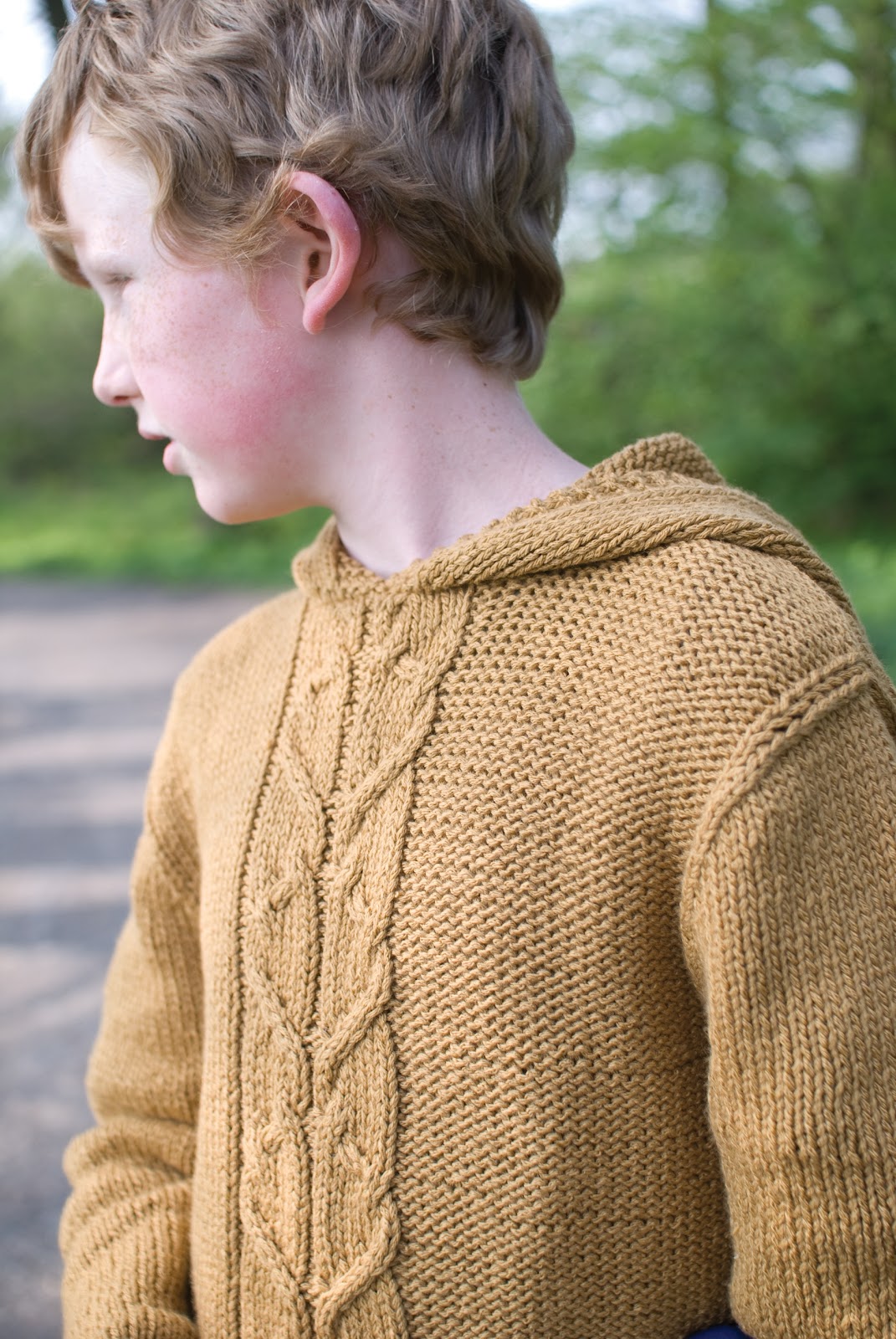
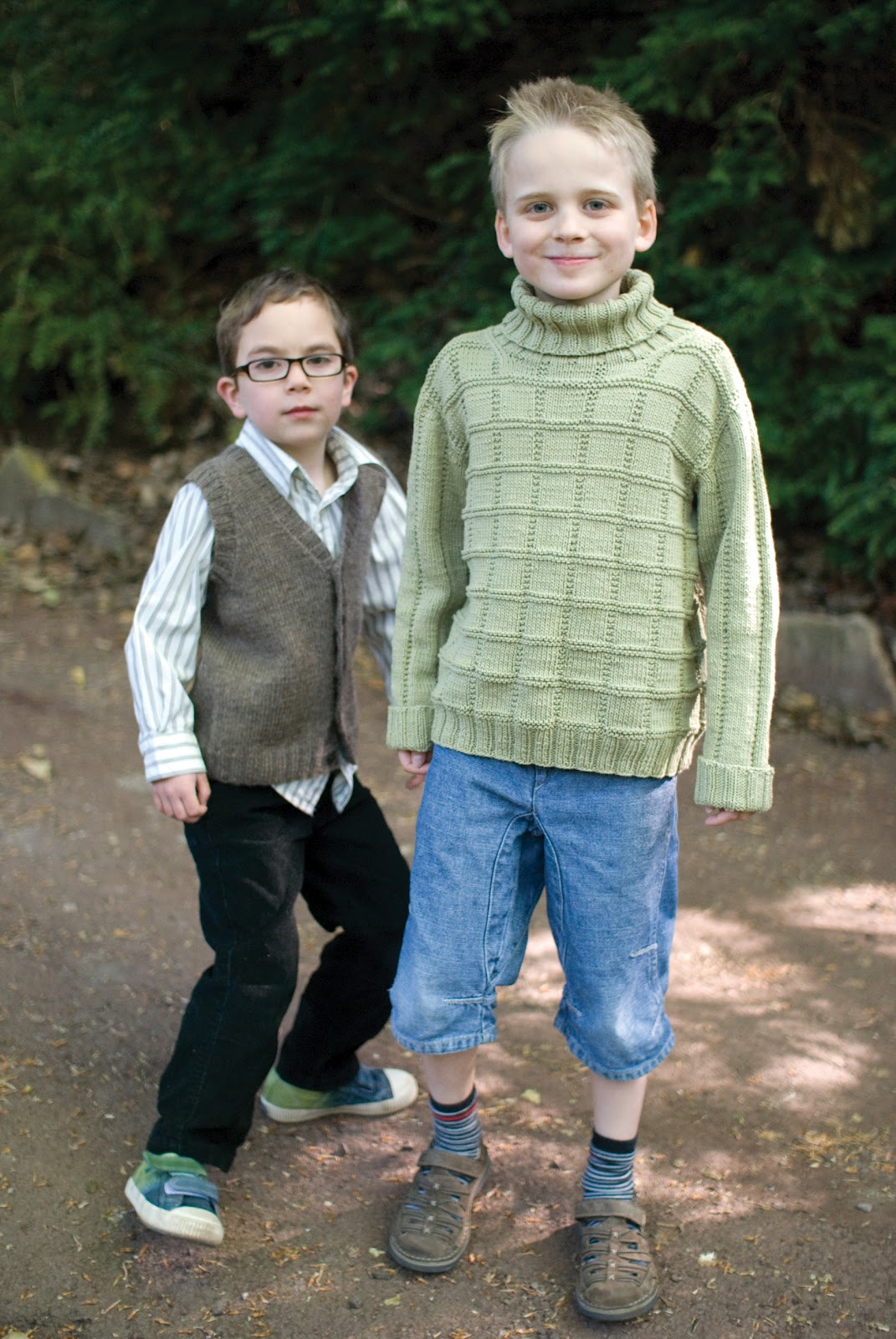
Katya's first book, Boys' Knits, is a collection of 16 sweater patterns that boys will love to wear. Her signature style combines classic silhouettes with feature details resulting in some very handsome sweaters. In the past she has published her patterns in Interweave Knits and has designed in a wide range of projects from accessories  to garments for both women and children.


You can find Katya here and here on Ravelry. Katya's patterns are available on Ravelry, at her website and in her upcoming book available for pre-order from the publisher's website at:
http://www.cooperativepress.com/shop/boys-knits/


Where do you find inspiration?
All around me: literature, photographs, fashion shows, doodling, art, yarn, knitting techniques - it depends what I am working on. I have a binder where I put any visuals that excite me, magazine clippings, descriptions of things that I think would be neat to have or wear. If I work for a publication then I dip into it to check if I have had any ideas that would cross with the submission call. Playing with yarn and seeing where it takes and then working around that inspires me a lot as well.

What is your favourite knitting technique?
I love any technique that's nifty and can be done along the way. Things like covering up little holes on the sides of the sock heels with crossed stitches, a way to work a fitted sleeve cap seamlessly, button-holes in one row, shaping incorporated into the stitch pattern all get me very excited!

How did you determine your size range?
Often it's determined by the look of the design and stitch pattern combination. But as a rule, I try to work between 30 and 48 inch chest circumference with 2 inch increments where possible. And for children's wear I include sizes to fit 4 to 12 year olds with finished chest measurements of 23-30/32 inch. Saying that, in the Boy's knits most of the sweaters are sized up to size 14 to cover a slightly wider range.
 

Do you look at other designers' work or are you afraid that you will be influenced by their designs?
Having made some great friends with a number of knitwear designers, inevitably, I do look at *their* work from time to time. We are being influenced by every single image we see and conversation we have and what not in our life, so yes probably I am being influenced by my peers' works but at the same time we all have quite a distinct direction. It's important to me to be authentic, my work might not excite everybody but it is true to myself.

How do you feel about the so called controversy of "dumbing down" patterns for knitters?
I have never heard of it.

How many sample/test knitters do you have working for you or do you do it  all yourself?
I usually work on everything myself because often I need to work through small nuances of the design, it's shaping or some special techniques, to know whether they all work together and whether each part can be extrapolated up and down across the range of sizes. I did however use a sample knitter for the Boys' collection. We worked closely together on every part of each garment and it was an interesting experience for me. The work plan had to be rearranged completely to what I am used to, all the details had to be thought through before I sent the patterns off to be knit up. In a way it was more difficult, because I felt that I couldn't monitor each step as the sweater grew and there were parts that had to be re knit for one reason or other but on the other hand I enjoyed the rush I got when I finally met with the finished samples.

Did you do a formal business plan?
I don't have an official plan but I have a financial projection for a year ahead and a set of goals that I check twice a year to make sure I am on course.

Do you have a mentor?
I do have a few friends that I can go to if I need help with a decision that I need to make.
 

Do you have a business model that you have emulated?
No.

Do you use a Tech Editor?
Absolutely! Finding a tech editor was the first thing I did when I decided to self publish my first pattern, well before it was written.

How do you maintain your life/work balance?
I do work from home and do find it difficult to limit my work hours when the two are so intertwined. If I am under a deadline, pressure work takes over my life completely but I still try to keep afternoons for family/children time. I'd really like to reach that point where I don't have to switch my computer on when the children are back from school. :-)

How do you deal with criticism? 

Over the past few years I've developed a thick skin when it comes to criticism. It used to be pretty hard to separate my work from *me* because my work is an interpretation of my feelings and so accepting criticism used to be difficult. I do however realize that I am putting my work out there, and although I'd love it if people liked it, I cannot possibly expect everyone to have the same taste or the same interest in techniques as myself.
 

Could you tell us a little about your upcoming book?
Boys' Knits is a collection of 16 sweaters for boys with focus on timeless wardrobe classics like: raglans and fitted sleeve sweaters, zippered cardigans and simple vests. I used classic shapes as a canvas to showcase different stitch patterns, design elements or finishing techniques, keeping sweaters simple yet interesting to knit and easy to finish. All patterns in the book are knit in the round from the bottom up and are sized up to fit chest measurements from 23 to 32. There are also step by step instructions with photographs that cover techniques used in the book.
 

Boy's Knits is being published by Cooperative Press, who is committed to publishing knitting and other craft related books. They were incredibly positive, supportive and relaxed, letting me bring my vision to life from choosing yarns to photography styling.

What advice would you give someone who wants to pursue a career in knitting?
Stay true to yourself and work hard! And on practical level be prepared to pick up new skills fast and work 10 different jobs in a day, find a fantastic tech editor that understands your needs.


Wednesday, February 15, 2012

New video - How to knit bobbles without turning the work

Tonight, I'll be teaching at the DKC's skills exchange evening. Since most of my readers won't be attending, here's a video presentation on my topic: Knitting bobbles without turning the work. The link is at the bottom of this post. The video includes several techniques for increasing and decreasing the stitches of a bobble. There are two methods for creating bobbles without turning the work, as well as a number of extra tips for successful bobbles.

I also have some exciting news to share from the Patternfish newsletter this month. I have 2 of the top selling patterns. My Prudence Crowley vest is the number 1 vest and Evelyn Howard made it into the top ten in the shawl category. The reason I'm so excited...just look at the other designers represented.  Even better my friend Deb Gemmell of Cabin Fever also is in several categories and she and I are currently collaborating on a plus size collection.