Wednesday, March 30, 2016

Oakville Guild Presentation

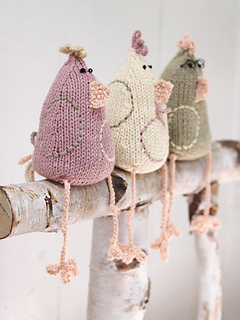
Found on Pinterest


I'll be speaking at the Oakville Association of Knitters and Crocheters next week. (Tuesday April 5) I'm doing a presentation version of one of my most popular classes there called:

What the Pattern Doesn't Tell You:
 
Knitting patterns are like recipes, full of terminology and instructions that assume you know things you might not yet have encountered in your knitting experience. Join me to learn all of my tips, tricks and knitter rules which will make your projects even better. I'll share the details which aren’t in the pattern. You'll learn how to choose patterns and supplies to knit with confidence. There will be quick tips on how to cast on without a knot, how to cast on large numbers of stitches and much much more. This talk was developed as a response to all the questions that knitters ask me.


Their Ravelry Group is here: http://www.ravelry.com/groups/oakville-association-of-knitters--crocheters

The meeting takes place at The Queen Elizabeth Community and Cultural Centre


Friday, March 25, 2016

An Interview with...Inês Sousa


Pétala


Once a week I post interviews with interesting people about their insights on their experience of working in the Knitting industry. I’ve noticed that every one of these individuals makes their living in a slightly different manner bringing their own unique presence to the knitting world.

You can find Inês here and here on Ravelry.


Where do you find inspiration?
Everywhere, it changes a lot. My attention might be caught by a pattern stitch, a technique or by a particular shape or concept. I have designs inspired by Nature, poems and music. Something is triggered and I feel the need to explore it until it’s materialized into stitches, resulting in a knitted item.

What is your favourite knitting technique?
I have many. I especially enjoy combining different techniques and pattern stitches that result in appealing textures. I have, however, a weakness for lace. Its precision and delicacy are both challenging and rewarding. I also prefer seamless projects, which I find polished and clever (more close to the true nature of knitting, in my opinion). When possible I work them in a modular manner, whereby size is adjustable depending of the number of pattern repeats worked.

How did you determine your size range?
At the present I design accessories and not garments. Most of them are adjustable, being worked in a modular fashion which offers a great deal of freedom to the knitter.
Do you look at other designers’ work or are you afraid that you will be influenced by their designs?
I do look and don’t see them as a threat to my own creativity. I enjoy seeing new patterns emerging from magazines, books and great sites such as Ravelry; being aware of the new trends and watching how everything tends to be recycled. What was once old may be now very fashionable. Vintage books and magazines show this very clearly.

How do you feel about the so called controversy of “dumbing down” patterns for knitters?
I believe that patterns should be clear, complete and concise. My approach isn’t throwing knitters into lions' dens by providing scarce instructions and obscure drafts. Most of my patterns have both charts and written instructions, and all of them have the abbreviations explained (for instance, I explain how to execute an invisible increase to the right and if the slipped stitches are worked with yarn in front or back). It’s common to provide links to videos, and sometimes I post tutorials showing a special stitch or technique. I think that all these reduce the number of messages inquiring about the pattern. After all, if you have doubts about a sentence, you may check the chart to make sure you’re on the right track.

However, every designer has to draw a line and this is very subjective – does it make sense doing a video about an ordinary cast-on just because you’re asked to? Well, the knitter may simply search it on-line and get the answer in a minute. Even though many techniques and new skills may be achieved by knitting more challenging patterns, it’s not reasonable to expect that a designer has to teach how to knit. I spend a great deal of time listing the necessary skills required to knit the pattern and also rate the level (Beginner, Intermediate, or Advanced). Every knitter should take these aspects into consideration before starting to knit the pattern, to avoid frustration and false expectations.
How many sample/test knitters do you have working for you or do you do it all yourself?
I don’t work with sample knitters I do it myself. I don’t have specific test knitters; I run test-knits in my Ravelry group and have worked so far with many knitters, many of whom are recurrent. I don’t do lists, which I’m aware is unusual, but this approach has worked well so far. Sometimes, I ask some repeating testers about future tests, especially when they’re done privately.

Did you do a formal business plan?
No, I follow a working ethic only – doing the best possible job, over and over again. My focus is on publishing high-quality patterns that I feel are special and unusual. I try not to repeat myself. I’m not present on most of the social media either – Twitter, Facebook, etc.  Ravelry is an exception.


Oliva

 
Do you have a mentor?
No, I’m a self-taught knitter. I started knitting as a child but my knitting skills were quite basic. I only knew how to cast-on and purl (that’s the dominant stitch in the Portuguese style of knitting). I learned everything else from books, videos, tutorials, etc… One big reference is Barbara G. Walker who is known for one of my favourite techniques – knitting top-down, seamless. When I started, the lack of yarn stores, workshops, knitting groups, etc... was very discouraging. I remember ordering yarn on-line and pretty basic tools such as double pointed needles, which I couldn't find locally. Fortunately, today, the scenario is totally different and knitters have a wide range of tools/choices available.

Do you use a tech editor?
No, unless the pattern is published by a third party. My work is highly tested, first by me and then by test knitters and at the present, this works for me.

How do you maintain your life/work balance?
That's a work in progress. I try to stop working after long hours, otherwise I know I won't function the next day. Because I have a full time job, there is the temptation to spend all my spare time in knitting - nights, weekends, lunch time, etc... However, I think that having a plan and sticking to the plan is a better idea, since I have to attend to other areas and eventually get some rest. Yoga practice is especially helpful to gain some awareness about this issue and create space for myself. I don't see creative work as a sprint but more as an endurance exercise.
How do you deal with criticism?
As with everything in life, we should keep what’s important and ignore what isn’t. One type is constructive feedback that helps to improve our work (correct typos, explain a technique better, fix errors, change the pattern layout, etc…) and another thing is the writing style and even the personal taste, which is much more subjective. Plus, we can’t please everyone; we really can’t.

Understanding that a criticism isn’t a personal attack – the subject of the criticism is the work itself and sometimes not even the entire work, but minor aspects of it – might help us deal with criticism in a better way.

What advice would you give someone who wants to pursue a career in knitting?
Patience and persistence. Follow your own path.

What’s next for you?
I'm writing a book focused both on knitting techniques and patterns. At the moment it feels overwhelming, but let's see how it goes. I would like to coordinate this with self-publishing patterns. Yesterday, I released Tulipa Espiral on Ravelry and I would like to keep doing that, despite my best efforts being directed into a bigger project.


Tulipa Espiral


Wednesday, March 23, 2016

How to Overcome the Fear of Public Speaking


Did you know that people rate the fear of public speaking as higher than that of death on surveys, according to Psychology Today?

It's something that you can get much better at if you put the effort into preparing and practicing

The first time I spoke at my own guild was probably more than fifteen years ago. I remember the anxiety I felt leading up to the event. There were over 75 people there and I did my presentation without seeing the faces of anyone in the audience. I struggled with speaking way too fast. Fortunately I had a friend there helping with the visuals so that was one less thing to worry about. 

After having done many presentations in the ensuing years I've finally gotten to the point where I feel very comfortable speaking and I'm no longer thrown when things go wrong. Which is good because they do! Often it's technical challenges. Every once in a while it will be a member of the audience who is challenging.

One of the things that really helped me was understanding, stress is good, it's your body getting ready to meet a challenge. I want to do a really good job. I want the audience to walk out the door saying "hey that was great!" So of course I feel pressure. If I didn't it would be because I didn't care if I did a good job.

Here's some of the things I did to get better at public speaking. 

I practice every talk many times. I stand up and do it out loud making sure I don't talk too fast. Now I usually speak too quickly for a moment at the very beginning but I catch myself and slow down.  

I studied up on how to do a good power point presentation. I read several books but this one is the winner in my experience: Presentation Zen: Simple Ideas on Presentation Design and Delivery by Garr Reynolds

I wrote a list after every presentation about which skill I wanted to work on for next time and I searched out resources and worked on that topic.

I watched YouTube videos on public speaking. 

I video taped myself and watched it. It's amazing how fast you break bad habits when you see yourself on tape.  

I remind myself that the audience wants me to do well and there are always people there rooting for me. 

When I get positive feedback I make an effort to repeat it to myself again when I'm nervous. 

I always have a plan for how to do the presentation if all the tech fails. That includes a paper version of my notes and some visual aids which can be held up and passed around. 

I write the notes in a less formal manner and change them to be in alignment to the way I normally speak often putting them in point forms to force me not to read every word.

I look around the audience and at specific people. With knitters this is challenging as some of them never look up. 

If you are one of the terrified public speakers please remember, worrying about it is almost always much worse than the reality. No one likes public speaking, especially in the beginning. Preparation is critical and once you're done you get to feel brave for doing it. 


Monday, March 21, 2016

My Very First Sweater


This was it! The first sweater I knit for myself.

Friday, March 18, 2016

An Interview with...Ela Torrente


Sand Pullover


Once a week I post interviews with interesting people about their insights on their experience of working in the Knitting industry. I’ve noticed that every one of these individuals makes their living in a slightly different manner bringing their own unique presence to the knitting world.

You can find Ela here and here on Ravelry.


Where do you find inspiration?
I find inspiration mostly from nature that surrounds me. I'm lucky to live in the heart of a small nature reserve and the "green" is part of my life.
 

Recently I'm also studying the 40s style and I'm very fascinated by it. I find that women were incredibly graceful and cleverly valorized from that fashion.


What is your favourite knitting technique?
I love seamless knits and I'm seriously addicted to lace knitting. Like children, I tend to get bored: lace knitting helps me to maintain interest in what I'm doing. 


Soft Stones


How did you determine your size range?
In designing garments, I try to cover a wide range of sizes. Habitually, I use the Craft Yarn Council as a guideline, but I try to design highly customizable garments because we are all different.


Do you look at other designers’ work or are you afraid that you will be influenced by their designs?
I love to browse the internet and look at what's new! I'm not afraid to be influenced, rather it shows me the new trends and helps me to be sure not to publish anything too similar. 


Pepita


How many sample/test knitters do you have working for you or do you do it all yourself?
It depends on the design. Usually I do my samples by myself, sometimes I get help from my mother. I receive lots of help in testing from Ravelers and Facebook friends!


Did you do a formal business plan?
Nothing formal. I have an annual spreadsheet with goals. It helps me keep my feet on the ground.


Do you have a business model that you have emulated?
Oh, no. There are some designers that I really admire.


Incrocio


Do you use a tech editor?
Always, since designing became my job. It's a precious help, whatever I write.


How do you maintain your life/work balance?
It's easy: my family first. I worked for many years by sacrificing time with my family. Designing allows me to repair.
 

A knitting work can be put aside however many times you want, a spreadsheet can be saved and opened countless times... any road trip, any Star Wars marathon can become my office time. I forgot the words "I can't". This has increased the support of my family to me, has made me satisfied and therefore more productive.


How do you deal with criticism?
Constructive criticism is always welcome!


Dirty Martini


How long did it take for you to be able to support yourself?
I'll tell you when I get there. XD


What advice would you give someone who wants to pursue a career in knitting?
Be curious, be positive, be patient and take the time to relax yourself. 


What’s next for you? 
During this year I'm increasing my presence in several online and paper magazines and my collaborations with yarn companies, so you can find me everywhere.  

I'm planning also to do a second edition of my "Ultimate Modish Sweater Club" which is going better than I expected!
 

I'd love also to focus on new yarns with special care in local and artisanal processing.


Mina