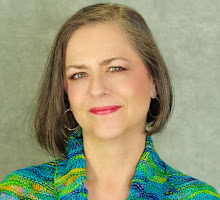
I'll be back at Linda's Craftique next Saturday. I'm teaching two of my most popular classes.
Here's what Linda says about the Buttonhole class:
"On a personal note, I have always told people to “get over it, there is
no such thing as a nice buttonhole in knitting” I was wrong….I took this
class and Robin has some wonderful ways to make great buttonholes!!"
Saturday, March 21st (3 hours), 10am-1pm
Buttonhole Boot Camp
Are you afraid of buttonholes? You don't need to be. Join Robin to learn all about buttonholes. Learn how to choose which type to use, the pros and cons of various forms of construction, how to knit each type and much, much more.
Students must know how to cast on/off, knit and purl.
Materials: Odd balls of worsted weight yarn and 4.5mm needles
Saturday, March 21st (3 hours), 1:30-4:30pm
What the Pattern Doesn't Tell You
Knitting patterns are like recipes, full of terminology and instructions that assume you know things you might not yet have encountered in your knitting experience. Join me to learn all of my tips and techniques that will make your projects even better. I'll share with you the details that aren't in the pattern.
Students will learn how to choose patterns and supplies to knit with confidence, cast on without a knot, make the cast off edge square, how to start a shawl from a garter stitch tab and much, much more. This class was developed as a response to all the questions that knitters ask me, so please come with your personal knitting questions.
Students must know how to cast on/off, knit and purl.
Materials: Odd balls of worsted weight yarn and 4.5mm needles
Monday, March 16, 2015
Friday, March 13, 2015
An Interview with...Eileen Casey
![]() |
| http://www.ravelry.com/patterns/library/tilted-heart-top |
Once a week I post interviews with interesting people about their insights on their experience of working in the Knitting industry. I’ve noticed that every one of these individuals makes their living in a slightly different manner bringing their own unique presence to the knitting world.
You can find Eileen here and here on Ravelry.
Where do you find inspiration?
Everywhere, really. I’m especially prone to seeing a snippet of something interesting on a passer-by, or rewinding films to get a second look at some knitwear, lace patterning, the cut of a sweater, or a colour scheme. My Devenish sweater (photo below) was influenced by the stone carvings on Devenish Island in Northern Ireland, while my Loie beaded sweater (photo below) was inspired from scroll-work seen on a wrought iron gate. What stops me in my tracks and sparks an idea is very random, really.
What is your favourite knitting technique?
It has to be cabling – I am from Ireland, after all! I cut my knitting teeth on traditional Arans, and they are my first love.
Do you look at other designers’ work or are you afraid that you will be influenced by their designs?
I do make a concerted effort not to look at the work of other designers. Although I now have a body of work that I feel shows enough individuality and creativity to defend myself if a question were to arise – a lot of sweaters, cardigans, shawls, etc. have similarities in shaping and stitch pattern. I just don’t want to leave myself open to scrutiny or criticism.
The down side of that is that you lose the spark of creativity that comes with community, and bouncing ideas around. We’re not philosophers or poets sitting around in cafés sharing ideas and encouraging each other to new heights.
Still, knitting and design are fairly solitary pursuits, and I think that is just the nature of the beast. I do get some good ideas and feedback from my local knitting group, in which there is another published designer, and well-known hand-dyer, but there is camaraderie not competition.
![]() |
| http://www.ravelry.com/patterns/library/loie-2 |
How do you feel about the so called controversy of “dumbing down” patterns for knitters?
Considering my answer above, if you had asked me this question a few weeks ago, then I wouldn’t have been sure what you were talking about. HOWEVER, one of my patterns was No. 4 in the Top 20 best seller on Craftsy last week, and upon seeing that I just had to go and look and saw the other 19…
Yes, there did appear to be some very basic hats, cowls and mitts there. And none of them were offered for free *gasp*.
My take on it is this: they were in the Top 20 best seller list too. Someone is buying these patterns, because someone needs these patterns. Having an impressive set of knitting techniques in your repertoire doesn’t happen overnight. There is a market for beginner patterns, for patterns that help you to hone your craft, and get comfortable with a m1 or k2tog. These patterns took time to write, format, test, photograph, and publish. Work is work – sometimes you have an easy day at the office and sometimes you are swamped, and I suppose this is the knitwear design version of an easy day at the office. Perhaps the controversy should be about why, for so long, it was expected that beginner patterns should be offered for free. Good, clear, well-written beginner patterns are crucial to keeping beginner knitters excited about, and interested in, knitting.
Also, there is the question of perception. When we were aged 13 in high school, we were offered the chance to branch out and choose subjects to study that were off the main curriculum. I chose Ancient Greek. Yes, I was odd. I was the only one in my class – other kids choosing more useful subjects like German and Japanese.
I remember my first day, just me alone with the teacher, and how bizarre and incomprehensible those letters looked on the page. I thought I would never be able to understand these strange symbols. After a while, though, I learned the Greek alphabet and the sentence construction. After a few months I went back to that first passage from that first day that had meant nothing to me, and I could read it. More than that, I could not un-read it. It would never again be gibberish to me. I stuck with Greek – even as far as studying Classics at university. And I’ve stuck with knitting – 33 years and counting.
So it occurs to me that I am no longer a good judge of the merits of basic knitting patterns any more – I can’t un-read them. I can look at a simple hat or scarf and replicate it. But new knitters can’t. New knitters want to be led by the hand step by step through this frustrating, fumbling process called knitting. And if it’s worth $4.00, or $5.00, or $6.00 to them to be walked through it, what does it really have to do with what I think?
How many sample/test knitters do you have working for you or do you do it all yourself?
It differs from pattern to pattern. The more sizes that a design is offered in, the more sample knitters I’ll look to have. For a sweater that has, say, 12 sizes, I usually end up with about 4-6 sample knitters – definitely not one for every size (which would be the ideal). But I aim for a good sampling of the middle ground, which are the sizes that most knitters make. I just have to trust the maths and Excel for the patterns that have not been sample knit previously – luckily I haven’t had anyone come forward with calculation errors.
I always have the first sample done myself in advance, though, before offering it out to sample knitters. It’s not so much about being a control freak, as being worried I’ll look like an idiot with a design that looks fine on paper but ridiculous in real life.
Did you do a formal business plan?
No, I have a business dream, which is a different thing (LOL). I like statistics, though – so I know which of my patterns sell well, and what time of year they sell – and I try to anticipate trends and extrapolate new design ideas going forward. Doesn’t work too well for me though, I have to admit.
I have a yearly outline, with the number of patterns I want to design and ideas of what they should be – and I do a more detailed quarterly plan, with specific goals and progressions for individual patterns, as well as things like website updates and sending newsletters out to people on the mailing list.
I do at least one extra thing each year from the year before to try to keep building momentum. My business does a little better every year, and that’s good enough for me at this point. My long term goal is to be able to make a living wage on designing alone.
![]() |
| http://www.ravelry.com/patterns/library/baby-aran-bodysuit-hat--booties |
Do you have a mentor?
My Mum! And secondarily, my Granny. Literally, I owe it all to them. My Granny would just make up designs on the fly, for order, and sell them (for nowhere near enough). I don’t really remember her knitting by hand (the canny lady went to machine knitting so she could crank stuff out faster), but my Mum said it was amazing. She sold her knitting too – I have lots of memories of brushed mohair bat-wing sweaters leaving our house in the 80s.
My Mum taught me to knit when I was 5. It was probably the greatest gift I was ever given – I can’t even conceive of the last 33 years without knitting in them. I was helping to teach knitting classes in my elementary school (note, boys and girls all learned to knit) at age 7, and by age 8 was designing and making Barbie sweaters and selling them to my friends for 20p (30c). She supplied my needles, yarn, and patterns.
I can never begin to thank her for the gift and the legacy she gave me. Now, she comes to me to learn new techniques or be shown new constructions. But it all started with her – and she doesn’t think she’s a designer, but she is. Love you, Mum!
![]() |
| http://www.ravelry.com/patterns/library/dem-bones |
Do you have a business model that you have emulated?
Not exactly – BUT (and I don’t think I’m alone in this) I think Ysolda Teague has been instrumental in the way that a lot of us sell our patterns. I think that before self-publishing was seen as a little bit sad and desperate – but now, it really is the most lucrative way to sell my patterns, and the best way for me to maintain control over them. I think modern day designers owe her, and her contemporaries, a huge debt of gratitude.
How are you using social media to grow your business?
I really should do better! I have a FB page for my business, but it is sadly neglected. I find myself posting about my knitting stuff on my personal FB page more, really. It is perhaps a little messy, but I think that these days consumers like to “know” the person that they are buying from. I am not this huge, removed, corporation – it’s just me. People know it’s just me, and they appreciate the personal touch.
I have a twitter account – but I really don’t tweet a lot. I’m not good at being succinct (see the length of some of these responses) and I don’t want to come across as always selling something. Really, my own website and Ravelry are where the bulk of my sales come from.
![]() |
| http://www.ravelry.com/patterns/library/devenish |
Do you use a tech editor?
It depends. I am a little anal and I like to have control over as pattern for as long as possible before going public. For the most part the spreadsheet method I use for pattern writing has been very successful, and there are usually no errors that come to light. I do use a tech editor when I can, though – cost permitting. And in a perfect world I would use one every time – it is always very useful to have a second set of eyes looking over things.
How do you maintain your life/work balance?
I don’t know that I do. At one point I was working as a knitwear designer for an outside agency and it was easily 60 hours a week. For very little money. With 2 toddlers in tow…
More recently, I was working 50 hours a week for an outside agency with nothing to do with knitting. It left me with no time left to spend with my family and maintain the basics of household standards, never mind design work. I didn’t lift a needle for about 6 months.
Now, I try to limit my design work (grading/writing/editing) to when my kids are in school and husband is at work, and just do the actual knitting in the evenings when we are all together. Trying to keep the household running like a well-oiled machine often falls by the wayside when I am in full-on design mode or when there is a deadline looming – luckily my family is pretty low maintenance.
![]() |
| http://www.ravelry.com/patterns/library/little-man-vest-2 |
How do you deal with criticism?
I try to be stoical about it, but I’m very thin skinned. I remember cutting different patterns to ribbons myself that I used to see in magazines – I guess we all do it to an extent. I didn’t realise then that you are undermining an actual person, who might be very hurt if they ever heard what you had to say.
Saying that, I look at it as a positive when people change and amend my patterns to suit themselves, which is really how I started as a designer. Yes, there can be the “the double rib was awkward and unnecessary so I improved it by doing x, y and z” comments, but I try to look at it from the perspective that they are not trying to be hurtful, but are offering information pertinent to them.
How long did it take for you to be able to support yourself?
Ugh – this is a dispiriting question, as I think it must be for many designers. The truth is that I might just about be self-supporting if I was alone – but I’m talking about poverty standards, living with parents, no car, etc. My design career depends upon on my husband’s regular, counted-upon income. As well as designing, I teach in my local Jo-Ann Fabrics and am looking for other teaching gigs and part time work. Yes, we have expenses that are wants rather than needs – new cars, owning a home, private school – but I couldn’t afford any of that on what I make as a designer. It is not a glittering career – knitwear designers do not make what fashion designers make (despite working harder, in my humble opinion), and it is a labour of love rather than the fast track to riches and success.
![]() |
| http://www.ravelry.com/patterns/library/reticulate-scowl |
What advice would you give someone who wants to pursue a career in knitting?
It isn’t easy, you have to love it, and you are not going to make a lot of money overnight (if ever). It can be tedious and time-consuming, and you had better be comfortable spending a lot of time alone, holed up with a spreadsheet or calculator. Take classes, learn as much as you can, and read books – the more techniques you can master, the better.
What’s next for you?
I am very excited to be able to devote myself to knitwear designing again full time. I have a lot of new designs in the mix, as well as a book idea that I think may bear fruit. I still have to explore whether a publishing house or self-publishing will be the better option for this – but either way there will be a lot of new designs coming from me in 2015!
![]() |
| http://www.ravelry.com/patterns/library/ocasey |
Wednesday, March 11, 2015
My Favorite Provisional Cast On - COWYAK
My favorite provisional cast on method is using waste yarn. I use a yarn of the same weight as my project yarn. That makes the stitches in the first row of work even in size with no distortion. If possible, I pick a smooth yarn in a strongly contrasting colour. I especially like cotton. I'm careful to make sure I don't use a yarn with any dye residue which will come off on my project yarn. To work this method, simply cast on the number of stitches you need with any cast on method, knit a few rows in stocking stitch and switch to your project yarn. When I'm ready to work in the opposite direction I use a smaller gauge circular needle to pick the stitches up and then I cut the waste yarn and pull it away before starting to knit in the opposite direction on the project size needle. I also use this method for garter stitch tab starts on shawls.
The fabulous blogger TECHknitting wrote about the Ravellers who came up with the name COWYAK here. It stands for Cast On with Waste Yarn And Knit.
There are other methods, one is a variation of long tail cast on with two yarns. Knitty covers it in this article. Theresa Vinson Stenersen wrote the instructions and mentions that she does not have a problem with the looseness of the first row of stitches being worked over two needles. This is one of the fascinating things about knitting. Different individuals get different results. I can use this method and still have stitches that show some distortion when I work off that row in the opposite direction. Perhaps due to my relaxed knitting style?
Many knitters use a crochet chain as a provisional cast on. I've used that version myself a few times and I do like the unzipping part, there is something fun about it. However I did end up with some uneven stitches at the transition point in the finished project so I've abandoned that method.
Monday, March 9, 2015
A Reminder for all the Knitters who are too Hard on Themselves
So many knitters in my classes are critical of their own work. Please stop your belittling voice, be patient with yourselves and just do the best you can. The more you practice your craft, the more beautiful your work will become.
Labels:
# knitting blogs,
patience
Friday, March 6, 2015
An Interview with...Staci Perry
| http://www.ravelry.com/patterns/library/mimi---hooded-scarf |
Once a week I post interviews with interesting people about their insights on their experience of working in the Knitting industry. I’ve noticed that every one of these individuals makes their living in a slightly different manner bringing their own unique presence to the knitting world.
You can find Staci here and here on Ravelry.
Where do you find inspiration?
I
get most of my inspiration from clothes – clothes I see everywhere.
Things I own, things I see on other people, items in catalogs, etc. I
keep a database of puzzle pieces in my head of the bits of things that I
like. The stripes on a shirt, the length of a jacket, the collar on a
sweater. I draw from this database when I design something new.
But
many of my patterns are designed as tutorials, so I don’t start with a
design inspiration. I start with the idea of teaching a skill, like
knitting socks or knitting a raglan sweater, and move from there. My
hope is that my viewers take the skills they learn from these tutorials,
and apply them to lots of different patterns they want to knit.
What is your favourite knitting technique?
Stockinette.
That probably sounds crazy, and it isn’t even much of a technique. I
like “boring” knitting the best, and when I get a chance to knit for my
own pleasure, I’ll always steer toward something that doesn’t require a
pattern or charts or even much measuring. That’s how knitting works as
therapy for me.
How did you determine your size range?
I
used to offer a narrower size range, and based purely on feedback from
my viewers, I expanded it to cover XS to 3XL. The response has been
very positive, so I’ve kept it up.
![]() |
| Learn to knit a log cabin blanket |
Do you look at other designers’ work or are you afraid that you will be influenced by their designs?
I
not only look at other designers’ work, I knit it! When I’m knitting
for my own pleasure, I prefer to turn off my designer’s brain and work
from someone else’s pattern. I don’t worry about being influenced by
other designs, but I do learn things. I like experiencing patterns
purely from the knitter’s viewpoint.
How do you feel about the so called controversy of “dumbing down” patterns for knitters?
I
am primarily a knitting teacher, and a designer second. I remember
being a kid, and getting stuck on a bit of a pattern that I didn’t
understand, and having to wait weeks to visit my Great Great Aunt for
help. When I’m writing patterns, I don’t ever assume that a knitter can
easily make a leap from Step A to Step B. I explain it in the pattern,
and I demonstrate it in the video. If I can help people finish
projects without frustration or confusion, I’m doing my job.
Did you do a formal business plan?
A
flexible formal business plan, yes. We (my video producer/editor, my
social media manager, and I) start off each year with a planning meeting
to discuss goals for the upcoming year, talk about trends, look at
stats, etc. Then we’re each on task for meeting these goals. I really
enjoy being a part of a small team, because of the flexibility to easily
modify plans as trends and technology change.
Do you have a mentor?
No,
I don’t have a mentor. I’m really out here on my own, since I’m
breaking new ground using new technology to teach knitting. But I do
have an idol I try to emulate – Julia Child. I consider her to be the
master of video instruction. I’m currently watching through every
episode of The French Chef, starting in the mid 1960s. I like her
conversational style and the way she demonstrates techniques.
| Sixes and threes cowl |
Do you have a business model that you have emulated?
When
we started making knitting videos in 2009, most knitting instruction
was sold on DVDs, or was kept behind a “pay wall” online that could only
be accessed with a credit card. My producer and I realized the
importance of making as much free and easily accessible content as
possible, emulating the Google business model. Even my premium patterns
have free videos and are still helpful to folks who don’t purchase the
pattern. This Google model still works for us, and I’m still making all
of my videos free and available to everyone.
How are you using social media to grow your business?
Social
media is a huge part of what we do. Besides being available to answer
questions people have, staying in close touch with my viewers is how I
get ideas for upcoming videos. I have a social media manager, and
together we’re able to keep the content on the different social media
platforms unique to each platform. Meaning, if you follow me on
Facebook and Instagram and Pinterest and Twitter, you won’t see recycled
content from one platform to the next.
Do you use a tech editor?
My
patterns and tutorials are usually pretty simple, so I’m my own tech
editor. I find that if I complete a pattern then put it away for a few
weeks, I can look at it with fresh eyes and edit it myself. It’s
working for me. I have about 75 patterns, and I’ve only ever had to
correct two of them after release.
| http://www.ravelry.com/patterns/library/bulky-sleep-socks |
How do you maintain your life/work balance?
Ha,
I’m not very good at this yet. I’m not kidding when I say that I
haven’t taken a day off in a few years. That isn’t as painful as it
sounds, because I love what I do.
How do you deal with criticism?
I
am one of the very few, very lucky YouTubers who doesn’t have to deal
with much criticism. When I do get criticism, it’s usually from folks
who are not my targeted audience, so I let it go. I get enough positive
feedback to more than balance out any negative feedback.
How long did it take for you to be able to support yourself?
I’ve
been supporting myself with a knitting career since the day I started
this wild ride. Back in the early days, before I had much of a
following on YouTube or Ravelry, I supplemented my income by teaching a
regular class schedule at LYSs. I haven’t taught locally much in the
past couple of years since my business is now almost entirely online.
What advice would you give someone who wants to pursue a career in knitting?
Don’t
do it! Nah, I’m just kidding. Here’s the thing – if you want to be
successful, there is a lot of sacrifice involved in a creative career.
You have to love it. You have to remember that you love it, especially
when you’re putting in more hours than you ever thought possible for a
job. If you love it, it’s worthwhile.
| http://www.ravelry.com/patterns/library/rodeo-drive-poncho |
Wednesday, March 4, 2015
Bargello Knits by Patty Nance
![]() |
| http://www.cooperativepress.com/#_l_4h |
Another way to get the best out of hand dyed and multicolour yarns!
What is bargello knitting? The name comes from the needlepoint and quilting world. Bargello is a type of needlepoint embroidery. The name originates from a series of chairs found in the Bargello palace in Florence, which have a "flame stitch" pattern. A bargello quilt is one that is made of strips of fabric sewn together to create movement. Do a google image search and you will find lots of examples.
There are 28 designs in the book, they use yarns with either short colour repeats or yarns with long repeats. The patterns utilize 17 different yarn brands. The project index divides them into levels of difficulty.
The photo above is an example of how the colours change using this technique. The border is created with a matching solid yarn.
Patty gives good explanations of how colour works on skeins and how each type works in your knitting. There's lots of technical advice for working with multiple strands of yarn.
![]() |
| http://www.ravelry.com/patterns/library/checkerboard-set http://www.cooperativepress.com/#_l_4h |
![]() |
| http://www.ravelry.com/patterns/library/bargello-basics-socks-2 http://www.cooperativepress.com/#_l_4h |
You can buy the book here.
Full Disclosure: I'm part of the Cooperative Press reader referral program. I think they publish great knitting content!
You can see all of the designs here on Ravelry.
Monday, March 2, 2015
OMG! I've got Different Dye Lots
It's happened to all of us. We get home and discover to our horror that the yarn we just bought is not all the same dye lot. If it came from your LYS you should be able to return and exchange the balls. If they don't have enough in stock for your project they may be able to order more in for you.
In my case it happened twice, once when I was buying at a no return sale and on another occasion when a shop was going out of business. So what do you do? First take a deep calming breath and promise yourself to always check ball bands before you buy. You already have the yarn, it's not returnable, so now what do you do?
First, decide this is a challenge and your creative side needs to kick in. There are ways to get around varying dye lots and still produce a beautiful project.
Second, examine the yarn in either strong natural light or under a true colour, light bulb. Ott-Lite is probably the most well know brand but there are others. You may be able to clearly see the difference in shade from ball to ball.
Third, separate the balls out according to dye lot. your plan to deal with the challenge needs to consider how many balls you have in each group so you can develop a solution.
Fourth, if you can't see a difference between dye lots, it's time to knit a swatch in stocking stitch, changing from one lot to another. You should be able to see the transition. If not, it's possible the ball band has been mislabeled or that the dye process for your particular colour is very stable and produces consistent results. Again examine under strong light and get a second opinion if you are not sure.
Fifth, think about what you originally planned to use the yarn for. Try to be open minded about this. You might not be able to make the project you imagined.
Sixth, generate fresh ideas to hide the colour variance.
Possible solutions:
Knit border and bands in one dye lot and main sections in another.
![]() |
| http://www.ravelry.com/patterns/library/audrey-cardigan-3 |
Work from darkest to lightest colours. Alternate between dye lots to soften the transition.
![]() |
| http://www.ravelry.com/patterns/library/skygge |
Use texture to hide the difference, light hits stocking stitch very differently than it does any combination of knit and purl stitches.
| http://www.ravelry.com/patterns/library/sweet-summer-raglan |
Choose a garment pattern worked in the round so you can perfectly align the dye lots on the sleeves to the body.
| http://www.ravelry.com/patterns/library/the-cloud-sweater |
Look for a cuff to cuff design, blending the dye lots as you knit by alternating or using bands of texture.
![]() |
| http://www.ravelry.com/patterns/library/striped-illusion-2 |
Think about combining your yarn with another colour or texture of yarn to divide the dye lots up.
![]() |
| http://www.ravelry.com/patterns/library/cuff-to-cuff-cardigan-2 |
Purposely treat the dye lots as stripes. If you do decide to do some sort of striping pattern, keep it as random as possible to avoid getting locked into an exact repeat that might not work out if you run out of one lot before the other.
![]() |
| http://www.ravelry.com/patterns/library/patti-random-stripe-pullover |
Combine two strands of yarn (one of each dye lot).
![]() |
| http://www.ravelry.com/patterns/library/double-strand-dolman-wrap-shirt-with-drawstrings |
Could you knit several small items out of each dye lot? What about a hat, scarf or mitten set using one dye lot for each item.
![]() |
| http://www.ravelry.com/patterns/library/the-eleanor-portal-capelet-and-scarf |
![]() |
| http://www.ravelry.com/patterns/library/the-laura-evesham-beret-scarf-and-fingerless-mittens |
Remember you can combine some of these solutions.
Subscribe to:
Posts (Atom)