Once a week I post interviews with interesting people about their insights on their experience of working in the Knitting industry. I’ve noticed that every one of these individuals makes their living in a slightly different manner bringing their own unique presence to the knitting world.
You can find Carri here and here on Ravelry.
You are currently taking a purposeful break from designing and writing. Could you tell us what lead to the break.
At first my break wasn’t
so much intentional as it was the result of circumstances. My husband and I decided
it was time for the increasingly common rite of passage, downsizing. We had
been living in the same house for 17 years and the task of purging our belongings
and dealing with delayed maintenance needed my full time attention. To be
honest, I thought I could probably make more money by doing a really good job
of selling my house than I was making at the time as a designer. So, I made a
clean break and limited my creative efforts to only those things which
interested me. I had something really interesting happen. In the past the
thought of watching TV or flying on an airplane without some kind of knitting
in hand gave me a sense of panic. With
time, I found that I was becoming better at just being still.
What kinds of things are you doing during your break?
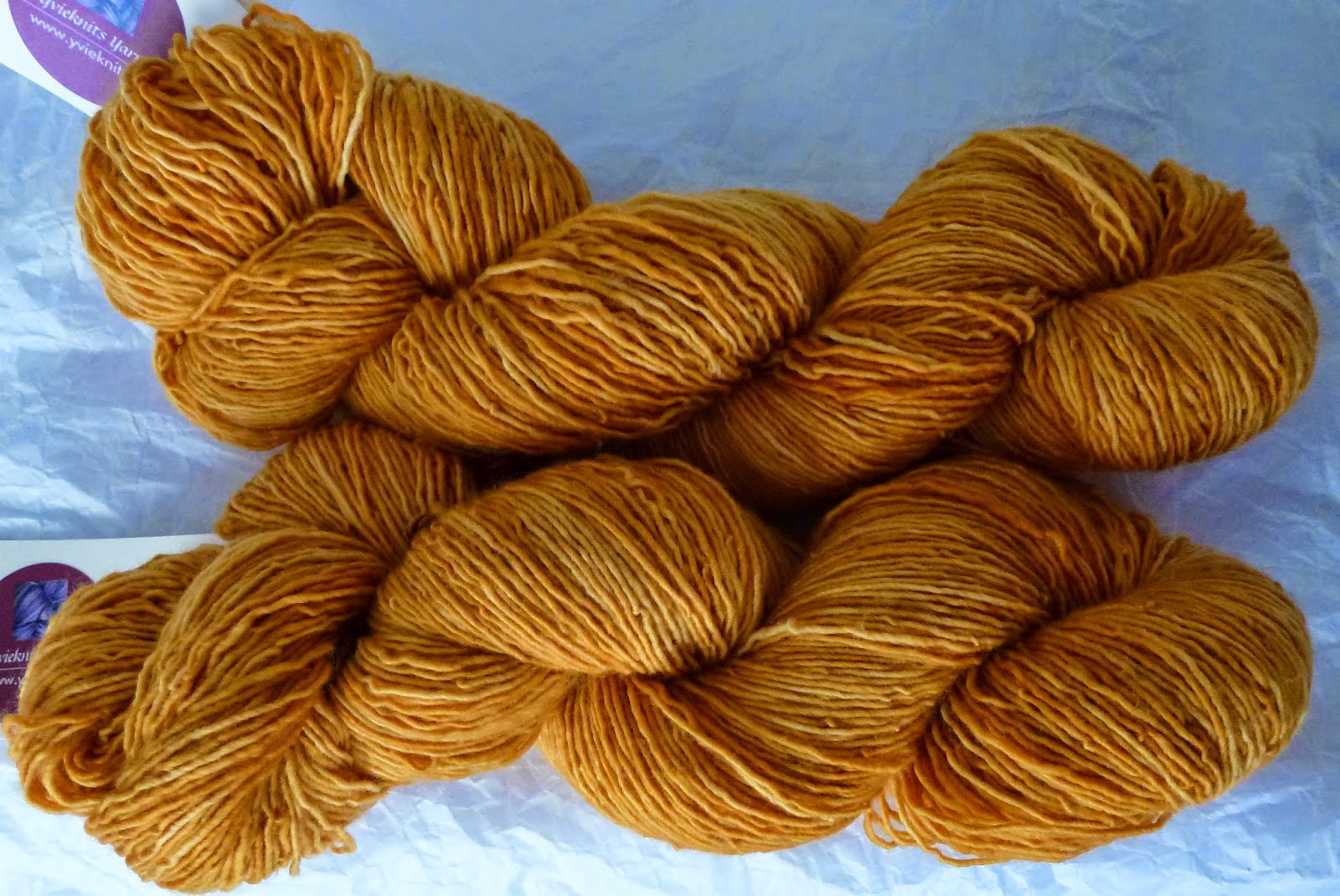
Well, I’m still unpacking boxes! I have to laugh. I’ve always told my friends that if I die suddenly they need to get to my house right away and help themselves to my stash of yarn and fabric. If they don’t take it I think my wonderful, long suffering husband will have it all bagged and waiting on the curb to be picked up by the garbage men within a few days. As painful as it is, I’m at a point in life where I feel that I need to give away much of my fiber stash and keep only those gems that truly inspire me.

I have also gotten very involved in my church. I’ve never had the time to seriously study the bible. My current lifestyle allows me the luxury to focus on making up for lost time.
I’m very fortunate to belong to a group of fiber artists who have met three times a month for years. We critique each other’s work, visit galleries, and learn new techniques. I think anyone who is committed to a life of creativity will benefit from the association with like-minded people. Personally I find it rejuvenating to hang out with people who ‘get me’.
Well, I’m still unpacking boxes! I have to laugh. I’ve always told my friends that if I die suddenly they need to get to my house right away and help themselves to my stash of yarn and fabric. If they don’t take it I think my wonderful, long suffering husband will have it all bagged and waiting on the curb to be picked up by the garbage men within a few days. As painful as it is, I’m at a point in life where I feel that I need to give away much of my fiber stash and keep only those gems that truly inspire me.
I have also gotten very involved in my church. I’ve never had the time to seriously study the bible. My current lifestyle allows me the luxury to focus on making up for lost time.
I’m very fortunate to belong to a group of fiber artists who have met three times a month for years. We critique each other’s work, visit galleries, and learn new techniques. I think anyone who is committed to a life of creativity will benefit from the association with like-minded people. Personally I find it rejuvenating to hang out with people who ‘get me’.
Please
tell us about your work to get yarn to survivors of the tsunami in Japan
and how others can contribute to this effort?
In 2010 I sold my yarn shop to my dear friend
Cynthia. She is a shrewd business woman and excluded from the purchase a large
quantity of yarn that didn’t meet her criteria for various reasons (basically
those items which at any time had been on sale). So I found myself with a
rented space stuffed with yarn. Fast forward to early 2012 when my
sister-in-law sent me an article from the Wall Street Journal about an American
woman named Teddy Sawka, who was living and working as a Christian missionary
in the area of Japan that had been devastated by the tsunami in March, 2011. Tens
of thousands of elderly people had suffered the tragic loss of friends and
family members and lost their homes and all their possessions. They had been
relocated to temporary housing by the government and Teddy, a knitter, worried
about the mental health of the ladies who were lonely, dispossessed, and had
nothing to do. She began to teach them how to knit and soon found herself
leading several groups at various sites. She called the program Yarn Alive. Many
of the group members had gone from meeting once a week to gathering daily. Her
knitting groups were hugely successful but Teddy struggled to find ways to keep
them supplied with yarn.

I wrote to Teddy and said I had a LOT of yarn
which I would be happy to donate. She replied that she would love the yarn but
the sad truth was that getting it to Japan was prohibitively expensive. Here’s
where the story really becomes miraculous. Teddy said there was one
possibility- a shipping container was leaving Seattle in August and if there
was any way I could get the yarn there, it could hitch a ride to Japan for free.
My daughter had just graduated from college and had been hired by a company in …
SEATTLE! They were paying for a full moving package - guys to pack her stuff,
moving van, and the works. She had a pitiful amount of stuff; basically just clothing,
a crazy number of shoes, books and some IKEA boxes. So I packed up 15 huge
boxes of yarn, 2000 balls in total, and they made their way to Teddy via
Minneapolis, Seattle, and a shipping vessel across the Pacific. Teddy and I
marveled at the way God was able to intersect our lives and dubbed the
experience the ‘Miracle in Seattle’.

Teddy and I have stayed in touch and in 2013 I
was able to use my work as a guest writer on Kara Gott Warner’s (editor of
Creative Knitting Magazine) blog to solicit yarn donations from readers all
over the US. It took a little bit of creativity, but once again the yarn made
its way to Japan via Seattle – another 2000 balls of yarn. Later that year I
was stunned to receive an email from Teddy and see what the ladies had done
with the yarn. The participants in Yarn Alive have always knit for others in
the belief that there are those who are less fortunate (can you imagine?). In
2013 they focused their efforts on making items for the children of Syrian
refugees living in Jordan. Continuing its miraculous journey, this time the
knitted items made their way from Japan to Jordan via two huge, overstuffed duffel bags on an airplane with a volunteer worker. I can only shake my head in
wonder at the way God continues to bless me with the knowledge of where all
this yarn goes. Last year was ‘The Miracle in Seattle II’.

Teddy told me
that it will be at least 2016, or even 2017, before the ladies of Yarn Alive will
once again have their own homes. So they continue to live in their tiny rooms
in relocation camps spread around the area of Shichigahama, Japan. This summer
I will be sending the last of my yarn from the sale of my shop to the ladies of
Yarn Alive. I have no doubt that God will again work wonders with the ‘Miracle
in Seattle III’. If you would like to read the whole story here are the two
articles I wrote:

If you have yarn you can donate (I will need it
by the middle of July) please contact me at:
carri@coldwateryarn.com.
Also, you can support Yarn Alive with your monetary donations by going to:
http://yarnalive.com/donate/.
Finally, please say your prayers for the ladies of Yarn Alive and for their angel, Teddy Sawka.

carri@coldwateryarn.com.
Also, you can support Yarn Alive with your monetary donations by going to:
http://yarnalive.com/donate/.
Finally, please say your prayers for the ladies of Yarn Alive and for their angel, Teddy Sawka.
Where do
you find inspiration?
My most powerful tool for inspiration is finding
mental stillness and allowing my mind to ‘go shopping’ among the information
that is already stored in my brain but not yet examined for its potential. As
an artist, my visual sense is most dominant so I find images of every kind
(nature, structure, creativity) compelling and fascinating. I’m at my most
creative when I find the time early in the morning to sit with a journal and a
very basic piece of knitting (like a garter stitch scarf). Ideas will begin to
surface like a new sweater design or a color scheme or a recipe. I write or sketch
however much I need in order to give the idea life and then go back to my
knitting. I might cycle back and forth like this for an hour or two. It’s very
relaxing and surprisingly productive and the lovely thing about this practice
is that I feel as I have given myself a gift.
What
is your favourite knitting technique?
I love making what I call ‘Knitted Quilts’. I’ve
had a lifelong love affair with Amish quilts. I adore their strong graphic
quality and use of color. I like to challenge myself to create knitted objects
that reflect Amish quilts but don’t have any seams. Instead I do everything
with the use of miters and picking up stitches. I just finishing the fourth in
a series of four pieces that will be felted and then hung as pieces of art
along with my fiber artist friends in an upcoming show. The pieces are big,
about 36” square and I’m really excited by how they’ve turned out but
intimidated by the prospect of felting them. I once designed a knitted rug for
Creative Knitting Magazine that used the same techniques.
 |
| Taste of Americana Hearth Rug |
How
do you feel about the so called controversy of "dumbing down"
patterns for knitters?
I owned a yarn shop for almost eight years and I
have taught a lot of people how to knit and how to advance their skills. As a
result of that experience I think I have a good understanding of the roadblocks
that often occur in the process. It’s important for me to write patterns that
anticipate a knitter’s questions and write in a manner that is as clear as
possible but also provides the extra information that experience has shown they
will likely need. I know I probably frustrate my editors with too many words
but the point is that I’m trying to help my knitters avoid THEIR frustrations.
I try to be mindful of yarn shop owners who often have a limited amount of time
to help knitters. If I can write patterns that keep knitters engaged and
enthusiastic then a lot of people have benefited. If that’s considered
‘dumbing down the pattern’ then I’m guilty.
How
many sample/test knitters do you have working for you or do you do it all
yourself?
I rarely use sample knitters. It’s important for
me to knit the item I’m designing. If something confuses me or I find a
technique difficult while I’m knitting then I know my readers will have the
same problem so I have to modify the design.
Did
you do a formal business plan?
When I opened my yarn shop I didn’t have a
formal business plan. There was the most incredibly charming retail space in a
town close to mine. It had been used as a clothing shop but I always thought it
would be the perfect spot for a yarn shop. I’ll never forget driving by on a
Friday and seeing a For Rent sign. By Monday morning I had signed a lease and
60 days later opened a shop. It was incredibly serendipitous but I could have
never pulled it off without the help and support of my husband and friends and
family. When I opened my shop it was the height of the scarf fad and novelty
yarn was hot, hot, hot. I think it would be much harder to do that now; it just
takes too much money to start a sustainable yarn shop.
I’ve worked with a number of tech editors but they have always been hired by my publishers instead of by me directly. I like to collaborate back and forth with tech editors on questions regarding accuracy or clarification but I struggle when working with a tech editor who is bound too tightly by a publication’s editorial guidelines. Even when writing a highly technical pattern I believe I have my own unique voice and I hate to see that quality stripped away from my patterns. I guess it correlates somewhat with your question about ‘dumbing down’ patterns.
How do you maintain your life/work balance?
Well at the moment I guess I’m in an all or nothing mode and I’m not finding a lot of balance at all!
How do you deal with criticism?
The longer I write the less attention I pay to it.
What advice would you give someone who wants to pursue a career in knitting?
When you’re designing, write everything down. All too often I get caught up in the flow of creativity while making a new design. I don’t want to stop and write down what I’m doing because I’m having too much fun and I’m sure I’ll remember what I did later. NOT!! I’m embarrassed to admit how many times I’ve had to go back and remake something or knit a swatch because I couldn’t remember how I accomplished it.
 |
| Bountiful Bouquet |