Friday, May 13, 2011

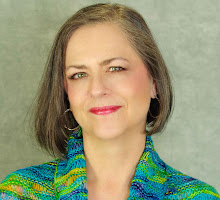
An Interview with...Anne Berk

Once a week I post  interviews with interesting designers about their insights on their experience of working in the Knitting industry.  I’ve noticed that every designer makes their living in a slightly different manner bringing their own unique presence to the Knitting world. 


You can find Anne here.

Where do you find inspiration?
I am primarily a teacher, who designs so that when students learn the techniques they have something fun to knit.  I aim for designs that are enjoyable to knit and use, and that will in turn inspire the knitter to keep using the techniques and enjoy the practice along the way. I developed a new way of working intarsia in-the-round, which I call “Annetarsia”. Since no one has done this before, I have more ideas on what to do with it than I have time to knit them.  That is fun, but a bit intimidating.

What is your favorite knitting technique?
It’s easier to think of what I don’t particularly like to knit.  There is only one technique in that category – I’m not fond of working entrelac.  I always try to have something intarsia on the needles, as that is my specialty and I need to keep new samples and designs in the pipeline.  But for personal knitting I will mix it up.  I just finished a lace shawl, and now I have a cabled cardigan started. 

How did you determine your size range?
I really like to have patterns available for a wide size range.  However, with intarsia charts, I can be limited by the size of my chart, so will offer only 1 or 2 sizes. Changing gauge by substituting yarn and needle size can make the garment larger or smaller.  Also, adding plain panels on the sides will enlarge the size.  I don’t want anyone to be left out, so I’ll write from kids’ sizes to XXL for a man, if it is possible! 


Do you look at other designers’ work or are you afraid that you will be influenced by their designs?
I buy books, pattern books and magazines voraciously, and read them cover to cover.  I know how much work went into them, and want to support other designers. I also greatly respect their talent, and look for insights that will help me to be a better teacher and designer.

How do you feel about the so called controversy of “dumbing down” patterns for knitters?
I feel this is not an issue.  Every pattern written should be clear, and accessible for all knitters.  I recommend reading through the entire pattern before beginning, every time, so that if elements seem unfamiliar, the knitter can practice on a swatch and see if it makes sense. I don’t think that anything in knitting is particularly hard, but lots of tricks and variations take practice.  If a knitter doesn’t feel like stretching a skill level for a particular pattern they can move on and come back later.  But labeling a pattern “easy” or “hard” is pointless.  How you feel about a pattern’s difficulty depends on a myriad of factors, and can change quickly.


How many sample/test knitters do you have working for you or do you do it all yourself? 
I plot out a basic outline, and then knit – writing the pattern as I go, so everything I design I have knit myself.  Often I will have a test knitter knit from the pattern, to catch things that could be more clear.  In classes I teach, I am always looking for knitters who might be test-knitters in the future, because I might need help soon!

Did you do a formal business plan?
This is a good question, and if this was a real business, I would. I am actually an optometrist, and run 2 very busy optometric clinics.  That is a business, and has a detailed plan.  The knitting work I do is more of an avocation, and my mission statement is “Use my powers for good”.  I take it very seriously, and expend every resource to ensure that my students, and the knitters who knit my patterns, get the best product possible.  Fortunately, expense/income ratio and other such issues don’t have to be a factor, because those numbers would not be good.

Do you have a mentor?
There are many knitters whom I admire, who have taught me and encouraged me. There is no one person who I would call a mentor, but the list of people to whom I owe a debt is long.

Do you have a business model that you have emulated?
No. I have developed one as I have gone along that is working pretty well. My main rule is to work with people that I like and trust, and that I would work with for free, since that may be the case, once expenses factor in. As a business model, it is horrible, but if you remember my mission statement, “Use my powers for good”, it fits.  I value the magazines, publishing industry, e-mags for knitters, knitting conventions, yarn companies – all these things help grow knitters’ knowledge and keep the craft alive and thriving.  I want good, new stuff to keep coming!  If I can help by developing designs, teaching knitters, and supporting the industry, that makes me very happy.  As a traditional business model, this is probably crazy, but it works for me.

What impact has the Internet had on your business?
I really enjoy Ravelry, e-mags, and keeping in touch with knitters on Facebook.  I haven’t sold any patterns on-line yet, but I like having the option.  Most of my interactions with knitters are face-to-face, in teaching situations, which is what I like best.  Being able to do a DVD for Interweave about Intarsia was a great opportunity for me, as I could show knitters the technique without actually being in the room, and for less than the price of a book.  Promotion of the DVD was heavily done on the Internet, which was important to get the word out. 

Do you use a Tech Editor?
I have been very lucky to work with great publishers, who have tech editors that will check all of the math and make sure that the format is clear and correct. When I send a pattern to a publisher, my goal is to make the tech editor’s job as easy as possible.  I triple-check the math, etc.  However, I really like knowing that there are more people checking my work, and adding their expertise. 


How do you maintain your life/work balance?
Not as well as I would like.  I work at the office 50-60 hours/week, and when I come home I start on knitting work.  It can get quite over-whelming, and I never get real time off, unless I’m running.  I run 1 or 2 marathons every year, and running gives me time to think and be my myself.  I also try to get 8 hours of sleep every night, and not miss meals.  My kids are grown, and my husband is very supportive, so we make it work. 

How do you deal with criticism?
I welcome critique, as I want people to have the best experience possible.  I like to have the opportunity to explain, correct, or go over something in a different way so that the knitter is successful.  As long as the comments are made in the spirit of cooperation and sincere interest, I’m fine. 


How long did it take for you to be able to support yourself?
I think we have already established that I don’t plan to make a dime off my knitting career.  Any money I make gets put back into buying books, yarn, computer design programs, etc.  When I attend knitting conventions, I try to buy something from as many vendors as possible.  I consider myself lucky that my avocation is self-supporting!

What advice would you give someone who wants to pursue a career in knitting?
If you actually want to make this a career, I would recommend doing it from the business end.  Find a job in an LYS to pay the bills, study what knitters want, and start designing and teaching locally, then branch out.  Careers in publishing can be very rewarding, and there are several excellent craft-oriented publishers. Tech-editors are always in demand. 


Wednesday, May 11, 2011

A Knitting Related Business on Etsy


I stumbled on this amazing Etsy artist who works with recycled sweaters.

Kat says on her site "I started making recycled patchwork hoodies 20 years ago, while I was a wee gypsy girl, following the Grateful Dead. Since then my style has evolved and grown into this sweatery madness. I have made thousands of sweaters by now. If you look at my sold listings you can see how they continue to morph and grow with each passing month. My elf coat design even seems to have inspired a little bit of a trend here on etsy. Ooh la la."

The garments are made from thrift store sweaters. She washes them thoroughly before use and uses a serger to make tight seams which are then hand finished. 


What can I say other than WOW!!!

Monday, May 9, 2011

Do you knit sleeves or front sections together at the same time?


Patterns typically have separate instructions for the right and left front pieces and a single instruction for the sleeves. I always knit the two fronts at the same time and then two sleeves at the same time. I use two balls of yarn, cast on the stitches starting with one ball and then switch to the second ball, casting onto the same needle. If the item is large I use a circular needle to accommodate the two pieces. I just alternate from one piece to the other row by row. I know my mother did this as well, so for the longest time I did not know that most Knitters work on each piece separately. I find it saves me a lot of time in tracking rows and keeping track of increase and decrease stitches. Working this way means I rarely have any discrepancies between the two pieces. If I do I'm more likely to notice them quickly. 

When working the fronts simultaneously the advantage is that the reverse shaping becomes visually obvious in a way that is not so apparent when working each piece separately. It wasn't until I started teaching that I discovered the reverse shaping instruction was such a problem for many Knitters. It also makes the right side vs. wrong side shaping instructions clearer. I really noticed how much it simplifies things recently while working on fronts with dart shaping. Much more detail was necessary to write the pattern out with stitch counts highlighted than when visual placement was used.


I'm curious, do many others knit this way or do you always knit each piece separately?


Sunday, May 8, 2011

Happy Mother's Day


A girlfriend sent me this and I found it very amusing.

Friday, May 6, 2011

An Interview with...Vivian Hoxbro

Once a week I post  interviews with interesting designers about their insights on their experience of working in the Knitting industry.  I’ve noticed that every designer makes their living in a slightly different manner bringing their own unique presence to the Knitting world.  
You can find Vivian here.

Where do you find inspiration?
Inspiration is everywhere – on a president's tie, on a belt in a train etc. When I have a hard time going to sleep – I construct garments. Sometimes I dream sweaters – that turn out completely different when they are produced. I constantly play with ideas and possibilities.

What is your favourite knitting technique?
Definitely domino-knitting – I will never get tired of combining figures in different ways!

How did you determine your size range?

Masai

I decide when I design – will this design be flattering for a larger women's size – then I make it big – if not – I only make the design for smaller size – such as Masai.

Do you look at other designers' work or are you afraid that you will be influenced by their designs?
I look – but I don't buy books with instructions and designs. I have ideas enough for more than one designer – I only need more time. Another life or two would be nice!

How do you feel about the so called controversy of "dumbing down" patterns for knitters?
It depends on who you are writing for. If I would write for beginners – I would need very simple and fun patterns – and explain the small challenges there that are very detailed. But first of all you need to know what you expect that the knitter is able to do. 

It is not only a question of – does the designer want to spend hours explaining everything from scratch? – actually companies and magazines want short instructions – as the pictures are what looks good in a magazine - not a long technical instruction. One of my patterns is 15 pages (letter format) long. Another thing is that an instruction can easily be too long – even so long and detailed that it is difficult to understand. I am hoping for instructions that are digital – so that I can write for example: Use the “knit cast on” and if the knitter does not know what that is – she can click on “knit cast on” and see what I mean. That will make it easier for the designer as well as for the knitter. The experienced knitter will not need all the details and we will all be happy. 


I do not write for beginners. I don't know what the knitter who would knit my design knows – or even what she calls the technique. The terminology is also an issue. Knitting is archaic
and so is the terminology. I can have a name for a technique and when I look it up in a book – there is another name for it. 

When you buy a book or a magazine or an instruction from a yarn company you should have a kind of guarantee – at least there will be someone to ask if you bump your head against the wall or if there are mistakes in the instruction (which there almost always are), but if you download an instruction online – that you don’t pay for – you are on your own.    

Sorry – this answer was almost an article – but this matter interests me a lot as I have always (almost for 30 years) loved and worked on my instructions to make them better and better.

How many sample/test knitters do you have working for you or do you do it all yourself?
I have 3 great knitters who have knitted for me for years – one for more than 20 years. I also have friends who proof-knit an instruction and many knitters who buy my patterns are so kind to tell me if something is wrong. I appreciate it. I do knit a new design myself before I send it to my knitters.

Did you do a formal business plan?
NO – not at all.

Do you have a mentor?
No.

Do you have a business model that you have emulated?
Of course I have: I was once so lucky that a knitter told me – this is your design, but this woman has it on her website as her own design. I got that one stopped.  Editors note: Vivian speaks and writes English extremely well however I'm guessing that she confused imitated and emulated when answering this question. I decided to leave her response as is, since plagiarism is of great concern to so many designers.

What impact has the Internet had on your business?
Everything – as it opened the US and Canada for me. 


Do you use a Tech Editor?
Yes my proof-knitters.

How do you maintain your life/work balance?
I work by the computer most of the day – and knit when it is evening. My kids are grown up, so it does not matter. I do – however – work a lot. I would never ever be able to calculate with a wage by the hour.

How do you deal with criticism?
I don't actually get very much criticism. But when I get it – if it is about an instruction – I am very, very sorry and I correct it right away. If it is about colors, design etc. I don’t care. If I like a design – OK – if some do not like it – they will not buy it and that’s it.

How long did it take for you to be able to support yourself?


What advice would you give someone who wants to pursue a career in knitting?
If she/he can figure out something else – do – if she/he cannot help it – I wish them all the luck in the world. I have actually helped some to get started. Given them advice etc. I like to be a shoulder they can lean on.

Wednesday, May 4, 2011

Cotton Shortages?


When I was at the DKC frolic last weekend I was looking for summer yarns like cotton or linen for some cooler summer knitting and found out that there really wasn't a lot available. I asked Jane from Dye-Version what was going on and she told me that the Chinese are hoarding cotton so there is less available on the world market. Here's an article from the Wall Street Journal that explains the situation. 

I looked around for more information and found the International Cotton Advisory Committee site.The information there is that after seven consecutive months of increase, cotton prices fell in April 2011. The
record high of $2.44 was reached on March 8, 2011, but was down to $1.73 per pound on April 28. These prices are considered to be very high by historical standards.

The reason given for the decrease in prices seems to be a significant slowing in demand. The very high prices, are all affecting mill use. A slowing of spinning operations and an increased switch to chemical fibers are curtailing demand for cotton and are reducing its share of world fiber use. Production is expected to increase by 11% in  2011/12. For Knitters that may mean it will be a while before we see more hand knitting yarns available in cotton.


I did buy this from Dye-Version 

It's a lovely mercerized cotton in a DK weight.

For an update on yarn prices you can read this post here.

Monday, May 2, 2011

A Field Guide to Knitters - Part 3


Part 1 is here, part 2 is here.

Technique Knitters (Artis knitcreo)

Description
This type of Knitter rarely completes a whole project. Often they become fascinated with figuring out better ways to reach their goal of perfection but then move onto the next challenge before completing the item that provided their last one. Very large swatches are common. Rare completed garments may be asymmetrical while this Knitter tests and compares various techniques rather than using matching ones. Alternatively they become so enamored  of their latest new technical tour de force that they will produce large numbers of a single item (usually a small one) trying a different variation of technique in each one.

Habitat and range
Often isolated from other Knitters due to the complexity of their knitting, when they do step out to share their insights they have no knitted items to wear publicly.

Vocalizations
They love to share their knowledge with other Knitters but have to stop to explain and demonstrate the numerous variations of every technique they have sampled.

Charity Knitters (Caritas knitcreo)

Description
An amazingly generous and diverse group, this type of Knitter rarely knits for themselves or even for family. Their product is gifted to others such as cancer victims, newborn babies, the humane society, to the homeless and even the Fairy penguins after an oil spill. When the call came out for penguin sweaters these Knitters responded in such large numbers that eventually they were asked to stop sending the little sweaters.

The request for penguin sweaters originally seemed so much like a hoax it ended up here on Snopes.com.

Habitat and range
This species of Knitter is often found at churches and hospitals and various community events. In Toronto sighting are common at the Relay for Life events. They will flock together in large groups to work on especially large projects for donation to others.

Vocalizations 
Words like giving, help and community are common. One Knitter who donated hats to the homeless was very amused to see one of her hats being used as a carrier bag for several bottles of beer by a happy recipient, not her intended use but obviously useful to the hat owner.

Field Guide to Knitters: