Friday, January 22, 2010

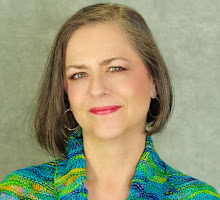
An Interview with....Nancy Marchant


Once a week I post interviews with interesting designers about their insights on their experience of working in the Knitting industry. I’ve noticed that every designer makes their living in a slightly different manner bringing their own unique presence to the Knitting world.


Where do you find inspiration?
From textiles. I have a fascination with patterning and decoration - be it on printed or dyed cloth, woven rugs or knitted sweaters.


What is your favourite knitting technique?
The brioche stitch, of course.


Do you look at other designers work or are you afraid that you will be influenced by their designs?
I look at everyone’s work and most of the time think to myself “why didn’t I think of that?” I am constantly amazed at the new knitting ideas designers keep coming up with.


How do you feel about the so called controversy of “dumbing down” patterns for knitters?
I think there are patterns out there for everyone. I just pass by the “dumbed down” ones but I know that a lot of knitters are still learning and that a lot of knitters really don’t want much of a challenge. That’s fine, whatever works.


How many sample/test knitters do you have working for you or do you do it all yourself?
I do most of the knitting myself but have a wonderful woman who knits a lot of my big pieces for sweaters. She knits the pieces and then I put the garment together. For my book, two knitting friends, Alex (underdutchskies on ravelry) made the Bloemenvelden Scarf and Malia (maliamather on ravelry) helped with the Book Exchange Cardigan.


Did you do a formal business plan?
No, but knitting is not my main source of income. I work as a freelance graphic designer and that pays the bills.


Do you have a mentor?
Every one of those great knitting teachers. I admire anyone who can teach well and there are a lot of good ones out there.


What impact has the Internet had on your business?
If I weren’t such a web duffus I think it would have more of an impact. Ravelry has made it possible for all designers, including myself, to make their patterns available to a huge knitting public. Ravelry has made a huge impact on knitting.


Do you use a Tech Editor?
For the book I got to use Sue McCain, one of the best.


How do you maintain your life/work balance?
Like I said before, I am a graphic designer by profession but I have a MFA in textile design. Because knitting is not my main form of income but my passion, I have the luxury of knitting when I want and what I want. I rarely have the pressures of getting projects done on time which can jeopardize the quality of the pattern and design.


How do you deal with criticism?
Badly, like everyone else. A million people can compliment my work, but I will always remember that one who criticized.


What advice would you give someone who wants to pursue a career in knitting?
Educate yourself as much as you can. At the same time work on developing your own knitting creativity. Try combinations of stitches, combinations of techniques and combinations of fiber. And don’t let yourself be paid less than what your time is worth.


Wednesday, January 20, 2010

Developing your own personal style


Sometimes we find our personal style while trying to hide a flaw. The beautiful Boleyn sleeve on this gown is thought to have been worn by Anne Boleyn to hide a small growth on one of her baby fingers.


Or what about Isabella Blow who often was photographed with her face obscured by an amazing hat?


I’ve read that Candice Bergen doesn’t like her neck so look at these photo's and notice how much of her neck is covered up.


I have very small feet and often wear pointed toes for the extra visual length they give my feet. What part of your body don't you like? Can you turn it into a style asset?

Monday, January 18, 2010

Creativity - Twyla Tharp


I'm a ballet fan and have been for years. Twyla Tharp is possibly the leading choreographer of her generation. So when she put out her book The Creative Habit: Learn It and Use It for Life. I looked forward to reading it. Her basic premise is that there is nothing magical about creativity, it is the product of preparation and effort, and it's within reach of everyone who wants to achieve it.
Her focus is often on process not product which is a common topic for Knitters. Much of the book does refer to dance as she inhabits that world, however she uses exercises for creativity that would apply to anyone in any creative endeavour.
She uses many other artists as examples and speaks of the power of practice. I especially liked a section where she tells us to accept that there aren't totally new ideas and to stop worrying that we won't be seen as breaking new ground. Instead that we are rearranging things in a new way. This comes up a lot among Knitting Designers as we all use the same stitch dictionaries and work with similar silhouettes while being influenced by main stream fashion. This is a book that I will reread again in the future as I pursue my own creative career.

Friday, January 15, 2010

An Interview with...Annie Modesitt


Once a week I post interviews with interesting designers about their insights on their experience of working in the Knitting industry. I’ve noticed that every designer makes their living in a slightly different manner bringing their own unique presence to the Knitting world.


Where do you find inspiration?Some yarns inspire me, colors always inspire me, but I find my greatest inspiration in the shape and silhouette of historic fashion.


What is your favourite knitting technique?I love lace. I used to hate it, I couldn't make sense of the directions, but with charts I have embraced lace and hope I design pieces that make it possible for OTHERS to embrace it, too!

How did you determine your size range?I'd like to offer a wide range of sizes. I'm not small, so I feel like a traitor to the cause if I don't put in a size that would fit me. But sometimes the sizes are limited by stitch pattern repeats. Taking the fact that a motif may repeat of 25 sts, and 5 sts = 1" can alter my ability to offer a wide variety of sizes (I may only be able to do a XS, S, L, XL in those cases).


Do you look at other designers work or are you afraid that you will be influenced by their designs?I don't really seek out other designer's work. I can't help but see it - there SO much wonderful stuff around - and when I DO see it I try hard not to be too influenced by what another designer's done. I think it's VERY possible for two people to come to the same design solution from different routes, which is why often - quite innocently - there are patterns that have significant similarities.


How do you feel about the so called controversy of "dumbing down" patterns for knitters?
I feel dumb that I'm not aware that it's a controversy! I trust the intelligence of my knitters, I work with magazines that trust the intelligence of their knitters, so for me there's no controversy!


How many sample/test knitters do you have working for you or do you do it all yourself?At any given time I have 2 or 3 folks I call on, among them Miriam Tegels, the Guiness World Record holder for fastest knitter (and a lovely person!) I find myself working up most of my patterns for my current book, "History on Two Needles", because I'm having a hard time mentally detaching myself enough to write the pattern up cold and send it to a knitter. This is definitely a fault and flaw, I need to get better about this.


Did you do a formal business plan?
No. At one time I did, things worked well, but now I just continue doing what I'm doing.


Do you have a mentor?No, not really. There are knitters and designers who have influenced me greatly - Priscilla Gibson Roberts, Lucy Neatby, Sally Melville, Nicki Epstein, Deborah Newton, Norah Gaughn & Kristen Nicholas. And there are editors who helped me shape my vision, Pam Allen and Melanie Falick from Interweave Knits figure large in this. But no "got-your-back" mentor.

Do you have a business model that you have emulated?No, not really. I see things that other web-savvy, innovative knitters, like Shannon Okey, Stephanie Japel & Cat Bordhi have done, and I'm inspired by them (and may even mimic them) but from my decision to self publish "Confessions of a Knitting Heretic" I've felt pretty much on my own road.


What impact has the Internet had on your business?There would be no knitting career for me if it weren't for the Internet, it's that simple. The Internet has allowed me to connect with an audience, develop a 'brand', market myself, promote my products and keep up with developments in my industry. All that would have been possible without the Internet, but not without a huge investment of money, time and development of many different skill sets.


Do you use a Tech Editor?Yes. I'm currently starting to have the patterns for History on Two Needles tech edited, I'm working with a few members of the Stitch Cooperative, Miriam Tegels and Kristi Porter to help me with the first few.

How do you maintain your life/work balance?
That's difficult. The lovely thing about what I do is that I do what I love. The hard thing is that by turning something I love into a business, I seldom have time to knit or crochet purely for fun. I work all the time, and yet there's always that haunting fear that I haven't done ENOUGH. This, of course, impacts on my husband and children.
The good part, though, is that I have flexibility so I CAN go to a school play, a baseball game, take my husband to the Mayo clinic whenever he has to go and I can work on the way or when I'm there. The flexibility is priceless.


How do you deal with criticism?Not as well as I'd like. I'm always working on that, on seeing the lesson in a critique, but it's hard. It depends often on how it's presented - is it a snarky dig, or a sincere expression of disappointment in a certain pattern? I have the hardest time taking criticism from folks who don't seem to understand the amount of work that goes into something, but - as I said - I continue to work on that.

How long did it take for you to be able to support yourself?
The publishing of Confessions of a Knitting Heretic was the point where I was able to support myself. In the past 3 years that's spread to supporting my family, which is a lot harder.


What advice would you give someone who wants to pursue a career in knitting?
First I'd say try not to think of yourself as a "designer" or "writer" until you have a good number of patterns or articles published. This mental hurdle will help a new designer stay open to new ways of doing things, and not lock themselves into a box after publishing just one pattern.

Wednesday, January 13, 2010

Marge Simpson KNITS!!


Marge Simpson KNITS!!!
I didn't know that until last Sunday night. I think she was working on a scarf. Do you think she would like to take one of my classes or join my knitting group?


Monday, January 11, 2010

An Interview with...Ann Kingstone


Once a week I post interviews with interesting designers about their insights on their experience of working in the Knitting industry. I’ve noticed that every designer makes their living in a slightly different manner bringing their own unique presence to the Knitting world.


Where do you find inspiration?
My designs all seem to start from a single point and build from there. However, the point they start from varies enormously. Some start with a beautiful yarn that is evocative of a particular theme or mood (e.g. my Luna’s Moonlight socks), some from an interesting stitch pattern for which I want to create a special application (Lórien and my Lady of the Wood mittens), some from a wish to experiment with an interaction of pattern and shape (e.g. my Durmstrang socks), and some from a desire to design to a particular theme (my other Potter sock designs). The rest of the process is just like a problem-solving exercise in order to best express the original thought. Nevertheless, whichever point they start from my designs inevitably meander through many other fields of inspiration on their journey to the fully expressed idea. These other fields always include my knitting bookshelves, and often also include a visit to the work of other knitters and designers.
What is your favourite knitting technique?
Whichever I’m currently working with. Clearly I am a fickle lover!
How did you determine your size range?
It depends on who I am aiming at with my product. For example, my Hogwarts socks for children are sized in three age ranges from 5 – 13. It also depends on the constraints of the design elements – the size of the pattern repeats in my stranded sock designs only practicably permit two different foot lengths within the standard ladies’ size range, whereas the calf circumference can be fully customized in half-inch increments.
Do you look at other designers work or are you afraid that you will be influenced by their designs?
Other designers are a great source of inspiration for me in lots of ways; the way they use colour; how they combine different textures; their placement of design elements in a garment; their construction methods; their garment shaping, etc… So, I deliberately look at their work actually hoping to be influenced by it!
How many sample/test knitters do you have working for you or do you do it all yourself?
For my self-published patterns I knit the samples myself. I’m also working on a book though, and for that will be working with sample knitters as I’ve realised that it is too big a project to undertake alone. Recently I have also started working with test knitters via Ravelry. I find this is a wonderful way of working to improve the usability of my patterns before I publish them. Typically I take on ten testers for a pattern, and in exchange for some feedback about the pattern they get the pattern for free, including the final published version. The test itself involves ongoing open discussion in the testers' forum about the pattern and the testers' projects. It’s a fun process with lots of social aspects which make it a great way of working for me.
Do you have a mentor?
While I don’t have an official mentor, I get advice from other designers via the designers’ forums in Ravelry. There is a forum especially for British designers, and I think this is helping to foster a sense of community between independent British designers. There is a lot of goodwill, and the more established designers are very generous in sharing their knowledge and experience. In particular Pat Ashworth (of Woolly Thoughts), WoollyWormhead, and Fiona Morris have given me excellent advice. I am very grateful for their kindness.
Do you have a business model that you have emulated?
As I have noticed is the case with other designers, my own unique personality, interests, ideas, and ways of working are all involved in my manner of business. Consequently my business model has to be uniquely suited to me.
What impact has the Internet had on your business?
It is where it started!
How do you maintain your life/work balance?
There is no separation between them!
How do you deal with criticism?
I can use criticism to feel bad, or to grow. While I sometimes do the former I much prefer the latter. Consequently I work to keep myself conscious of that so that I can see the growth potential in any feedback I receive. I am fortunate to have done a lot of work with the Institute for Self-Actualization, and to have had coaching from Nigel Jardine. These have made a big difference to the way I deal with all kinds of things.
How long did it take for you to be able to support yourself?
::Laughs maniacally::
What advice would you give someone who wants to pursue a career in knitting?
Go for it! Of course, as with any other life plan, it will be necessary to manifest all kinds of qualities to make it work the way you want. I find that I constantly have to work on getting clear about what I want and on planning how I will create it.


Thursday, January 7, 2010

A Handy Dandy Little Conversion Tool


This is a very cool converter that I stumbled across recently. http://www.thedietdiary.com/knittingfiend/tools/YardageConversion.html


I wish I’d known about it sooner. I often re-knit items with different weight yarn (especially accessories). Usually it’s because I buy yarn not knowing what it is going to be when I get around to knitting it. So I often have odd balls left over that I like to use up knitting hats or gloves. This question used to come up as well when I worked in my LYS. Many knitters aren’t afraid to re-gauge an existing pattern often just knitting a different size to accommodate the differing stitch counts. You can often change to a heavier or lighter weight yarn than the original pattern called for with no negative consequences.
You can find the free glove pattern here http://www.berroco.com/exclusives/glover/glover.html