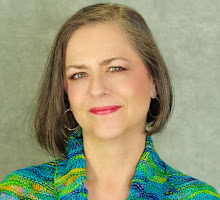
A regular reader asked the question about exactly what a Tech Editor does?
I acquired my editor when Julia Grunau of http://www.patternfish.com/ told me I needed one. At that point I didn't really know what I should expect to get from one either. How did I find her you ask? I went to my guild meeting and asked someone if they knew any and was immediately pointed to someone I had chatted to several times in the past. Today as a member of http://www.ravelry.com/ I would use the forums for recommendations to find one.
As to what she does for me? My editor has turned out to be worth her weight in gold. I bounce ideas off her. I ask all sorts of questions that are helping me transition to becoming a professional designer. I have to answer her questions about my patterns which often clarify exactly what I'm trying to express to other Knitters. She keeps me in line with generally accepted pattern writing standards. She also edits a number of other BIG NAME designers so I know that I'm being pushed up to their standards. She helps me determine what level of knitter can knit my design and makes suggestions for making the pattern accessible to more levels of knitting experience. It was my Editor that confirmed to me my name not a company name should be on all of my patterns. We also discuss trends in yarn buying and what people are interested in knitting. She has helped me to figure out my weaknesses (publishing and graphics) and my strengths (my understanding of garment construction and fitting).
When she works on the pattern she corrects my grammar. She makes all of the formatting consistent. She checks all of my numbers for grading and yarn requirements. She recently caught an error on a yarn distributors site on the colour name and number not matching up with the ball band. They fixed the site after I let them know. She has described her process as mentally knitting the pattern and if something doesn't make sense to her she picks up her needles and does a quick sample of that portion. She also has the ability to reverse engineer from a garment or to all the grading if I choose to write only one size. She has also given me many suggestions to improve my patterns so that I can cut down on editing costs, which is money out of her pocket!
She has been very encouraging about my work from our first meeting which is wonderful for me as a "newbie"
Monday, December 14, 2009


Saturday, December 12, 2009
An Interview with Jill Wolcott


Once a week I post interviews with interesting designers about their insights on their experience of working in the Knitting industry. I’ve noticed that every designer makes their living in a slightly different manner bringing their own unique presence to the Knitting world.
You can find Jill on Ravelry at http://www.ravelry.com/people/JillY2Knit and here as well http://www.y2knitpatterns.blogspot.com/
Where do you find inspiration?
Like all designers I tend to find inspiration everywhere. I look at fashion a lot and get shape and silhouette from there. As a creative person I find travel, music and art are crucial to keeping the creative juices flowing.
What is your favourite knitting technique?
I consider myself a knitting generalist because my favorite technique is always whatever I’m currently or planning. I’m fascinated by counterpanes and by extrapolating a stitch pattern into variations, but I don’t have a special area that I focus on. I do get a bit obsessed, but then I move on.
I consider myself a knitting generalist because my favorite technique is always whatever I’m currently or planning. I’m fascinated by counterpanes and by extrapolating a stitch pattern into variations, but I don’t have a special area that I focus on. I do get a bit obsessed, but then I move on.
How did you determine your size range?
When Y2Knit began doing a line of patterns I established our size range of XS to XL; we do some plus sizes but I don’t usually have enough time to write things in more than one size range. I created our sizing chart based on a combination of standard measurements, ready-to-wear sizing, and my observations over many years. I do a medium as my sample. It helps that I’m a medium and I’ve been working in that size about 35 years! I should add that I really try to do designs that work on many figure types—and if someone is being left out of Y2Knit sizing, it is probably the younger knitter.
When Y2Knit began doing a line of patterns I established our size range of XS to XL; we do some plus sizes but I don’t usually have enough time to write things in more than one size range. I created our sizing chart based on a combination of standard measurements, ready-to-wear sizing, and my observations over many years. I do a medium as my sample. It helps that I’m a medium and I’ve been working in that size about 35 years! I should add that I really try to do designs that work on many figure types—and if someone is being left out of Y2Knit sizing, it is probably the younger knitter.
Do you look at other designers work or are you afraid that you will be influenced by their designs?
I don’t pay too much attention to other knitwear designers. I don’t knit other patterns but I do look at knitting magazines. I’m too involved in my own process!
I don’t pay too much attention to other knitwear designers. I don’t knit other patterns but I do look at knitting magazines. I’m too involved in my own process!
How do you feel about the so called controversy of "dumbing down" patterns for knitters?
I’m not sure what is meant by “dumbing down” patterns. I know there is a school of thought where the knitter should be able to figure things out for themselves. I tend not to agree with this because it assumes that every knitter has the same body of knowledge, is able to process information the same way, and is looking for the same thing from a pattern. In addition to designing I am also a teacher at a design college and teach knitting classes. There are so many types of learners and knitters that nothing is going to suit everyone. The knitter who needs a pattern just as a guide is probably not my target customer. I want the knitter to know what I did to get the result I did. I don’t think it is fair to say “cast on” when there is a specific cast on which got the pictured result; perhaps it is ego, but I assume that as the “expert” it is reasonable for the knitter to get that information from me. Now they are welcome to do whatever they want, but I’m going to let them know how I did it so they can make an informed choice.
How many sample/test knitters do you have working for you or do you do it all yourself?
I have three to five people who knit for me. Every sample knitter is a bit different, so I try to match projects to knitters. I have one very special sample knitter who I keep working all the time. She is a perfect foil for me and she has allowed me to really grow as a designer by doing the actual execution and leaving me to figure out how.
I have three to five people who knit for me. Every sample knitter is a bit different, so I try to match projects to knitters. I have one very special sample knitter who I keep working all the time. She is a perfect foil for me and she has allowed me to really grow as a designer by doing the actual execution and leaving me to figure out how.
Did you do a formal business plan?
We (Y2Knit) did a formal business plan—and won a contest with it! It wasn’t exactly what our business ended up being, but we did do a plan. We spend time doing on-going planning every year, but finding time to plan is one of the most challenging parts of being a business owner.
We (Y2Knit) did a formal business plan—and won a contest with it! It wasn’t exactly what our business ended up being, but we did do a plan. We spend time doing on-going planning every year, but finding time to plan is one of the most challenging parts of being a business owner.
Do you have a mentor?
I don’t have a mentor. I have always done things on my own but got encouragement early on that gave me the courage to go forward. I’m fortunate to have a business partner (my sister, Susan) who does most of the stuff I don’t/won’t do. I am also supported by my spouse who believes in me even when I don’t believe in myself.
I don’t have a mentor. I have always done things on my own but got encouragement early on that gave me the courage to go forward. I’m fortunate to have a business partner (my sister, Susan) who does most of the stuff I don’t/won’t do. I am also supported by my spouse who believes in me even when I don’t believe in myself.
Do you have a business model that you have emulated?
I’m not sure that occurred to us! I’m more likely to look at other businesses and say “I don’t want to do that” than to model. I do a lot of reading and thinking about business and marketing in general and specific to Y2Knit and I try to keep an eye out for opportunities and ideas that might translate for Y2Knit.
I’m not sure that occurred to us! I’m more likely to look at other businesses and say “I don’t want to do that” than to model. I do a lot of reading and thinking about business and marketing in general and specific to Y2Knit and I try to keep an eye out for opportunities and ideas that might translate for Y2Knit.
What impact has the Internet had on your business?
The biggest impact is that it allows Susan and I to operate as if we were in the same place without having to be. The other huge impact for us is the ability to market. It is also a huge distraction and must be used wisely.
The biggest impact is that it allows Susan and I to operate as if we were in the same place without having to be. The other huge impact for us is the ability to market. It is also a huge distraction and must be used wisely.
Do you use a Tech Editor?
I do use a tech editor. I’ve used a lot of them because I haven’t always enjoyed working with them—or they with me! I finally asked someone I knew if they’d give it a try and we work really well together. It is someone who has used my patterns and seems to understand how my mind works. We also share a similar sense of humor—that may be the secret.
How do you maintain your life/work balance?
What’s that? I totally struggle with it and don’t feel I’m winning. I always say that I’m fortunate that my spouse works so hard or else he’d be offended at how much time I spend working (like he doesn’t notice when things aren’t getting done!). When a hobby becomes a job you have to find other things to do for relaxation. I have to admit that I’m not great at that because knitting uses so much of my time. Even though I don’t knit samples, I am always knitting swatches and trying out new ideas.
What’s that? I totally struggle with it and don’t feel I’m winning. I always say that I’m fortunate that my spouse works so hard or else he’d be offended at how much time I spend working (like he doesn’t notice when things aren’t getting done!). When a hobby becomes a job you have to find other things to do for relaxation. I have to admit that I’m not great at that because knitting uses so much of my time. Even though I don’t knit samples, I am always knitting swatches and trying out new ideas.
How do you deal with criticism?
Depends, if it is constructive I appreciate it. Otherwise, it is easier to take the older I get.
Depends, if it is constructive I appreciate it. Otherwise, it is easier to take the older I get.
How long did it take for you to be able to support yourself?
I don’t. I teach part time and Y2Knit does Events, Susan and I wrote and published a book (YNotKnit: step-by-step instructions for Continental knitting), Susan has a yarn shop, I do online classes, etc., so the designing is just a piece of our business.
I don’t. I teach part time and Y2Knit does Events, Susan and I wrote and published a book (YNotKnit: step-by-step instructions for Continental knitting), Susan has a yarn shop, I do online classes, etc., so the designing is just a piece of our business.
What advice would you give someone who wants to pursue a career in knitting?
Only do this if you love it. First, you give up your hobby; second, you work all the time; third, whether or not you are successful isn’t always under your control; and almost no one understands what you really do.
Only do this if you love it. First, you give up your hobby; second, you work all the time; third, whether or not you are successful isn’t always under your control; and almost no one understands what you really do.
Friday, December 4, 2009
An Interview with....Joanne Yordanou
Once a week I post interviews with interesting designers about their insights on their experience of working in the Knitting industry. I’ve noticed that every designer makes their living in a slightly different manner bringing their own unique presence to the Knitting world.

You can find Joanne here http://www.joanneyordanou.com/
What is your favourite knitting technique?

How did you determine your size range?
Do you look at other designers work or are you afraid that you will be influenced by their designs?
How do you feel about the so called controversy of "dumbing down" patterns for knitters?
How many sample/test knitters do you have working for you or do you do it all yourself?
Did you do a formal business plan?
Do you have a mentor?
What impact has the Internet had on your business?
How do you maintain your life/work balance?
How long did it take for you to be able to support yourself?

You can find Joanne here http://www.joanneyordanou.com/
Where do you find inspiration?
I am a very visual person. I can be inspired by a lines in art or a great photograph. I am a complete magazine junkie and can be also inspired by a cuff or neckline off the runway. Also, home décor magazines are a great source for ideas. But my best work is born of the sub-conscience. I wake up with an idea and jot it down before it’s gone.
What is your favourite knitting technique?
I love to cable; very rewarding knitting. I also appreciate the easy stitches that give a big bang for the effort, such as slip stitch patterns. I also love to embellish. I will often challenge myself to add a little whimsy to a pattern, especially with children’s patterns, which is always fun.

How did you determine your size range?
I use Standards for sizing. I will offer as many sizes as is “right” for the pattern silhouette and suitable for body types.
Do you look at other designers work or are you afraid that you will be influenced by their designs?
I will always admire other designer’s work and will often think “ I wish I thought of that”. However, it is fairly easy to appreciated a beautiful project and not let it influence your own work. Often times, you are in a completely different head zone for designing, than what you may be admiring. For example, I saw a unique shawl collar pattern a few days ago that I was taken by (again wishing I thought of it). But I am working on an intricate scarf pattern now and working that out of my system, so it is more a case of “hats-off” to the other designer.
How do you feel about the so called controversy of "dumbing down" patterns for knitters?
I was trained by the Patons Design Studio and the more info you can give a knitter, the better. I don’t want to ever assume the level of knitter, even though we suggest a level for a pattern. Really, if your instructions are informative, an intermediate knitter could do an experienced pattern. The experience knitters among us will easily scan the pattern and filter out what they don’t need. However, I will say that the pattern is simply that – instruction of how to knit the item. It isn’t a learn to knit book.
How many sample/test knitters do you have working for you or do you do it all yourself?
I always use test knitters as the more eyes on a pattern, the less error. I have many I have used that I met from my days at Patons or from Knitting Guilds I have presented to. I am always looking out for new experienced knitters in my area – just west of Toronto – in case you’re out there!
Did you do a formal business plan?
I do or rather I did when I started out. Now I just know what I need to do from years of experience. The plan changed over the years and I may insert a new idea or direction from time to time. But I highly recommend one to start out. It will maintain your focus.
Do you have a mentor?
Not so much anymore. One of my best editors and knitters lived 2 doors away – Joyce. She was a fantastic knitter and a stickler for details. She taught me to be a stickler too. I don’t assume anymore. I check and recheck, over and over. It is so easy to miss an error or typo. Joyce was for me, a mentor of editing. She passed away recently and I will miss her very much. But she left with me the habit of slowing down to be efficient with review.
Do you have a business model that you have emulated?
Nope, just mine
What impact has the Internet had on your business?
Huge. I have been able to reach knitters all over the world. I get a kick when I hear from a knitter in Germany, Australia or other reaches of the world - some I have never heard of! Since I offer patterns on my web site, I have learned the value of sites like Ravelry and the strong connection of knitters on the www.
Do you use a Tech Editor?
Almost always.
How do you maintain your life/work balance?
I have a very busy family life. Both of my daughters are athletes and most of my life is spent in gyms. I recently gave up a part-time job to work on my next book. Carving out time for designing and knitting is always a challenge. I loves quiet days when I can devote a whole day to designing. It is even better when I can get 3-4 designs out of a weekend; patterns written. I am often knitting while my husband drives to games or tournaments. The games are too exciting to knit there! During the summer, I am at the cottage and there I have my favorite chair that looks out onto the water. It is my most peaceful knitting!
How do you deal with criticism?
The knitting community is a very friendly one. Once in a blue moon, you will read something or hear something that can produce a gray cloud above your head. But, it is water off a duck’s back. You have to move on from it.
How long did it take for you to be able to support yourself?
My husband supported me while I built my own business. I worked for Patons beforehand and then I launched Baa Baa Knits, which is now joanneyordanou.com. My husband always “had my back” on slow months. So, I wouldn’t say I ever supported myself. Rather, I contributed to the family.
What advice would you give someone who wants to pursue a career in knitting?
Think big! Believe you can and don’t take rejection too personally. Celebrate what you can.

Wednesday, December 2, 2009
82 Ways to Become a Better Knitter
- DO A SWATCH!
- Knit a larger than 4" swatch.
- Take a course.
- Buy a technique book.
- Find a mentor.
- Develop a relationship with your LYS.
- Use the Internet for video instructions.
- Acquire the right tools (needles and notions).
- Try different types of needles.
- Get a good light to knit by.
- Make knitting friends.
- Join a Guild.
- Choose an new technique to learn once a week.
- Go to retail knitting shows.
- Learn to understand ease.
- Examine the schematic carefully.
- Measure yourself frequently.
- Assess your shape and adapt patterns to flatter it.
- Join the TKGA Master Knitter Program.
- Choose challenging projects on purpose.
- Learn to knit backwards.
- Learn everything you can about the various fibers.
- Read knitting blogs.
- Teach someone else how to knit.
- Set specific challenges for yourself, as an example learn 6 ways to cast on.
- Go to a Knitting Retreat.
- Read the classic Knitters like Elizabeth Zimmermann.
- Read the contemporary Knitters like Cat Bordi.
- Learn how to knit Continental style or English style, which ever is different from your current technique.
- Felt something (on purpose).
- Learn to knit socks.
- Knit something you wouldn't knit for yourself as a gift.
- Learn how to do Entrelac.
- Read all of the posts on http://techknitting.blogspot.com/.
- Learn to knit top down as well as bottom up.
- Join Ravelry.
- Read the online Knitting magazines (Twist Collective and Knitty).
- Swatch for the sake of swatching.
- Learn to knit 2 handed Fair Isle.
- Take a finishing class.
- Learn how to read knitting charts.
- Study how colours work.
- Knit a moebius.
- Learn the vocabulary of Knitting.
- Knit socks toe up if you normally knit them toe down.
- Knit with beads.
- Make sure your sleeves are the right length. Use this handy calculator http://www.getknitting.com/ak_0603mfcalcrslt.aspx.
- Don't change needle mid project.
- Buy more than one needle sizer. You will misplace the one you have.
- Carry a yardage chart when buying yarn, here's a free one http://www.elann.com/faq.asp#estimates.
- Always check that the dye lots are the same yourself.
- Learn how to substitute yarns.
- Learn how to calculate yards to meters or in reverse.
- Look at Vintage patterns.
- Always check for errata when you start a pattern.
- Don't assume the pattern is right look for errors.
- Don't assume the pattern is wrong look carefully at your technique.
- Look closely at the photograph of the garment, have they pinned it at the back?
- Try different methods to increase and decrease.
- Try a different medium, sew, embroider, paint or anything else and apply what you learn back to your knitting.
- Knit chemo caps or items for the homeless.
- Remember that the model in the picture is usually a 34" bust.
- Read the technique book, don't wait until you have a problem to fix.
- Knit gloves (with fingers).
- Get the books about knitting you can't afford out of the library.
- Learn to duplicate stitch.
- Learn to graft stitches.
- Knit sculptural things like a Teddy Bear or another toy.
- Learn to cut your knitting (steeks, after thought pockets or heels).
- Learn to short row.
- Learn more than one type of thumb construction.
- If you get frustrated with something put it down and go back to it the next day.
- Look at how your purchased garments fit or don't fit you. Those are the areas you will need to adjust when you knit from patterns as well.
- Keep a nail file in your knitting bag, you can use it to fix a rough spot on a wooden needle and file a rough nail that is catching on your yarn.
- Learn what correct and incorrect stitch orientation means.
- Learn to knit Brioche.
- Wash your hands before you start knitting especially when working with light coloured yarns.
- Learn more than one way to join your yarn.
- Know that dye colour may affect gauge. Black is the most noticeable making yarn thicker.
- Work on controlling your gauge. It is important for unusual stitches and to avoid tension changes when you are stressed out.
- Remember that even a novice Knitter can teach you a technique you have never seen before.
- Do a swatch!
Friday, November 27, 2009
An Interview with....Ilga Leja

Once a week I post interviews with interesting designers about their insights on their experience of working in the Knitting industry. I’ve noticed that every designer makes their living in a slightly different manner bringing their own unique presence to the Knitting world.
You can find Ilga here http://www.ilgaleja.com/
Where do you find inspiration?
The short answer would be “Everywhere”. But no matter where I get inspiration, whether it’s from nature or a fashion runway model or a work of art, none of it takes on any meaning until I have some yarn in my hands. In the end, it is the yarn itself which gives shape to my design ideas. A friend of mine, and a fellow knitwear designer (Jane Thornley) talks about “yarn whispering”. And that is what I do, listen to the whispers of the yarn.
What is your favourite knitting technique?
I don’t have a favourite knitting technique. There are so many to love. Currently I am experimenting with short rows and am fascinated with how this simple technique can alter the structure of a garment. I like to see movement in a piece of knitting and short rows are a fascinating way to introduce movement.
How did you determine your size range?
First I started out offering sizes from Small to Extra Large. Then I began to hear from both ends of that size range. There were those who wanted to see the Extra Small size and those who wanted the Extra Extra Large sizes. I have now sized some pieces up to 4X. But I also consider the piece itself and decide on which sizes it would suit and then size accordingly.
Do you look at other designers work or are you afraid that you will be influenced by their designs?
I am always looking at the work of other designers, both knitwear designers and fashion designers, as well as textile artists in general. There is no question that I am influenced by their work. I am in awe of some of the amazing work that is being done by so many outstanding designers who are pushing knitting into new directions. I hope that I don’t copy any of them, in the same way that I hope that they don’t copy my work. But being influenced and inspired by the work of others is something different. We can celebrate each other’s gifts and inspire each other instead.
How do you feel about the so called controversy of "dumbing down" patterns for knitters?
I have a lot of respect for knitters and for their capabilities. Some of my patterns can be challenging for some knitters. But I include extensive directions and tips for knitters to help them over the trouble spots along the way. There is no reason that a knitter with good basic skills can’t create an item of exceptional beauty.For me, knitting is an art form, an exploration into self-expression and creativity, in the same way that painting or sculpture are art forms. So whatever it takes to make that a reality for a knitter, from the place where that knitter is at a particular time, then that’s what is needed.
How many sample/test knitters do you have working for you or do you do it all yourself?
I have a number of different sample/test knitters who work for me at different times. The number varies as people move on with their lives and as I have a need for more or fewer knitters. I no longer try to do it all myself. Because I don’t do custom, production work, I only need knitters to work up a single sample or test a single pattern at a time. So I may be working with up to 3 or 4 knitters at any given time. Nevertheless, I still work up many of the original samples myself because I tend to “design on the needles”. And because I just love to knit.
Did you do a formal business plan?
I have a very “fluid” business plan. I developed it in a step-by-step manner, doing research and creating an overall plan. But the plan is under constant review and it changes as circumstances and the general economic environment changes. I actually enjoy that about having a plan. And because it is my own business, I can make the changes I want to make with having to consult only one person (i. e., myself). We have lots of interesting business discussions, myself and I.The basic mission of my plan continues to be the cornerstone that doesn’t change. And that is to experience delight, both for myself in the creation of the designs and for others who re-create those designs.
Do you have a mentor?
I have had many mentors along the way. The one I would like to give special mention to is Lucy Neatby. She has been the resource of so much generosity and support as I was starting out in this business. And she continues to be a good friend. I feel very fortunate to have such an experienced teacher and designer who is willing to share her knowledge with me as I try to find my own way.
Do you have a business model that you have emulated?
I have followed many of the recommendations and suggestions that Lucy Neatby gave me. But I don’t try to do what Lucy does. I have, of course, done my research and looked to see how other successful designers have developed their businesses. But in the end, I have come up with my own approach.
What impact has the Internet had on your business?
The impact of the Internet is immeasurable. I can’t even imagine what my design business would have looked like without the Internet, since it was the integral piece of my business plan. It has shaped my business more than any other single factor.
Do you use a Tech Editor?
Yes. I learned after I released my first pattern—which I was sure was perfect in every detail and then found out that it wasn’t—that having a Tech Editor was not a luxury. It is a necessity.
How do you maintain your life/work balance?
Since I have left my day job to take up designing full-time, I have been able to achieve a much better life/work balance. I work out of my own home which means that I can be more available for any immediate family/household needs as they arise. At the same time, I can incorporate my knitting work into my daily home and personal life.
How do you deal with criticism?
I try to view any criticism as impersonally as possible. Sometimes that is difficult. But I have found that not becoming defensive has been the better approach. I look at what is being criticized rather than thinking of it as a criticism of myself as a designer. Then I can make improvements. Flattery and compliments are very nice, of course. But it is criticism which has caused me to learn and to improve my work.
How long did it take for you to be able to support yourself?
I would have to say that I am not there yet. I am fortunate in that I don’t have to rely on the knitting business for 100% of my income. But it is my aim to make it become that 100% eventually.
What advice would you give someone who wants to pursue a career in knitting?
If you love it, do it.
Wednesday, November 25, 2009
Tips for Making Fringe

I recently made fringe for a shawl. You can find the basic instructions here http://www.janeausten.co.uk/magazine/page.ihtml?pid=548&step=4
I have a few more tips to add about the initial cutting of the fringe. I use a VCR tape or a small hard cover book to wrap the yarn around. Some sources recommend cardboard but it bends as you wrap making the fringes vary too much in length. I use the short side for simple fringe and the long side for the knotted variety. I try to keep a consistent tension on the yarn as I wrap as some yarns can stretch quite a bit but then they pop back after they are cut. I also place a knitting needle against the tape and wrap the yarn over it. Once I finish wrapping I pull the needle out so I have room to slip the tip of my scissors under the yarn wraps before cutting.
When placing the fringe along the edge of my knitting I keep the same amount of space between each fringe even either by counting the stitches or by using a finger as a measuring tool. Another technique for placement is to put one fringe at each end and then fold the edge in half matching fringe to fringe and placing the next fringe at the halfway point. As each new fringe is added you match it to another and place the next one in the center.
Happy fringing!
Monday, November 23, 2009
Disrespect for Knitters
The issue of disrespect for knitting has been discussed many times amongst my knitting friends. Most often we simply accept that the non-knitting world just doesn't "get" us and move on. I think that the strength of the knitting community may be partially related to this lack of respect, as we search out others that share our values and validate our goals.
Sally Melville wrote about it here http://www.sallymelvilleknits.com/blog.html in her Sept 1, 2009 posting. She questioned "Why are we relegated to a stereotype: the non-active, elderly, usually female, person-without-anything-better-to-do."
I've always labeled it as a slightly more politically correct form of sexism. I work in a very sexist industry and my knitting is viewed in a derisive manner by most of my colleagues. If I responded in a similar way about their interests I would expect to be considered very rude. I'm generally seen as "artistic" due to my interests in ballet, theatre and art but those interests don't seem to invite the mockery that my knitting does.
On the Yarn Harlots blog, August 13 2009 http://www.yarnharlot.ca/blog/archives/2009_08.html.
Stephanie Pearl-McPhee says that during Sock Summit " We learned that sexism is (in case you were wondering) alive and well in the world. We'd wondered throughout the entire process if it was our imagination that we weren't being taken very seriously, but thought that it was the topic that was throwing people off. (Fair enough. Knitting is often not taken very seriously as a business and we did complicate it by narrowing it down to socks) We were wrong. Sure, the topic didn't help, but one fine day as we were working on the summit, a service provider trying to give us advice (we won't tell you who, because the gentleman in question did better from then on, and learning should be rewarded) prefaced his information to us with the incredible statement "Ladies, young ladies. Listen to daddy..." We didn't wonder anymore if we were imagining that the fact that we had breasts was working against us. "
I have been thinking about the question of what should we learn from all of this? Do we promote ourselves and our craft (Art?) more and educate others or do we learn to relax and take our selves a little less seriously because after all what does it matter what others think? I'm going to knit anyway in spite of them.
When I see others behaving badly, I often look to my own behaviour as well to see if I'm guilty of anything similar. I am aware of how Crocheters feel the same way towards knitters that non-knitters think of us. If you are on Ravelry check this out http://www.ravelry.com/discuss/search?sort=&q=crochet+disrespect&w=all
Generally it appears that they feel disrespected by Knitters so I guess this means that we all have to learn to be less judgmental about how others spend their time.
Sally Melville wrote about it here http://www.sallymelvilleknits.com/blog.html in her Sept 1, 2009 posting. She questioned "Why are we relegated to a stereotype: the non-active, elderly, usually female, person-without-anything-better-to-do."
I've always labeled it as a slightly more politically correct form of sexism. I work in a very sexist industry and my knitting is viewed in a derisive manner by most of my colleagues. If I responded in a similar way about their interests I would expect to be considered very rude. I'm generally seen as "artistic" due to my interests in ballet, theatre and art but those interests don't seem to invite the mockery that my knitting does.
On the Yarn Harlots blog, August 13 2009 http://www.yarnharlot.ca/blog/archives/2009_08.html.
Stephanie Pearl-McPhee says that during Sock Summit " We learned that sexism is (in case you were wondering) alive and well in the world. We'd wondered throughout the entire process if it was our imagination that we weren't being taken very seriously, but thought that it was the topic that was throwing people off. (Fair enough. Knitting is often not taken very seriously as a business and we did complicate it by narrowing it down to socks) We were wrong. Sure, the topic didn't help, but one fine day as we were working on the summit, a service provider trying to give us advice (we won't tell you who, because the gentleman in question did better from then on, and learning should be rewarded) prefaced his information to us with the incredible statement "Ladies, young ladies. Listen to daddy..." We didn't wonder anymore if we were imagining that the fact that we had breasts was working against us. "
I have been thinking about the question of what should we learn from all of this? Do we promote ourselves and our craft (Art?) more and educate others or do we learn to relax and take our selves a little less seriously because after all what does it matter what others think? I'm going to knit anyway in spite of them.
When I see others behaving badly, I often look to my own behaviour as well to see if I'm guilty of anything similar. I am aware of how Crocheters feel the same way towards knitters that non-knitters think of us. If you are on Ravelry check this out http://www.ravelry.com/discuss/search?sort=&q=crochet+disrespect&w=all
Generally it appears that they feel disrespected by Knitters so I guess this means that we all have to learn to be less judgmental about how others spend their time.
Subscribe to:
Posts (Atom)