Friday, February 8, 2013

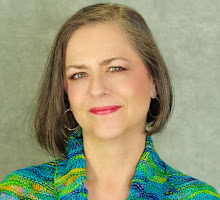
An Interview with...Janelle Martin


Once a week I post interviews with interesting people about their insights on their experience of working in the Knitting industry.  I’ve noticed that every one of these individuals makes their living in a slightly different manner bringing their own unique presence to the Knitting world.

You can find Janelle here and here on Ravelry.

Where do you find inspiration?

I have a large collection of stitch dictionaries and spend a great deal of time paging through them and considering how different stitch patterns would work together.  I also find a lot of inspiration in the patterns nature creates.

What is your favourite knitting technique?

Lace, especially Japanese lace patterns, although currently a close second is Bavarian twisted stitch patterns.

Do you look at other designers' work or are you afraid that you will be influenced by their designs?

I do look at other designers’ work.  I feel it’s important to be aware of current trends and how other designers express their aesthetic, brand and cohesive collections.  I feel like I’m still finding my feet in this field and have a great deal to learn from other designers.

http://www.ravelry.com/patterns/library/new-tech-cowl


How do you feel about the so called controversy of "dumbing down" patterns for knitters?

Is there a controversy?  Knitters all have different skill levels depending on the technique.  I include lots of information in my patterns to ensure knitters have enough detail to succeed.  The controversy I run across is the charts versus written instruction debate – extremely polarizing!  I include both and knitters can then choose which they want to use, although this does make my patterns longer.

How many sample/test knitters do you have working for you or do you do it all yourself?

Up until now I haven’t used sample knitters that often because I work out the details of my designs on the needles.  But I’ve realized that the only way I can increase my pattern output is by employing sample knitters.  Knitting all the samples myself is too slow.  Currently I have found two sample knitters and I use the Free Pattern Testers group on Ravelry.  I’ve been using test knitters almost since the beginning.

Did you do a formal business plan?

No, I don’t have a formal business plan.  At this point designing/teaching doesn’t comprise a large enough portion of my income that I need one.  I have several large projects underway in my other spheres of work and once those are completed, I’d like to develop a more formalized approach to my designing and marketing.


I have a number of designers that have inspired and encouraged my work.

What impact has the Internet had on your business?

I couldn’t have a business without the Internet as 99% of my pattern sales come via the Internet.  Online pattern sales makes what I do feasible. 

Has being published in Knitty resulted in more sales of your other patterns?

Yes, although at the time I was published in Knitty I didn’t have a large collection of patterns.  I believe that published in Knitty gave more “legitimacy” to my design work.

Do you use a tech editor?

Yes, and the quality and consistency of my patterns has improved as a direct result of her input.  I wouldn’t release a pattern without a tech editor’s work on it.

How do you maintain your life/work balance?

That’s the biggest challenge.  For now, I go through creative spurts where I design when I can find the time.  My goal is to always have a few designs ready to go so that I can publish new designs regularly, rather than one or two a year.

How do you deal with criticism?

I struggle a lot with this one and am working on developing a thicker skin.  I set the criticism aside for a day or two until I have the distance to evaluate it realistically and determine if there is anything constructive I can take from it.

How long did it take for you to be able to support yourself?

At this point I’m not, but I look forward to the day when I can!

What advice would you give someone who wants to pursue a career in knitting? 

Be aware that it’s going to take time to build up a portfolio of designs and that success isn’t going to come overnight.  Find your niche and focus on designing what you enjoy.


Wednesday, February 6, 2013

In the Category of This Made me Smile

http://www.flickr.com/photos/christiorrkarolevitz/6782638942/in/photostream

I saw this ball of yarn chair on Pinterest and it immediately brought a smile to my face. The flicker site doesn't explain anything about it. I ended up googling knitted chairs (please tell me I'm not the only knitter who googles this weird stuff) and found this amazing site. Melanie Porter focuses on contemporary furnishings. She has a book coming out in March 2013. The book shows step by step instructions for knitting projects for the home and includes a few of the pieces from the collection. All of the photos below come from Melanie's website and they are amazing.


Monday, February 4, 2013

How to Knit Gloves Part 3


The direction of the increases for the thumb gusset varies from pattern to pattern. The decision to consider is does the work look best with the increases slanting towards the centre of the gusset or away from the gusset? Any stitch pattern may change this result. Neither version is incorrect. What is most important is consistency.

Extra Tips for Fingers


When knitting for yourself check the lengths of each section continuously while knitting and note any adjustments made to ensure the second glove will be the same.


If any of the fingers feel too snug during the knitting, tear back to the beginning of the finger and add in an extra stitch with an additional pickup.

Work the thumb before the fingers for more accurate fit.

If the stitches on waste yarn are slipping down, tug on both ends of the waste yarn above the stitches to be retrieved, until the smaller needle can be inserted.
Use the smaller needles to pick stitches up from the waste yarn and then change to the larger needles.

If the stitches at the base of the fingers look strained, create an additional stitch or two in the pickup area edges and then work corresponding decreases in the first round with knit two together to reduce back to the appropriate number of stitches.

Finger shaping can be perfected by switching to smaller needles just above the upper knuckle for contoured fingers or on the row before the decrease round for fingers of very even widths.

Push completed fingers inside the glove if they get in the way while working subsequent fingers.

Warning, fingertips always look pointy until the yarn tail is woven in.
 
Part 1 can be found here.
Part 2 can be found here.
Part 4 can be found here.
Part 5 can be found here.


Friday, February 1, 2013

A Special Guest Post by Fiona Ellis


When you have exciting news you want to share it with your friends so I was thrilled when Robin allowed me to write this guest post for her blog. I wanted tell you a little about what is new in my design and teaching world.


I was one of Robin’s victims, ahem I mean interviewees, back in 2009 (you can read the interview here) so I decided to go back and look at my answers to the questions she posed in that interview. And you know many of the answers still hold true. Cables are still my favourite technique (but I do love doing colour work too), I have even delved into them further. Inspiration can still take me by surprise sometimes and I still work in series - exploring a theme for a while until I feel I have exhausted it. Currently I am working on cables than mimic the feel of corset lacing, it’s a great way to be able to add what has become my signature I-cord detailing.


The one question where I think my answer might be different is when evaluating the impact of the Internet. It has been a much bigger outlet for my work than I thought was possible back in 2009 (when I already thought it was hugely important).


Photo from Twist Collective - Photographer Caroline Bergeron
 

Twist Collective was launched in 2008 (they are having their 5th birthday this year) and my design Bonnie  was featured on the cover of the premier issue - what a terrific honour that was! They have continued to support my work (I’m featured in each issue to date) along with encouraging a huge number of international designers, some well established and some new to designing. Because of the business model that Twist operates (a royalty based system) and how beautifully put together it is I have seen a jump in revenue for my designs.


When you combine it with our ability to share images and notes on patterns it has become a very powerful way to increase my income. There have been a couple of occasions in the last few months when my designs Gwendolyn and Granville have been at the top of “What Hot” on Ravelry which has in turn caused a spike in sales making it significant in my earning potential.


Photo from Twist Collective - Photographer Jane Heller

Along with designing I love to share with knitters what I have learned through workshops, This area too has seen big changes, especially in how we are able to deliver these classes on-line. I am one of the newest instructors at Craftsy and again I have had such a wonderful experience so far with them that I would like to share my excitement. I filmed not only a full class on designing cables (Mastering Cable Design) but also a free mini class (Creative Cable Necklines) that serves as a way for people to try out the Crafsty platform and also to get an idea of if they like the instructor before they sign up for the paid class. I was stunned at how the number of students enrolled added up in the first few days after it went live. OK I’ll admit it I was checking it every few hours as it was just so thrilling. 


At first I wasn’t sure about how I would cope with the different teaching medium. I tend to let my classes evolve organically and sometimes end up doing some impromptu things in class in response to questions that come up. So not having that instant direct feedback from faces but working to a camera was really interesting. I found I relied on things I know work in a regular class situation and tried to answer the question that I know come up every time. But it did feel strange to be making jokes and not having a response- the camera crew had to remain silent and not laugh.


However the great thing about teaching on-line, along with the fact that students can watch at any time (even in their PJ’s), is that the platform allows for question and answer between student & instructor and inter-student sharing too. Learning how valuable feedback on my design work has been in allowing me to tailor my patterns to what I see knitters respond to I think that my teaching will now benefit a great deal from this endeavor too.


I hope that you will check out my classes and let me know what you think.


Thanks again Robin for inviting me to be a guest here.


Photo from Twist Collective - Photographer Jane Heller