Friday, December 31, 2010

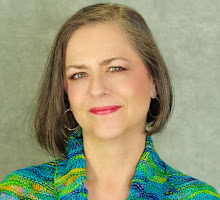
An Interview with...Katherine Vaughan


Once a week I post  interviews with interesting designers about their insights on their experience of working in the Knitting industry.  I’ve noticed that every designer makes their living in a slightly different manner bringing their own unique presence to the Knitting world.  


You can find Katherine here and here on Ravelry.


Where do you find inspiration?
I know everyone says “everywhere” and that's definitely true for me as well. However, I'm particularly interested in shape and texture, so I tend to get excited by seeing patterns and silhouettes in the environment around me. My pattern Barclay was inspired by the contrasting colors of tree trunks in the forest; my blanket Amirah came out of a pairing of a stop sign and Persian carpets. I also habitually thumb through my stitch dictionaries (my faves are the Barbara Walker series, though I think I have about 20 in total). Though it's another cliché, I sometimes pick up a yarn and hear it speaking to me, telling me what it wants to be. I design for specific people, so often I take inspiration from their lives and stated interests. And finally, I often get inspiration from the calls for submission from magazines and books – both for my own submissions and for my self-published patterns.


What is your favourite knitting technique?
I don't think I have just one. I like knitting in the round (largely because I dislike seaming). I like cables and lace pretty equally. I tend to avoid colorwork such as intarsia and fair isle, but will do them when the moment is right.

How did you determine your size range?
Much of what I do are accessories and baby blankets, so the sizes for those are pretty set. When possible I cover a large range of head sizes for hats – from preemie to men's XL. I have some friends who are over 6'6”, and their heads are larger than many hat sizes go, so I try to include them. My father is a neonatologist, so I knit a lot of preemie caps, which is the other end of the spectrum. Since most of the sweaters I design are for magazines and books, I go with the size range requested by the editor.


Do you look at other designers' work or are you afraid that you will be influenced by their designs?
Well, I also work as a technical editor, so that means I HAVE to looks at other people's work. I think it's really important to see how other people interpret our art differently. Often I learn a new technique or discover something really exciting in others' patterns. And then there are the designers that I'm just in total awe of – like Kaffe Fasset – and who have no worry about me copying them!

How do you feel about the so called controversy of "dumbing down" patterns for knitters?
I'm not sure I feel any controversy here. I think that there's a realization that writing a clear pattern free of errors and with certain elements (such as photos, diagrams, and abbreviations key) increases the likelihood of success for all knitters, not just the ones who have lower skills. Especially for patterns published online, there is less of a pressure to keep everything short. This means we can actually tell people how many stitches to do between decreases, rather than “decrease 5 times evenly spaced” (my personal pet peeve). We can write out the neckline shaping on each side, rather than the shortcut of “reverse from left.” Why make knitting hard for people? I guess I feel pretty strongly about this, especially since, as a medical librarian, I am a strong proponent of clear language as a means of enhancing health information literacy.


How many sample/test knitters do you have working for you or do you do it all yourself?
I currently have a wrap out for sample knitting – my first time ever using a sample knitter. I had to do this because I have two conflicting deadlines for magazines, and am not physically capable of doing the knitting for both. Luckily I found a great sample knitter (hi Veronica!) and am confident in her work. I like doing my own sample knitting in general, because I sometimes will alter a design on the fly. Test knitters I definitely use, both to catch any weird language in the pattern and to get a few projects already logged on Ravelry. I always have a tech editor take a look at every pattern before self-publishing.

Did you do a formal business plan?
Nope, though I keep thinking I should. I also should keep better books, incorporate as a business, etc. I do pay my taxes like a good girl, though it's pretty painful when that time rolls around!


Do you have a mentor?
Not really, though I do have designers who have helped me in the past and whom I respect quite a lot. These include Shannon Okey, who as the editor at Yarn Forward published one of my first print patterns, and then who connected me with Kristi Porter (for whom I designed two patterns for her Knitting in the Sun books), and with whom I then worked on some other book projects. It's designers like Shannon who have opened doors for me in sometimes serendipitous ways rather than as formal mentors that I really treasure.

What impact has the Internet had on your business?
I would not be a published designer without the Internet. My first three patterns (Reduce Reuse Recycle, Sadz Resama Bega, and Skirtsicle) were published in MagKnits and Black Purl Magazine. Both of these were online magazines that have since gone under. In 2011 I will be moving into wholesaling print self-published patterns, but for the last few years I've sold my self-published line entirely online via Ravelry, Etsy, and Patternfish. Ravelry in particular but also a few Yahoo! groups for self-publishing designers, tech editors, and the PhatFiber indie fiber artist community have introduced me to techniques and worlds not normally open to a librarian in the American South (fewer knitters here, especially in the summer, than in colder climes, sadly).

Do you use a Tech Editor?
I would never release a pattern for general distribution that has not been professionally tech edited, and if I purchase a pattern that has clearly not been edited first, I get cranky about it, think mean things about the designer, and never purchase another pattern from that designer. Does that sound overly harsh? It's true!

How do you maintain your life/work balance?
Luckily, knitting is generally still a relaxing thing for me, including the designing part. My children know that something is wrong if I'm not knitting. I carry my knitting and a notebook everywhere, but I'm fully capable of putting it down to play. Since my designing is a part time enterprise (I'm a medical librarian during the day), this is part of my life – as well as my work. This becomes one of the balancing points.

How do you deal with criticism?
There are three kinds of criticism. The easiest one to deal with is the knitter whose skills don't match the pattern's level. I once was ripped apart in a forum by a knitter who hadn't encountered the “ssk” stitch before, and thought it meant “slip 2 then knit the next stitch”. She kept ending up with too many stitches, obviously, and decided that it must be my “atrocious math skills.” Luckily, in that case someone else set her straight. Then there are people who simply don't like something about the pattern. Sometimes there are things I can (and choose to) do about those – sometimes it's just a matter of personal preference. The third kind come from mistakes in my pattern. I love my tech editors, because they help minimize these last ones. Any criticism stemming from an error is fixed immediately, and I publicly thank the person who found the error and send them any pattern they want for free.

How long did it take for you to be able to support yourself?
I don't support myself on my design and editing income. Someday, maybe, but right now having a full-time faculty position has serious advantages, including sick and vacation leave, health insurance, and retirement savings. However, my designing allows me some financial comfort, which is particularly good in an economy like this one. I took a look at my current levels a few months ago, and came to a conclusion that if I worked full-time at designing, tech editing, and picked up more teaching, I would have to be twice as successful as I am now and work four times as much as I do now to match my faculty salary. Ouch!

What advice would you give someone who wants to pursue a career in knitting?
If you are thinking of becoming a designer simply to make some money, don't. It takes a long time and a lot of effort to become financially successful in this field, and the field is already very crowded with talented designers. However, if you truly have a passion for design coupled with a head for the technical aspects of pattern writing and business management, this is a good job to have. For me, designing is a compulsion, a habit, a necessity. If I could not publish, I would still be designing my own knits. The publishing aspect, the money aspect, justifies some of the time I spend on this but is not the driving purpose for me. Instead, it's the thrill of seeing an idea that I had come out first in the cloth, then on paper, and finally in other people's interpretations of the pattern. I fear that if I lose that excitement that design will simply become a job, and not a passion.


Wednesday, December 29, 2010

Row Gauge - Ignore it at Your Peril


The typical advice when working a swatch is to focus on stitch gauge and almost ignore row gauge. Beware of this as changing needles sizes can sometimes affect row gauge more than stitch gauge. So perhaps an additional swatch or two is in order if your row gauge is way off. 

If you are working simple shapes it's true you can just knit to the correct measurement as given in your pattern and you can ignore the row gauge. However there are many places that this simply does not work. I've often heard Knitters comment that they were working on something like the Swallowtail Shawl (pictured above), and had to knit extra repeats of one of the 3 pattern stitches to get the correct length. The shape of top down triangles also changes if the row gauge is off varying from a equilateral to an isosceles to a right angled triangle. Another place that row gauge is very important is in the popular top down raglans. The shape of the armhole and bust area is heavily affected by the stitch to row gauge. If you don't get that right there is no way that you will be knitting what the designer originally intended. It could be better or it could be worse depending on your individual body shape. The correct fit of set in sleeves and their proportion to the armhole will also be affected by a row gauge that changes the sleeve cap shape. Even if you have worked to the correct cap depth, the curve of the cap is determined by the cast offs and decreases so a row gauge discrepancy will change its overall shape. 

The final place that row gauge is important is for the horizontal front bands of a cardigan. The stitch pickups are calculated on the length and row count of the front of the garment and since not every size is test knit this is typically done mathematically. Therefore if your row gauge doesn't match neither will the pickups. 

Let me know - are you re-swatching when you get stitch gauge but not row gauge?

Monday, December 27, 2010

Business Plans


Having interviewed many Knitting Professionals I've discovered that it is rare for them to have a business plan. I recently attended an evening session at the library that covered this topic. This one was lead by Sally Wilkie of the Toronto Business Development Centre The viewpoint of the centre is that a business plan will help ensure success when starting a business. They report that only about 46% of small businesses survive past 3 years and that a survey of emerging growth companies felt that having a good business plan and sticking to it was the key success factor for their first year. 

Briefly the business plan spells out details of various parts of your business usually in the areas of  marketing, operations and finance. It should spell out your mission and vision statements, describe the business, mention the legal status (sole owner, partnership, etc.) and include the future plans as well as your key objectives.

If the plan is written for potential investors that will have a big impact on it's format. In my case I don't need investors so I'm viewing this more as a goal setting exercise to keep me on track. I have been doing some market research but there is not a lot of formal data being collected about knitters. Most of what I know is from personal observation and speaking to my peers and knitting friends. 

Lately I've been thinking a lot about pricing strategy and I think that will evolve as I produce more patterns. I'm most interested in doing garments but I'm focusing on accessories right now while I perfect my pattern writing skills as well as mastering software and other new skill sets.

The presenter also talked about developing a customer profile and for the first time her version made sense to me, instead of a single profile she recommended that the plan should describe several potential customers. I know a lot of Knitters but there is no way I could distill them down to a single profile so the concept of thinking about multiple profiles works for me, the young urban Knitter vs. the gift Knitter or the high fashion Knitter. I"ll be working on a few of these because I think that will send me in some new directions. 

The session also included sections on sales plans and forecasting as well as financial planning and a strategic activity plan. Under features of a poor business plan was an item that I suspect all Knitting professionals suffer from. Infatuation with the the work of the business or its product and not the marketing process. Hummm.... well I'm off to do some knitting now.


Here a few sites with some free info for you (just in case).

Here in the U.S. and here's one for Canada

Saturday, December 25, 2010

Merry Christmas


The instructions to make this wreath are here.


Friday, December 24, 2010

An Interview with...Diana Troldahl

 
Once a week I post  interviews with interesting designers about their insights on their experience of working in the Knitting industry.  I’ve noticed that every designer makes their living in a slightly different manner bringing their own unique presence to the Knitting world. 
 
You can find Diana here, her blog is here and on Ravelry here.

Where do you find inspiration?
Everywhere, really. I love looking at nature in micro and macrocosm, and sometimes the shapes or textures suggest things. I also get interesting ideas from looking at architecture. I sometimes see a line or fabric pattern of a dress that inspires a new way to put together a garment. I often get different perspectives by reading antique handicraft books like the Weldon's Practical Needlework series and others I find on sites like gutenberg.org
What is your favourite knitting technique?
 
Wow, I've never really thought about it. I keep trying new things and like not being married to any one way of accomplishing a goal. I know how to knit in the round in multiple methods, for example. I probably favor dpns above magic loop for small projects, but know how to do both, as well as a few more techniques.

How did you determine your size range?
Because I am a large woman, I like to have extra options on the large end of the spectrum, but I haven't done a lot of garment designs requiring grading, yet; although there are a few in process for 2011.
Do you look at other designers’ work or are you afraid that you will be influenced by their designs?
I enjoy seeing other designer's work. I think we can learn a lot from each other. I am confident that my own sense of design is unique and strong enough not to be overly influenced by others, and I gain a great deal from purchasing patterns from designers I admire and seeing how they approach tricky bits of design and instruction.
How do you feel about the so called controversy of “dumbing down” patterns for knitters? 
I don't think it is possible to write a pattern with too much clarity. My goal when writing instructions is to leave the pattern-user with as few questions as possible, while pointing out areas within the design where the adventurous knitter or crocheter can explore options to make the design their own. When I purchase a pattern, I become quite cross when the designer skips over important information or provides vague or useless instructions. I have no way of knowing the skill level of someone who purchases one of my patterns. Better that an advanced knitter skips over parts they don't need than a less experienced knitter winds up frustrated with a lack of information. 

How many sample/test knitters do you have working for you or do you do it all yourself?
I mostly do it myself, especially because I have a tendency to change the design while making the samples. I do have test knitters and crocheters I have met through Ravelry and elsewhere, and some of my friends have been lovely about pitching in to pattern test for me.
Did you do a formal business plan? 
I have plans, but they tend toward the informal. I deal with chronic health issues and having firm goals can set me up for frustration if I am unable to accomplish them. I prefer to have a list of projected tasks unconnected to a timeline.
Do you have a mentor?
Probably that was my sister-in-law, LynnH of Colorjoy. I tested a few patterns for her as a rank beginner, then began offering editing advice (I am a writer) and she encouraged me to jot down some of my own patterns. She is always there for me if I need advice, and I still occasionally test knit and tech edit a bit for her.
Do you have a business model that you have emulated?
Not really. I have grown it organically as opportunities came to my attention.
What impact has the Internet had on your business?
Huge. It cannot be over emphasized. Without the Internet, I do not think I would be selling patterns.
Do you use a Tech Editor?
No, although my test knitters often provide great advice. I find I can edit my own patterns fairly well if I let them rest and come to them with fresh eyes as I knit a sample. (I often make two or even more samples of each pattern).
How do you maintain your life/work balance?
That is tough. I have a tendency to over focus on a project until my hands literally will not work. This is not healthy, so I am trying to set time limits on any one activity.
How do you deal with criticism?
Pretty well, I think. I am always grateful when someone takes the time to point out an error or unclear section of instructions in my patterns. I feel gutted that I published something with an error in it, but no one is perfect, and I console myself with that :-} If someone simply does not like something I created, that has more to do with their particular taste than with the worth of my creation.
How long did it take for you to be able to support yourself?
I am not there, yet. It may never happen. I am happy that I am able to provide some income to the household. I am unable to work and have been denied any form of government support, so anything I can bring in is wonderful. I am grateful I have the skill to do this :-}
What advice would you give someone who wants to pursue a career in knitting?
Foster diversity of technique, and also try and place yourself and your patterns in as many different areas of the industry as possible. Teaching, publication in online and print magazines, submitting art installations to exhibitions, blogging, writing reviews of yarn, tools and books as well as self-publishing online in as many different markets as possible. Doing these things can build your reputation and platform to the point you will eventually be able to put together book proposals, and perhaps lead to guest shots on television programs. Start small, but look for opportunities to grow your skills and renown.

Wednesday, December 22, 2010

Rip off or Classic? You Decide

My Feather and Fan Shawl

My other Feather and Fan Shawl


I think Ravelry is making us more aware of the fact that people can come up with similar designs independently. We are now able to see so many of the patterns out there that in the past we did not have access to.

Several times now I've had the experience of working on something that was already out there in a similar version so I moved on to a different idea. In some ways knitting will improve by forcing designers to be more creative. On the other hand those new to knitting are always going to want a feather and fan or sea foam scarf pattern written specifically for the yarn they just purchased. I've also noticed that sometimes when one person assumes that another ripped off an idea from a third party that it's merely because they don't realize that it's a knitting classic (that they just haven't been aware of), and I think those pieces have a place in the pattern publishing world.

I read a heated thread a while ago in Ravelry about a pattern that the original poster felt she had been ripped off for when a similar version was published after hers. To me it looked just like something my mother had knit many versions of and when I flipped through some of her old patterns there it was with a publishing date in the 60's. I had a similar experience when someone hinted that I had done the ripping off but named the wrong source of my inspiration for a silhouette that I had seen before in both hand and machine knitting patterns as well as in woven fabric in a book about a main stream fashion designer. In that case the person hinting simply thought that the first version she had seen was totally original while in fact there were many precedents. 

I just finished reading an article about the American remake of the Swedish movie The Girl with the Dragon Tattoo. The writer was furious that Hollywood could think they could make a better version but did admit that a non-subtitled version might be more palatable to American audiences. Which ultimately means that more people get to enjoy the original authors work. Movies and the theater have a long history of remakes, remounts and revivals of previously released work. Copyright is protected and the owners are paid for the use of their work. Unfortunately since I have no idea who originated the feather and fan stitch pattern there is no way to compensate that designer and really it would be like trying to compensate the originator of words or letters in the English language.

Last summer my husband and I toured the Vatican with a guide who is an art history graduate. She showed us many examples of how ideas were borrowed and reinterpreted from one era to another in the art world, often indicating what the improvements and changes were. She also spoke about how students were instructed to copy directly from the great masters as a way of improving their own skills. It's fascinating to see how attitudes to this have changed. I think there is nothing more valuable than original thinking but unless we study past work we have no way to recognize what is truly original and be inspired to a higher level of creativity.

Monday, December 20, 2010

Ugly Christmas Sweater Parties


I just read an article here, that says this type of party is becoming common. It sounds like fun to me. Is anyone having their own party?


I googled ugly Christmas sweaters and got 399,000 results, that's a lot of ugly sweaters!